
-
Bird DIY Embroidery Beginner Kit Set 1
Regular price From $13.97 USDRegular priceUnit price per$27.95 USDSale price From $13.97 USDSale -
Embroidery Thread Organizer Numbered Boards 01-111, Floss Holder for Embroidery Organization
Regular price $2.97 USDRegular priceUnit price per$5.95 USDSale price $2.97 USDSale -
Multicolor Embroidery Thread Set - 250 Pcs
Regular price $22.97 USDRegular priceUnit price per$45.95 USDSale price $22.97 USDSale -
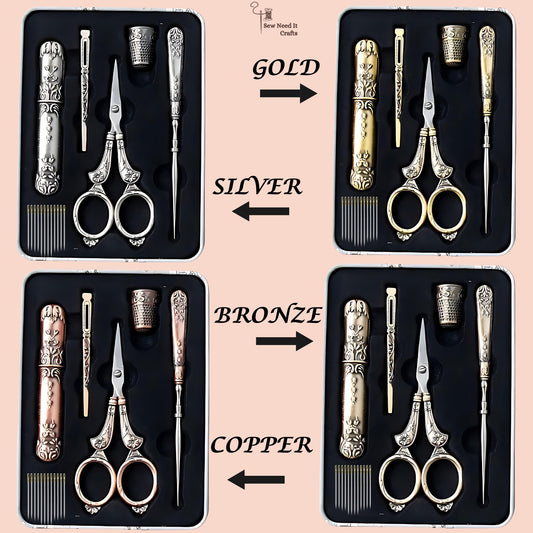
Engraved Vintage Style Sewing Gift Set — 5 Piece Embroidery Kit in a Box
Regular price $34.97 USDRegular priceUnit price per$69.95 USDSale price $34.97 USDSale -
Vintage Style 6 Piece Embroidery Tool Kit in a Tin — Includes 12 Needles
Regular price $34.97 USDRegular priceUnit price per$69.95 USDSale price $34.97 USDSale


Embroidery supplies split into the things you buy once and the things you keep buying. The hoops here are the once — good beech lasts decades. The floss and the fabric are the rest.
What size embroidery hoop do you need?
Bigger than the design, and small enough to hold comfortably in one hand. The beech hardwood range runs 3 to 12 inches, sold singly or as sets, and 6 to 8 inches covers most hoop art. Go up only when the design will not fit — a large hoop is heavier to hold for an evening, and you can always move a small hoop across a big piece of fabric as you work.
A wooden embroidery hoop grips better than plastic because the grain has some give, and it takes a screw tighter without the ring deforming. If you want a shape other than a circle, the faux wood frames come as octagon and oval as well.
Stitching for long stretches?
Holding a hoop is fine for an hour; past that it is your neck and your non-dominant hand that complain first, not your stitching hand. Three beechwood stands take the weight and free both hands — a clamp-on for a table edge and two sit-on versions for an armchair, one of which rotates a full circle. Adjustable height on all three. They have their own page: embroidery hoop stands.
Floss, and keeping track of it
Six-strand cotton in colour sets from 50 to 250 pieces, plus the bobbins, boards and boxes that stop a drawer of loose skeins becoming a knot. Full range and the sizing advice is on embroidery floss.
Buying the parts, or buying a kit?
If you already know what you want to stitch, buy the parts. If you want to start this weekend, a kit arrives with the design already printed on the fabric and the threads matched to it — see embroidery kits, or embroidery kits for beginners if it is your first. Both are listed on this page too.