


Vintage Style Seam Ripper — Engraved Metal, Flat or Round Handle, 4 Antique Finishes
Vintage Style Seam Ripper — Engraved Metal, Flat or Round Handle, 4 Antique Finishes
Limited Availability!
Trusted by Crafters Worldwide ✔
Couldn't load pickup availability
Estimated delivery -
—
- Fast Shipping
- 100% Guarantee
- Secure Checkout
GUARANTEE - 45-Day Money Back Guarantee
GUARANTEE - 45-Day Money Back Guarantee
100% Risk Free 45 Day Money Back Guarantee. If something is wrong with your order, you can contact our helpful customer support team to get a refund.
SHIPPING - 5–12 Business Days (Tracked)
SHIPPING - 5–12 Business Days (Tracked)
Please allow 5 to 12 business days for delivery, however, you may receive your items much earlier. All orders are shipped with tracking numbers so you can track them every step of the way! You will receive an email with tracking number once the order is shipped.
SECURE CHECKOUT - 100% Encrypted
SECURE CHECKOUT - 100% Encrypted
Safe payments via Stripe® and PayPal. We use encrypted SSL security for 100% protection.
SUPPORT - Fast & Friendly
SUPPORT - Fast & Friendly
We have 24/7/365 Ticket system with Phone and Email Support. Please contact us if you need assistance.
If you are buying for someone who sews, quilts or embroiders, this is the rare present that is genuinely useful and still looks like a present — cast metal, engraved end to end with raised blossoms and leaf scrolls, and something they will reach for most weeks rather than shut in a drawer. Our customers buy it for a sister alongside her first sewing machine, for a mum's birthday, for a friend who has just taken up sewing, and for their own Christmas stocking. It lands every time.
The other half of it is buying one for yourself, and there is no need to justify that. People who sew tend to like beautiful things — it is why the fabric gets stroked before it gets cut. If you are drawn to antique and retro pieces generally, this sits happily among them; it looks like something out of an old sewing box rather than something off a modern notions shelf. As one customer put it, you get to correct your mistakes in style.
And then there is the part nobody expects. This is a substantial tool — noticeably heavier and longer than the little plastic ripper that comes in a sewing machine's accessory box — and that turns out to be the thing buyers mention most. The weight gives you something to grip instead of something to pinch, so your hand does not ache after twenty minutes of unpicking. The engraving that makes it worth looking at is also raised texture, so it does not slide through your fingers. And because it is large and distinctive and has some heft, it stays where you put it down and you can find it in a basket at a glance. A seam ripper you don't lose is worth a great deal more than a seam ripper you replace twice a year.
The head is a proper stainless steel fork — long curved point on one side, short prong tipped with a red safety ball on the other, sharpened cutting edge in the U between them. It is the same head shape you will find on any good ripper, and it goes through thread without you having to push.
Two Handles, Two Blades — Which One to Choose
These are not two versions of the same tool with different decoration. The handles differ and so do the blades, and that is the part worth reading before you choose.
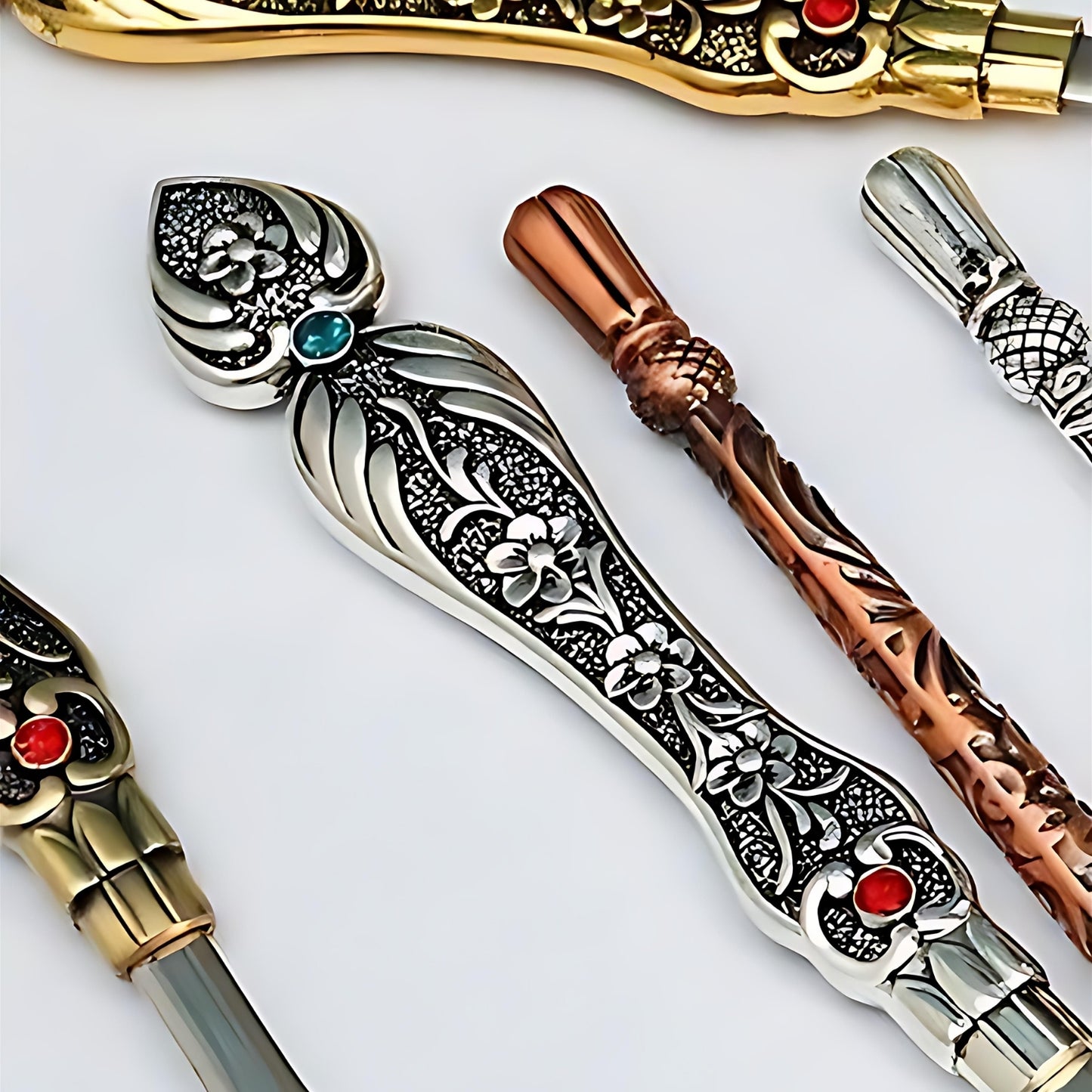
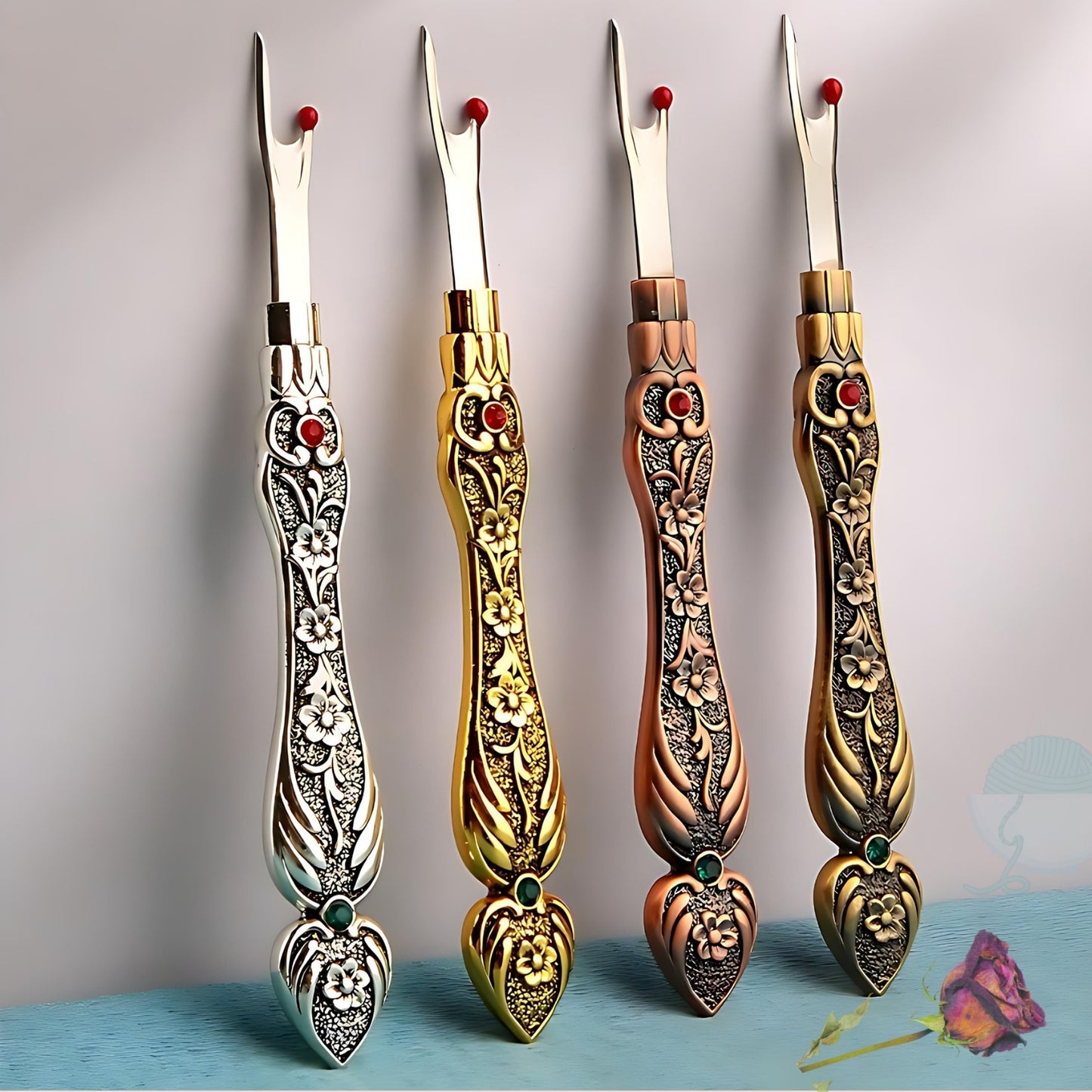
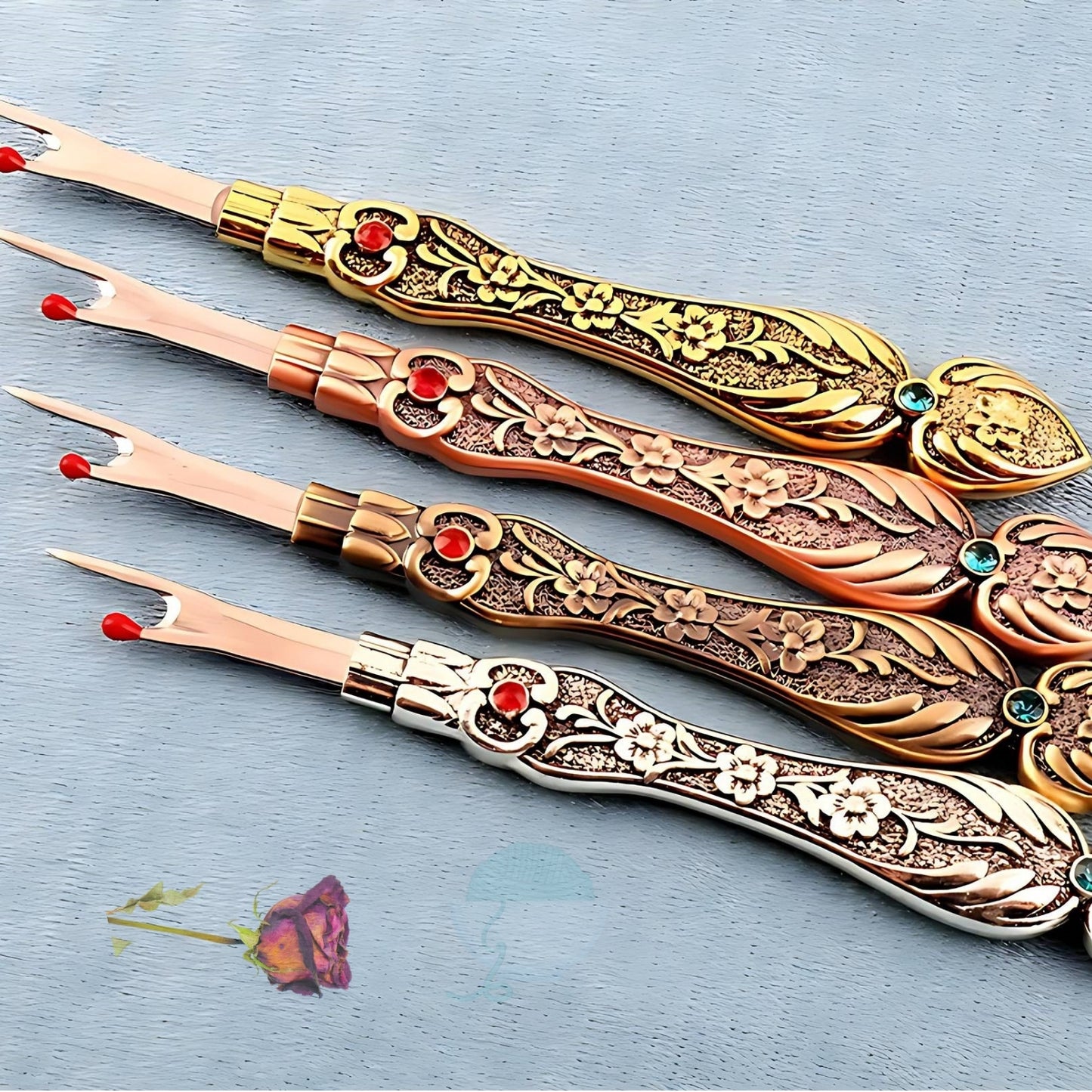
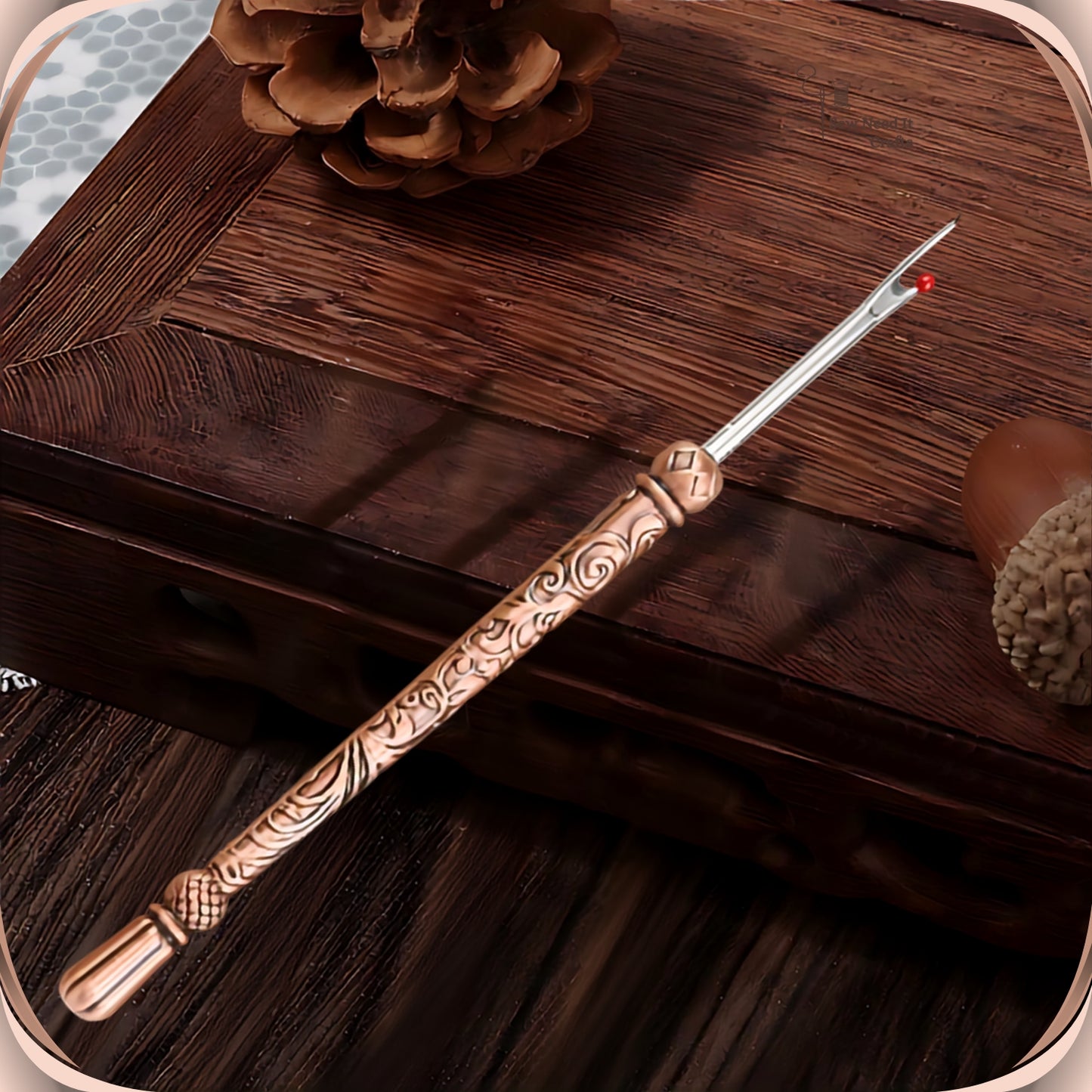
Antique Flat — 115 mm (4.5 in), broad handle, broad blade. A wide, spoon-shaped handle that swells through the middle and finishes in a heart-shaped tail, with the deepest relief of the two: raised five-petalled blossoms and swept leaves over a stippled ground, a red crystal set into the collar and a teal-green crystal in the tail. The blade to match is a wide, deep U with a generous throat between the point and the ball. That shape takes a bigger bite, which is what you want for heavier-weight thread, denser seams, topstitching and anything on canvas, denim or upholstery weight. It also fills the hand more, so it is the easier of the two to hold firmly through a long session.

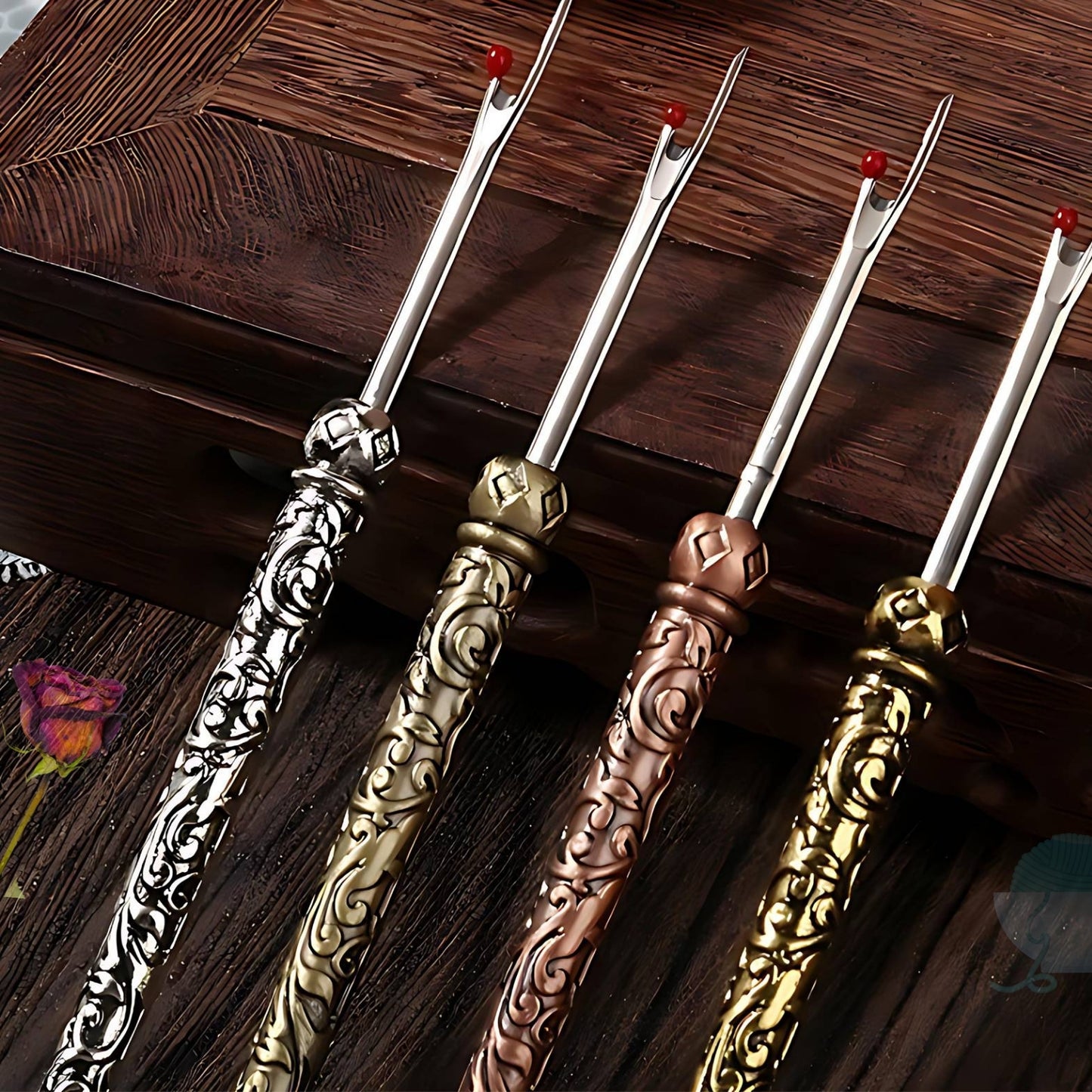
Antique Round — 120 mm (4.7 in), slim handle, fine blade. A slender, round-sectioned handle covered in flowing scrollwork, with a faceted bead where the blade meets the handle, finishing in a smooth fluted end. No crystals on this one — it is the quieter design of the two. Its blade is correspondingly fine and narrow, with a shallow notch, and that is its whole advantage: it slides under short, tight, closely-set stitches that a wide fork simply cannot get beneath. Fine cottons, lightweight linings, small machine stitches, delicate work. It is pencil-slim in the hand, so you hold it much the way you hold a pen, and the scrollwork gives your fingers grip on what would otherwise be smooth metal.

So: heavier work and a fuller grip, take the Flat. Fine, close stitching, take the Round. Plenty of our customers end up with both, and use them for different jobs. Both come in the same four antique finishes — gold, silver, bronze and copper — so there are eight options in all: four finishes in each of the two handle styles.
Product Details
- Handle style: Antique Flat, 115 mm (4.5 in), or Antique Round, 120 mm (4.7 in)
- Finishes: antique gold, antique silver, antique bronze, antique copper
- Blade: stainless steel, classic fork head with a red safety ball on the short prong. Wide, deep fork on the Flat; fine, narrow fork on the Round
- Handle: cast zinc alloy with an antique plated finish; the pattern is raised relief in the metal, not printed on it
- Crystal accents: on the Antique Flat handle only — red at the collar, teal-green in the tail
- Quantity: sold individually — one seam ripper per order, in the style and finish you choose

How to Use It
Slide the long pointed side under a single stitch, so the thread drops into the curve of the U. Push forward gently and the sharpened edge cuts it. Do not saw at it — if you are having to force the tool, you are pushing the point through fabric rather than under thread.
For a whole seam, the quick way is not to cut every stitch. Break a stitch every two or three centimetres along the seam, then turn the work over and pull the unbroken thread from the other side; it lifts away in one length. Then run the ball tip along the seam to lift out the short thread ends.
The red ball is the part that protects your work. Keep it against the fabric, underneath the threads, and it rides along the surface instead of digging in. That is what stops a slip from becoming a hole.
Who It's For
Dressmakers and garment sewists taking out a seam that went in crooked. Quilters unpicking a block that came out the wrong way round. Anyone taking apart a thrifted garment to reuse the fabric, shortening a hem, moving a button, or opening a machine-stitched buttonhole. It is a tool that gets used on almost every project, which is exactly why it deserves to be one you like.
It is a particularly good upgrade for anyone still using the ripper that came in the machine's accessory box. That one is designed to be cheap and small, not to be held — and the difference in hand fatigue over a long unpicking session is the thing our customers write to us about.
It also finds a home with people who simply like antique and retro things: collectors of old sewing tools, anyone who keeps a vintage workbox, anyone whose sewing corner leans more Edwardian than Ikea. And it makes an easy gift for a beginner, a sewing student, an apprentice or an experienced sewist who would never spend the money on themselves — you do not need to know anything about their machine, their patterns or their fabric stash. Everyone who sews needs one of these, and almost nobody buys themselves a nice one.

How This Compares
Against the small plastic ripper that comes with a sewing machine. Same idea, same job, entirely different experience. A metal handle has real weight to it, and weight is not a downside in a tool you push with your fingertips — it gives you something to grip rather than something to pinch, which is why buyers report less hand fatigue. At 115–120 mm it is longer and more distinctive too, so it sits still where you put it down and turns up when you look for it. The little plastic ones are cheap to replace precisely because they disappear so easily.
Against a hand-turned wooden seam ripper. Those are lovely, and they are also a considered purchase — often several times this price, made one at a time. This is the same instinct at a price you can act on without thinking about it, and cast metal takes fine engraved detail in a way turned wood cannot.
Against buying a plain one for work and a pretty one for the shelf. This is a genuine seam ripper with a stainless blade and a standard safety-ball fork, in two blade sizes chosen for different weights of work. It is not a decorative object with a token point on the end, so it does not need a working ripper kept alongside it.
Materials & Care
The blade is stainless steel and the handle is cast zinc alloy under an antique plated finish. Keep it dry — wipe it after use if your hands are damp, and store it somewhere it will not knock against other metal tools, since the raised relief and the plated finish are what give it its look.
A seam ripper is blunted by fabric, not by thread. Cutting cleanly under stitches rather than dragging the point through cloth is what keeps the edge, and it is the habit worth having whatever ripper you own.
Frequently Asked Questions
Why is there a red ball on a seam ripper? It is a guard. The ball sits on the shorter of the two prongs and is meant to travel against the fabric, underneath the threads you are cutting, so the sharp point stays clear of the cloth. It is the reason you can run a ripper along a seam at speed without putting a hole in the garment. Every one of these has it.
What are the different types of seam rippers? The common ones are the small plastic-handled ripper found in most machine accessory boxes, the larger ergonomic-handled type, and metal or wooden-handled rippers like these. All of them use the same fork-shaped head; what changes is the size of the fork and how the handle sits in your hand. Here you are choosing between the Antique Flat, with a broad handle and a wide, deep blade for heavier thread and denser seams, and the Antique Round, with a slim pen-like handle and a fine, narrow blade for short, closely-set stitches.
What is another name for a seam ripper? Stitch ripper, stitch unpicker, stitch remover and seam unpicker all mean the same tool. "Unpicker" is the more common word in the UK and Australia; "seam ripper" is the usual term in the US, and plenty of people simply call it a stitch ripper. If you are searching for a stitch remover tool for sewing, this is it.
What are seam rippers used for? Taking out machine or hand stitching — a seam sewn in the wrong place, a seam sewn with the wrong tension, a hem that needs shortening. They are also used to open machine-stitched buttonholes, to remove basting, to take a garment apart at the seams so the fabric can be reused, and to lift out a misplaced button or label.
How long does a seam ripper last? Years, if the point only ever goes under thread. Stainless steel holds an edge well and there is nothing on this tool to wear out or come loose. What actually kills a ripper is being forced through fabric, or being left loose in a tin where the point gets knocked about — so cut cleanly, and give it somewhere to live.
What is the fastest way to seam rip? Break a stitch every couple of centimetres rather than cutting them all, then pull the long unbroken thread from the reverse side and the seam comes apart in one go. Clear the loose thread ends afterwards by running the ball tip along the line of the seam.
What is the best seam ripper for beginners? A handle you can actually hold matters more than anything else when you are starting out, because most beginner damage comes from gripping something too small and pushing too hard. Of these two, the Antique Flat is the one to choose — the wide middle gives you something substantial to hold, and the safety ball does the rest. It is also the one most often bought as a gift for someone new to sewing.
Pick your handle, your blade and your finish, and you have a tool you will reach for on most projects and be pleased to see every time.








Haven’t needed to use it yet but it is well crafted and detailed.
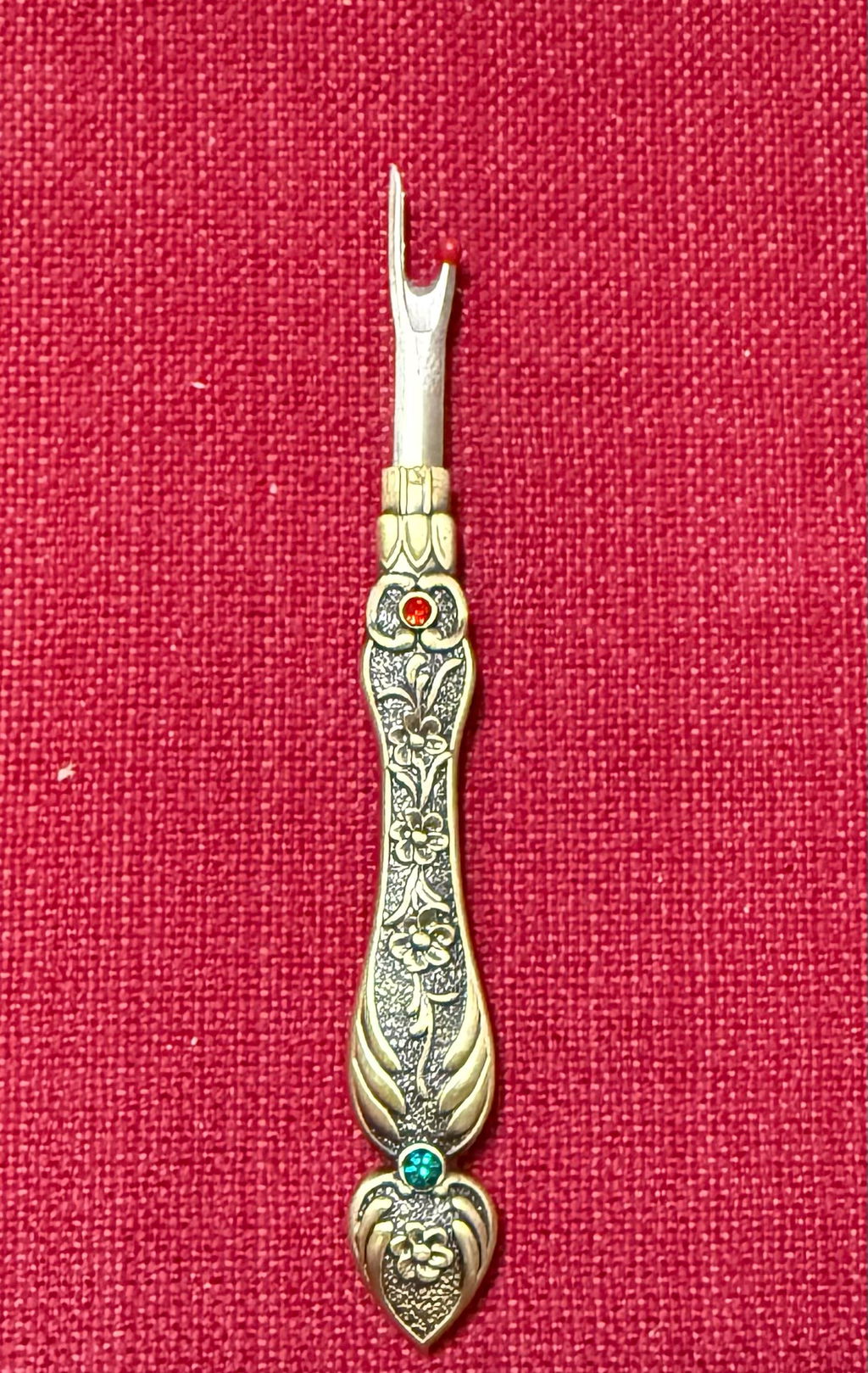
Such a beauty! Shipped fast and came in perfect condition, cant wait to use!
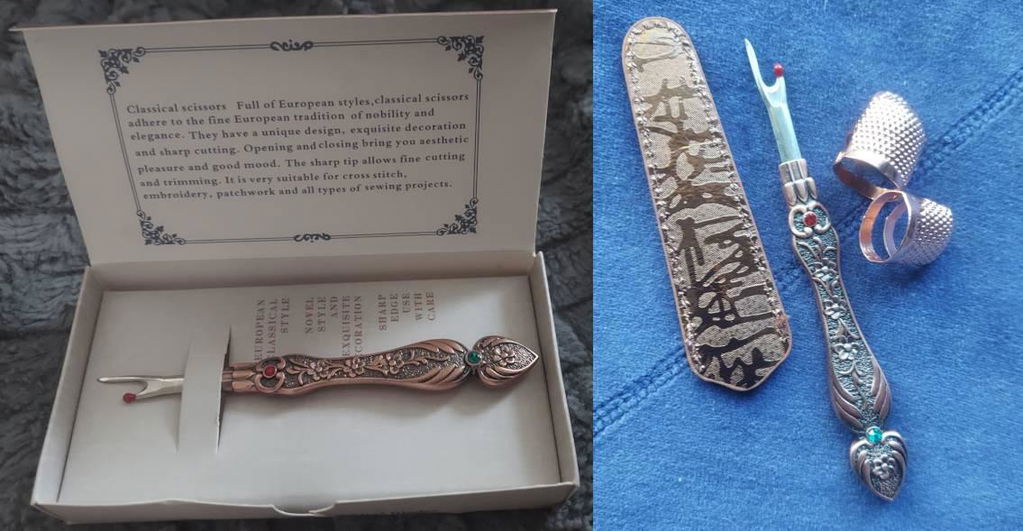
Pretty, nice weight, not cheaply made. The design of the shape makes it comfortable to hold. Sharp - removed a tag like a hot knife through butter. Exactly as pictured and described. Comes in a nice, giftable box. The Red Copper looks nice with rose gold notions like thimbles (shown here) or scissors.
My only complaint is that it doesn't come with any protective sheath to avoid poking yourself when grabbing it, or snagging something when sewing on-the-go. But I found that a standard size sheath for thread snips will work. (ScissorFobz makes a copper one that matches the Red Copper nicely, shown here.)
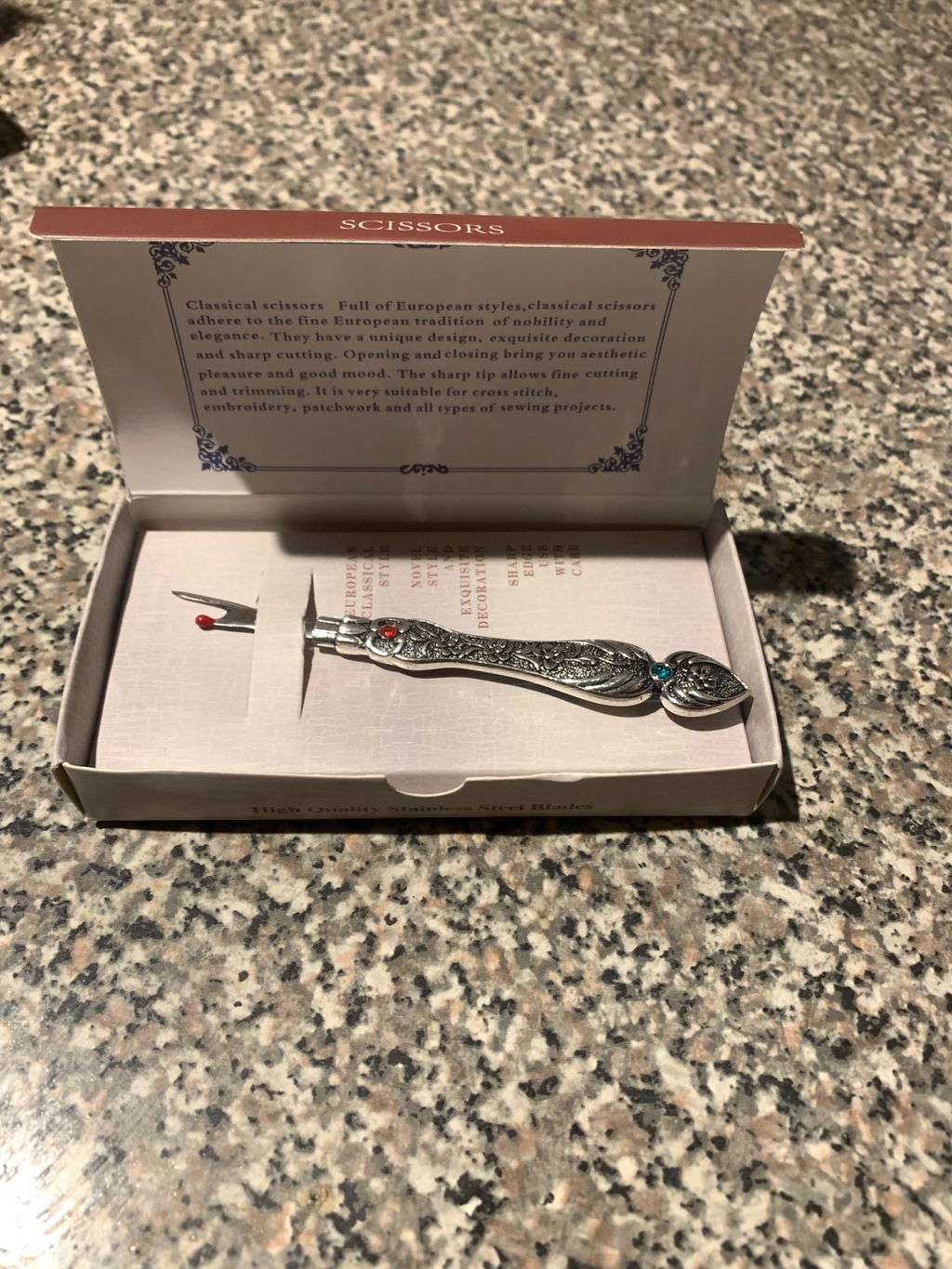
I am disappointed that this is just Amazon or foreign items being sold on a platform meant for homemade items. The box it shipped in has the name of the brand, which is available on Amazon and elsewhere online. The box says “scissors” and mentions a bag, but I bought a seam ripper. I am disappointed to purchase something on Etsy, that I could have bought anywhere else. Seems goodish quality but more of feel “duped” into thinking I was buying something locally and lovingly made and instead buying random stuff from other countries and mass produced.
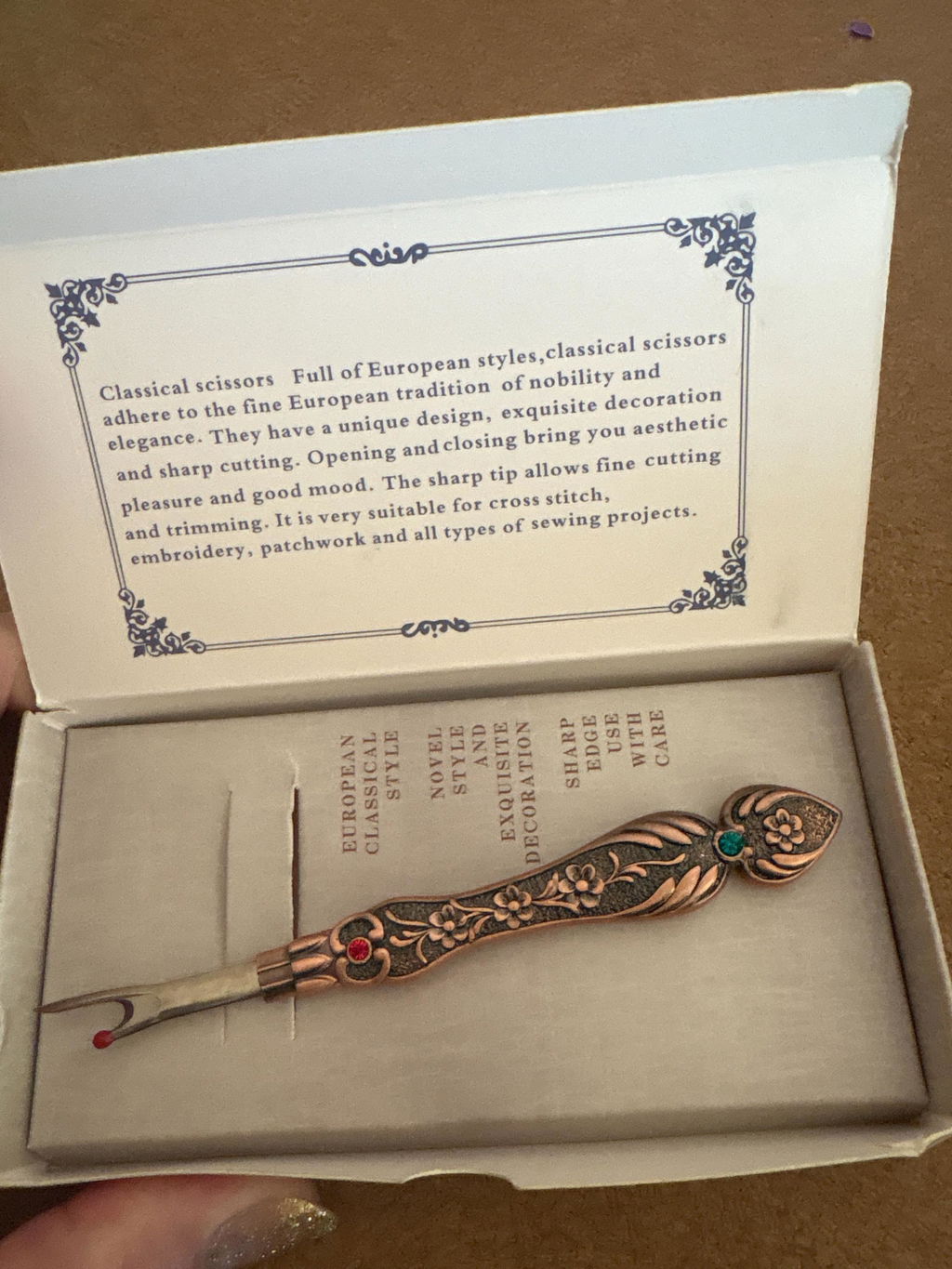
Great Quality and a great gift
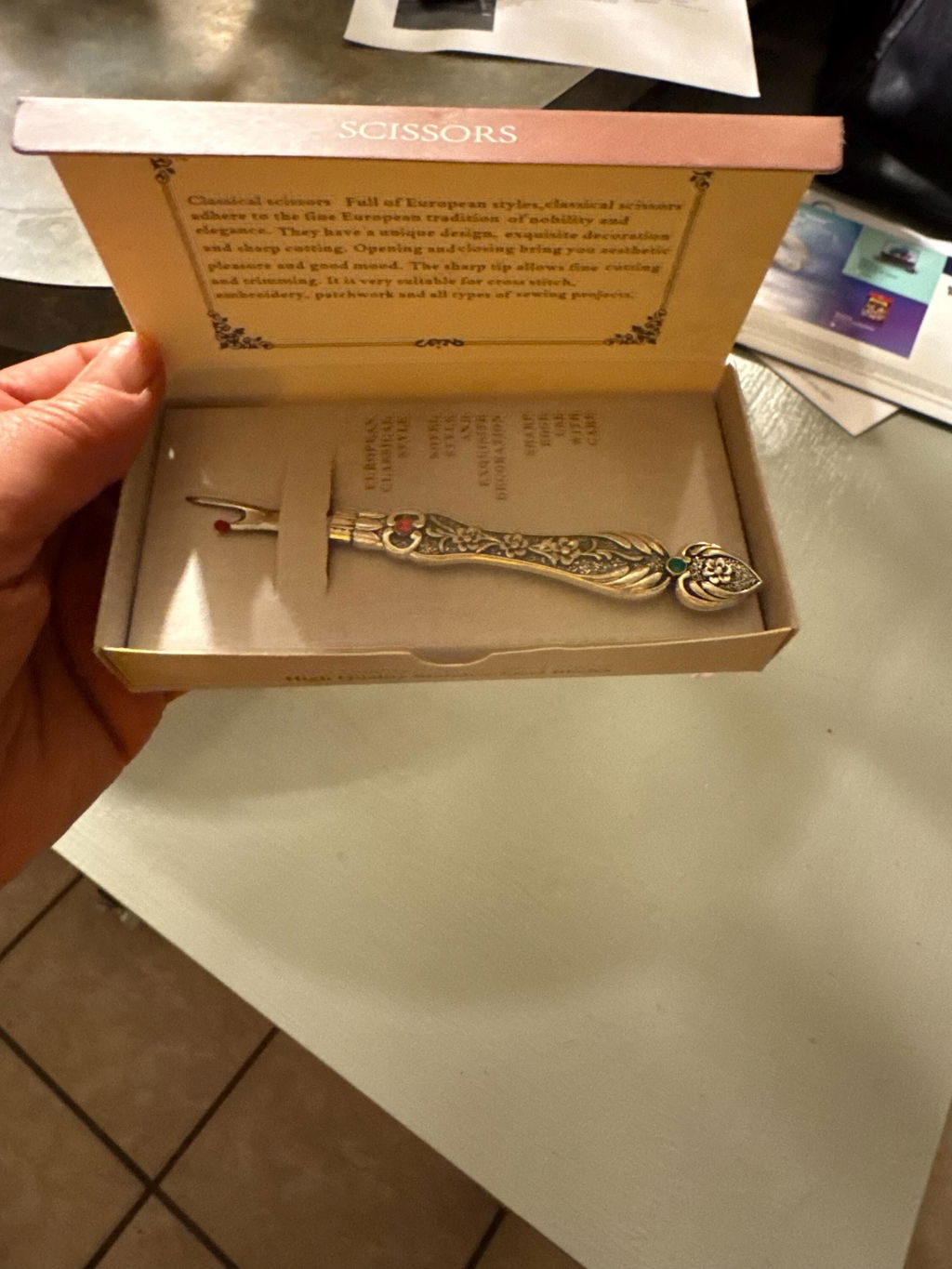
Sturdy and beautiful, these are diplay worthy
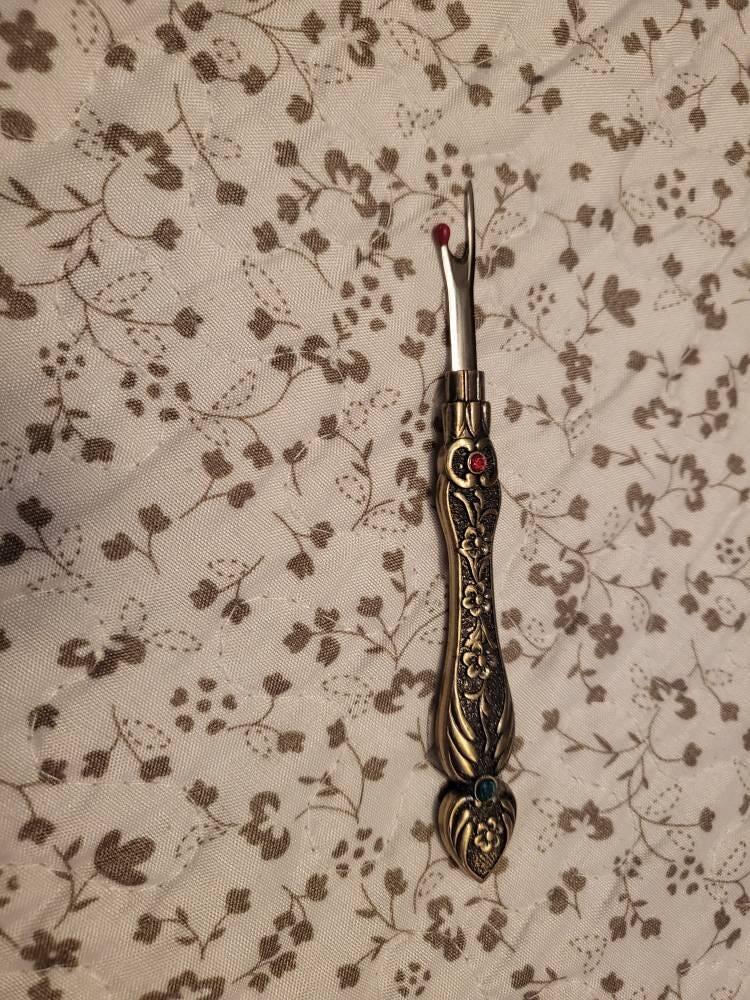
Such a beautiful gift for a dressmaker. I am so pleased with the quality and look of the stitch ripper.
If I were being critical, the thing that let's it down slightly is the gift box. The quality of this doesn't reflect the item inside.... but on the whole, I am happy with my choice 😊
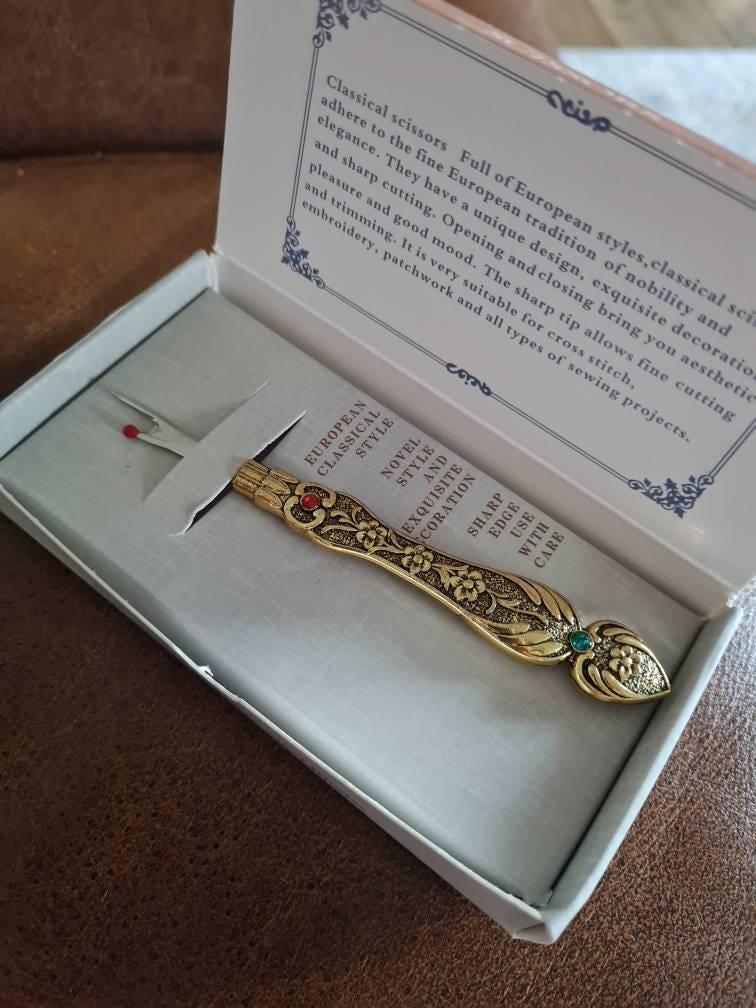
Just a gorgeous seam ripper! Now I can correct my mistakes in style haha. Thank you!
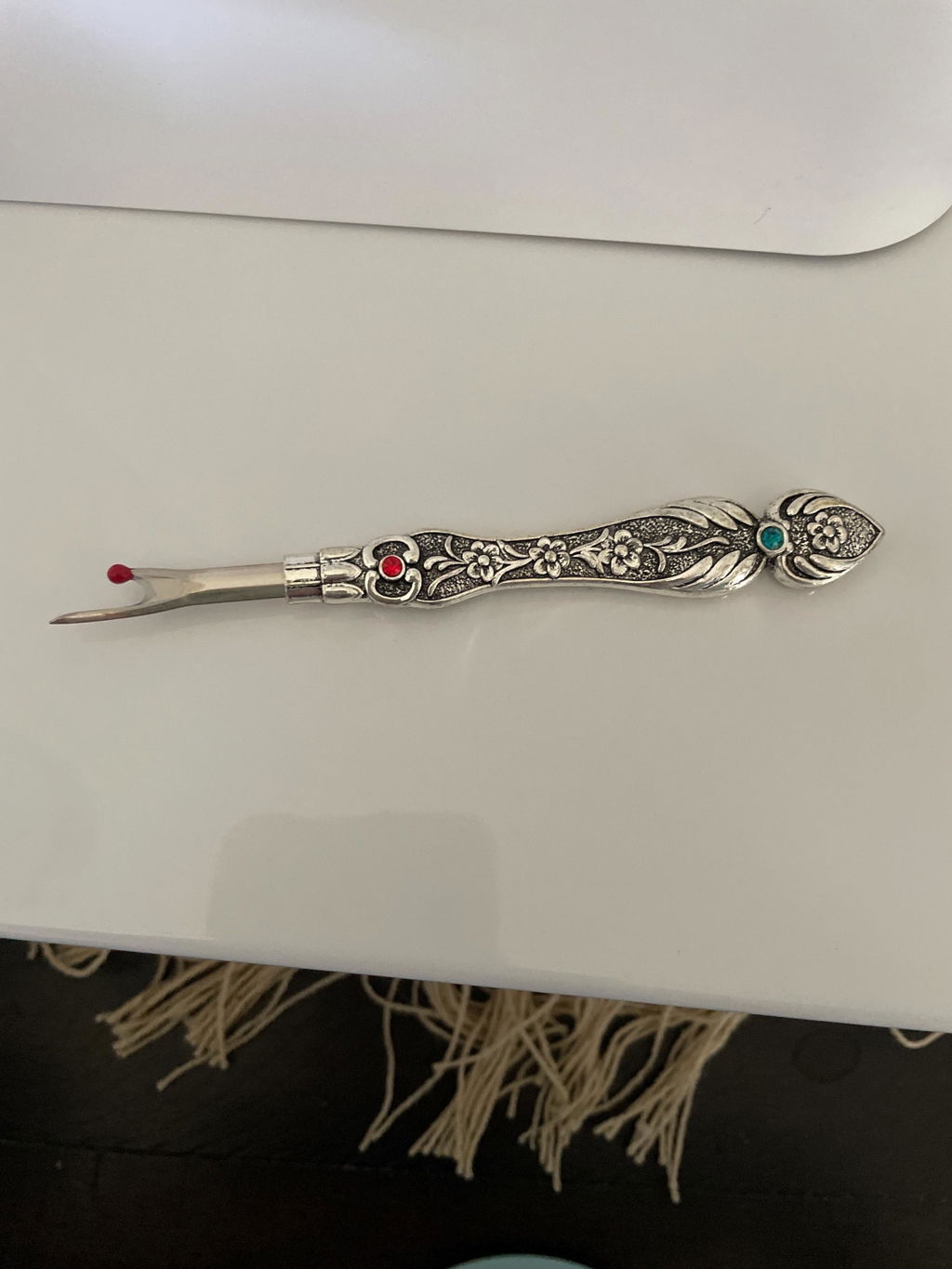
Beautiful little seam ripper, really satisfying hand feel.
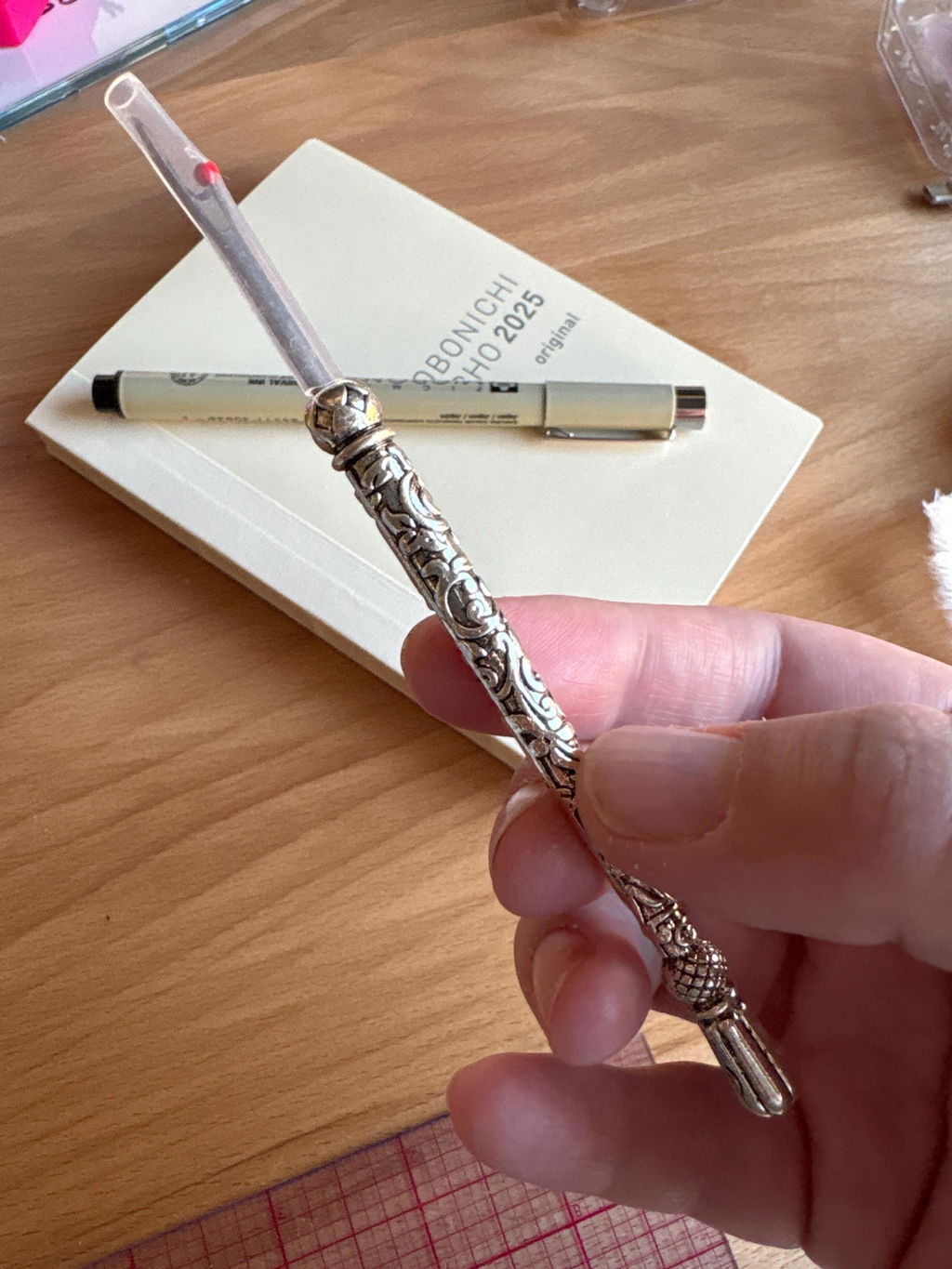
This is a lovely addition to any sewing basket. High quality materials and craftsmanship. The safety cap is only a small plastic tube not a hard plastic cover as I had expected. Hence 4 stars not 5. As the blade is very sharp this could be a concern for those with small children or taking sewing to classes etc.
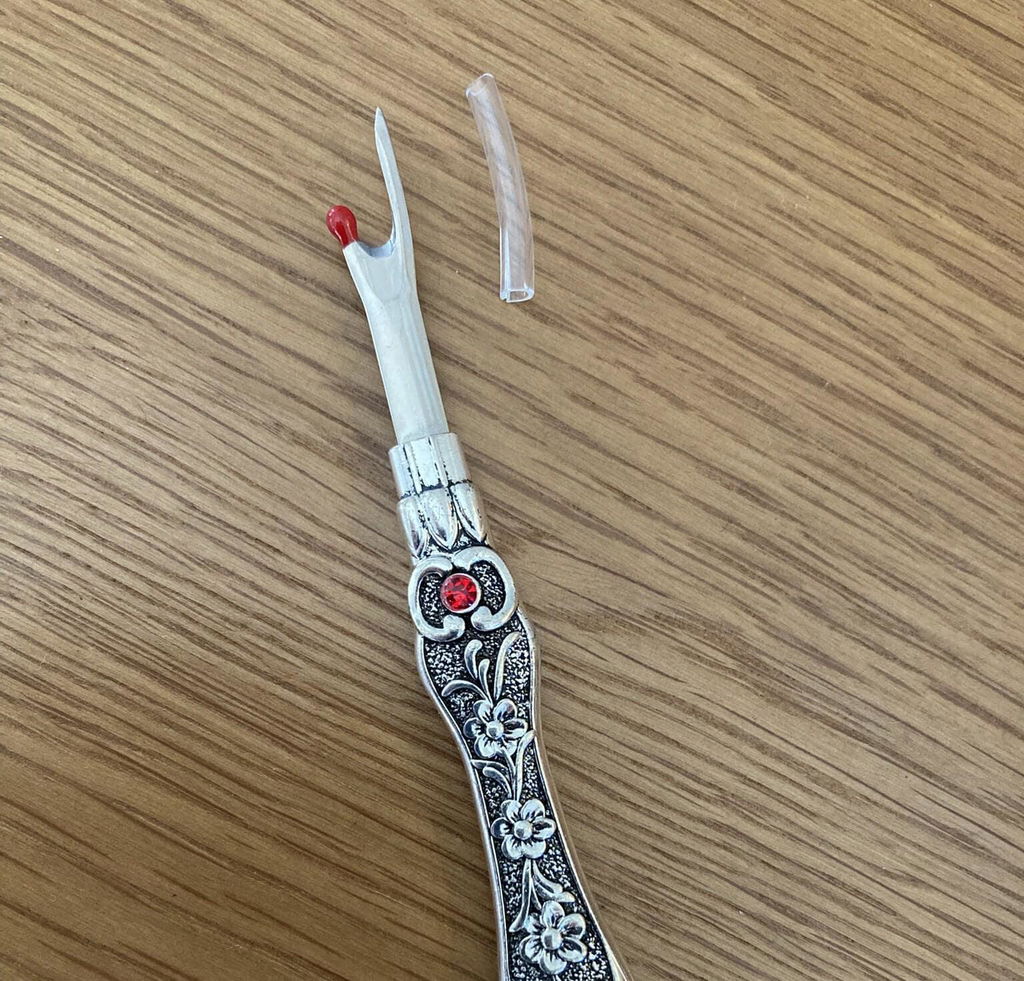
Beautiful, came in cute little box.
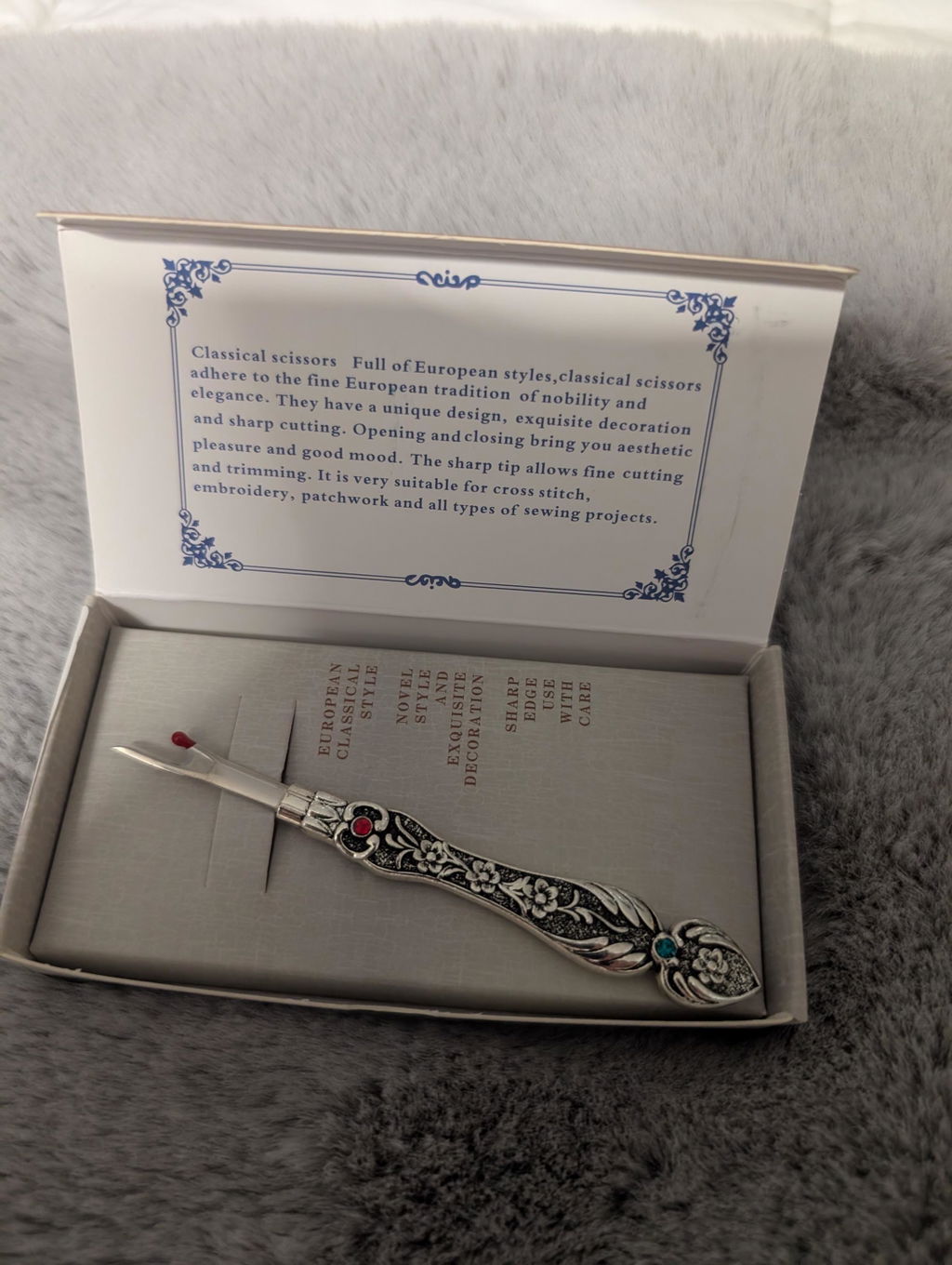
Happy bunny, absolutely love the unpicker. It's a good weight and looks amazing, the website photos don't do them justice.
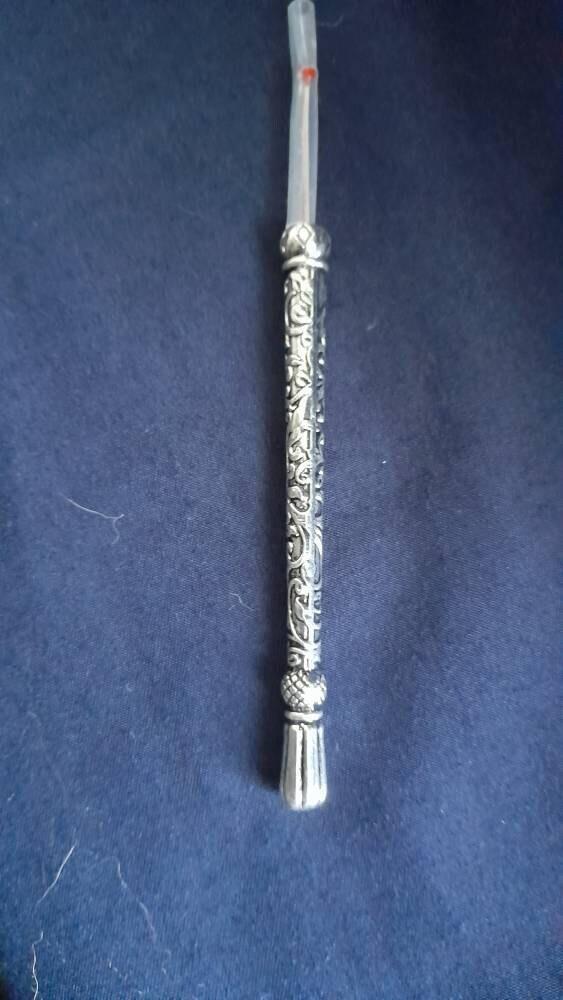
The item is a nice weight, and it feels good in the hand. Design is lovely. Dispatch was fast, and the packaging was excellent.
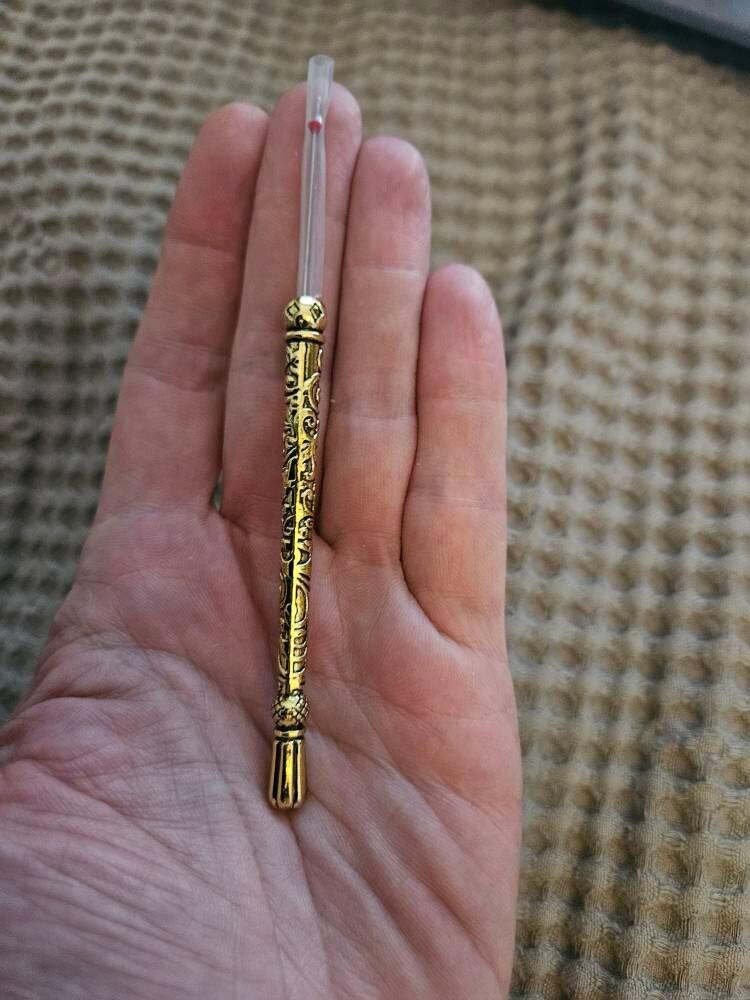
The item is a lovely weight. The design is beautiful. The dispatch was quick, and the packaging was excellent.
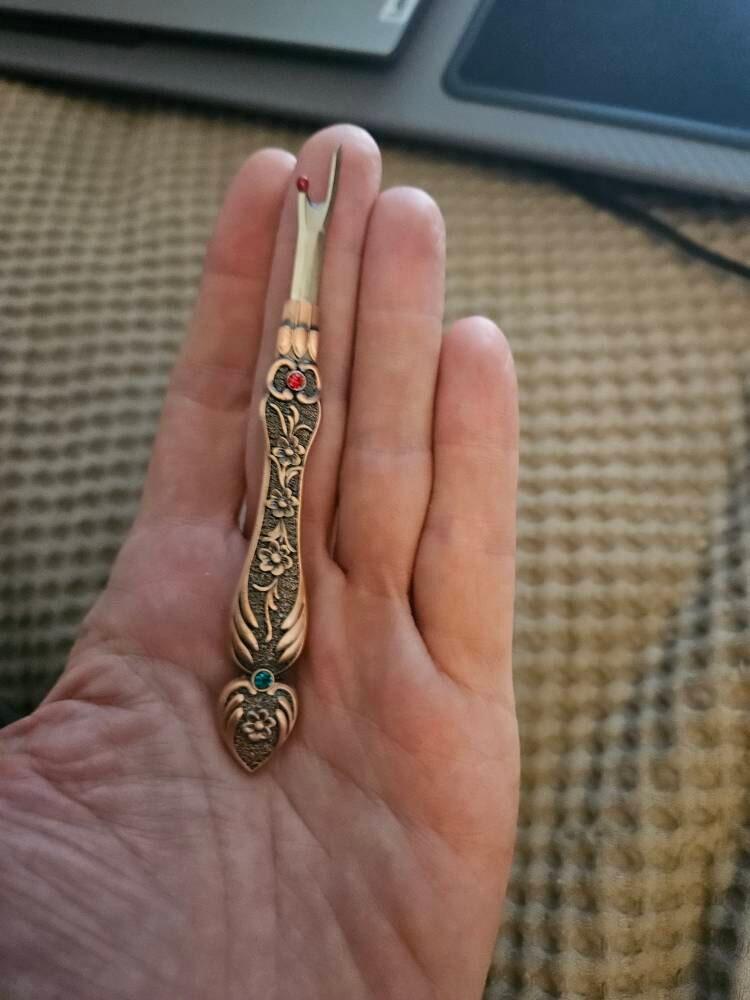
Item was just as shown and delivered as expected. Love it.
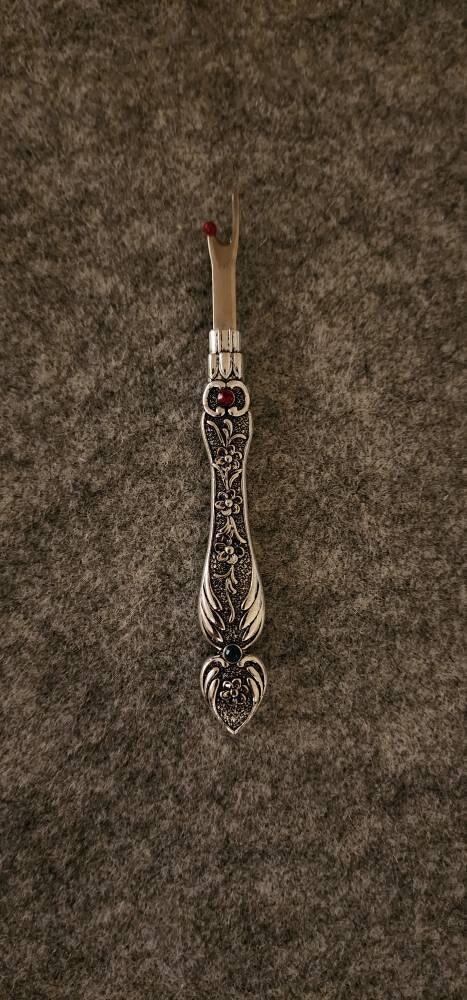
Beautiful. Bought as a gift and really pleased with how it looks.
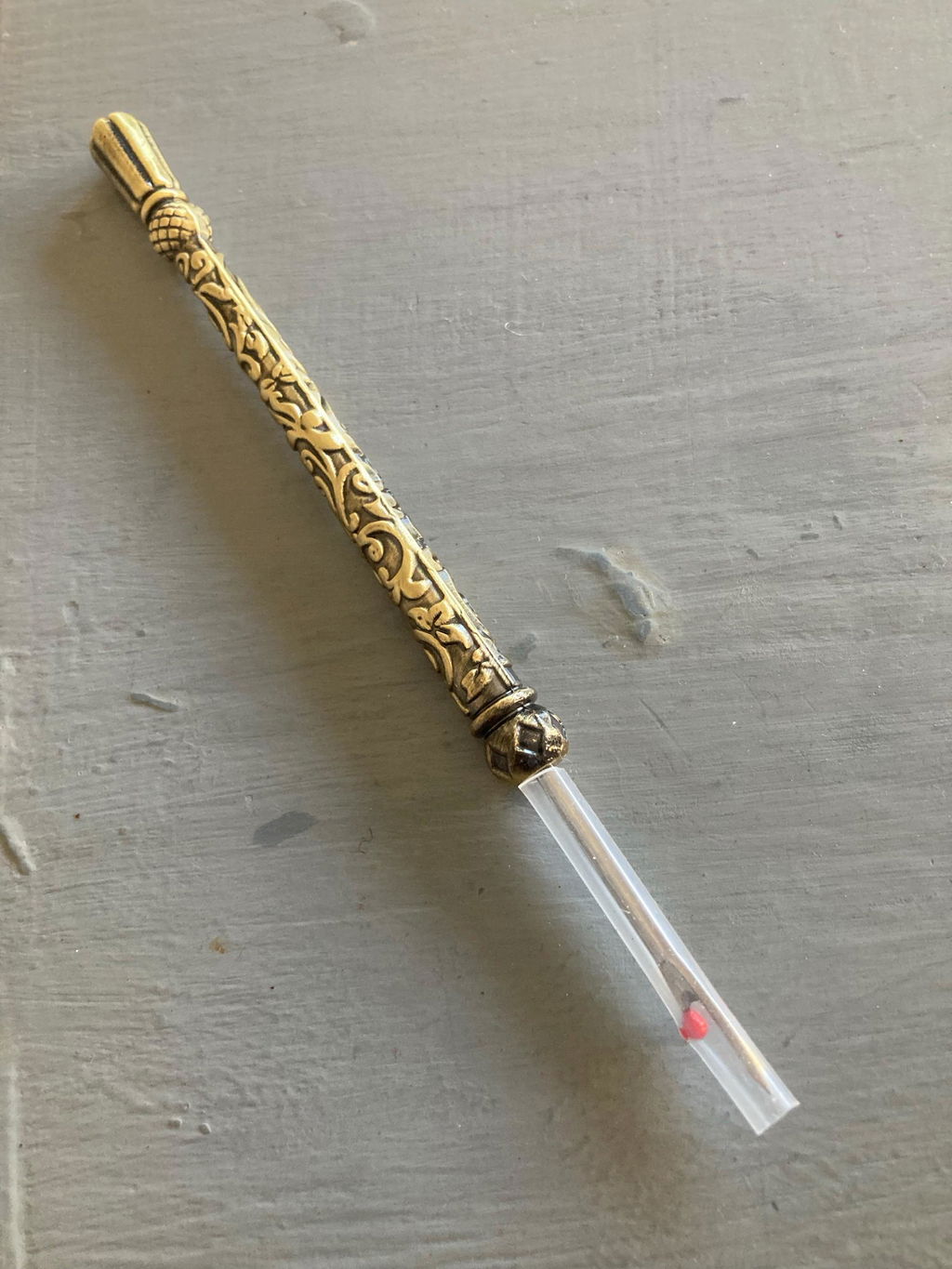
Beautiful and nice to use
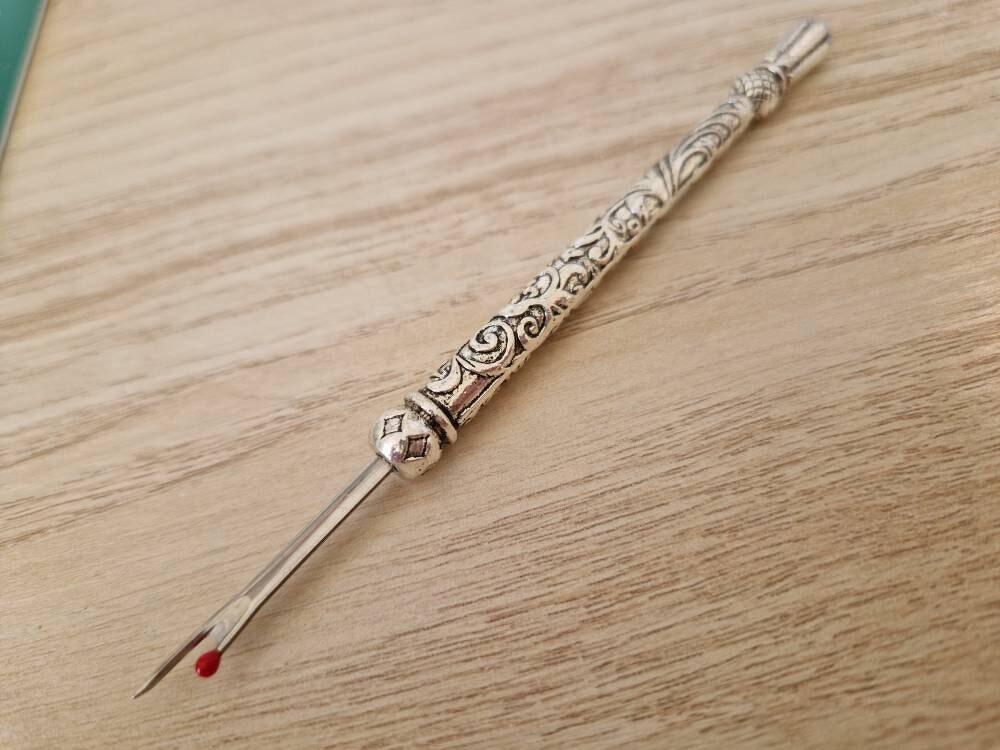
Nice gift for my mom who likes to sew. Pretty piece.
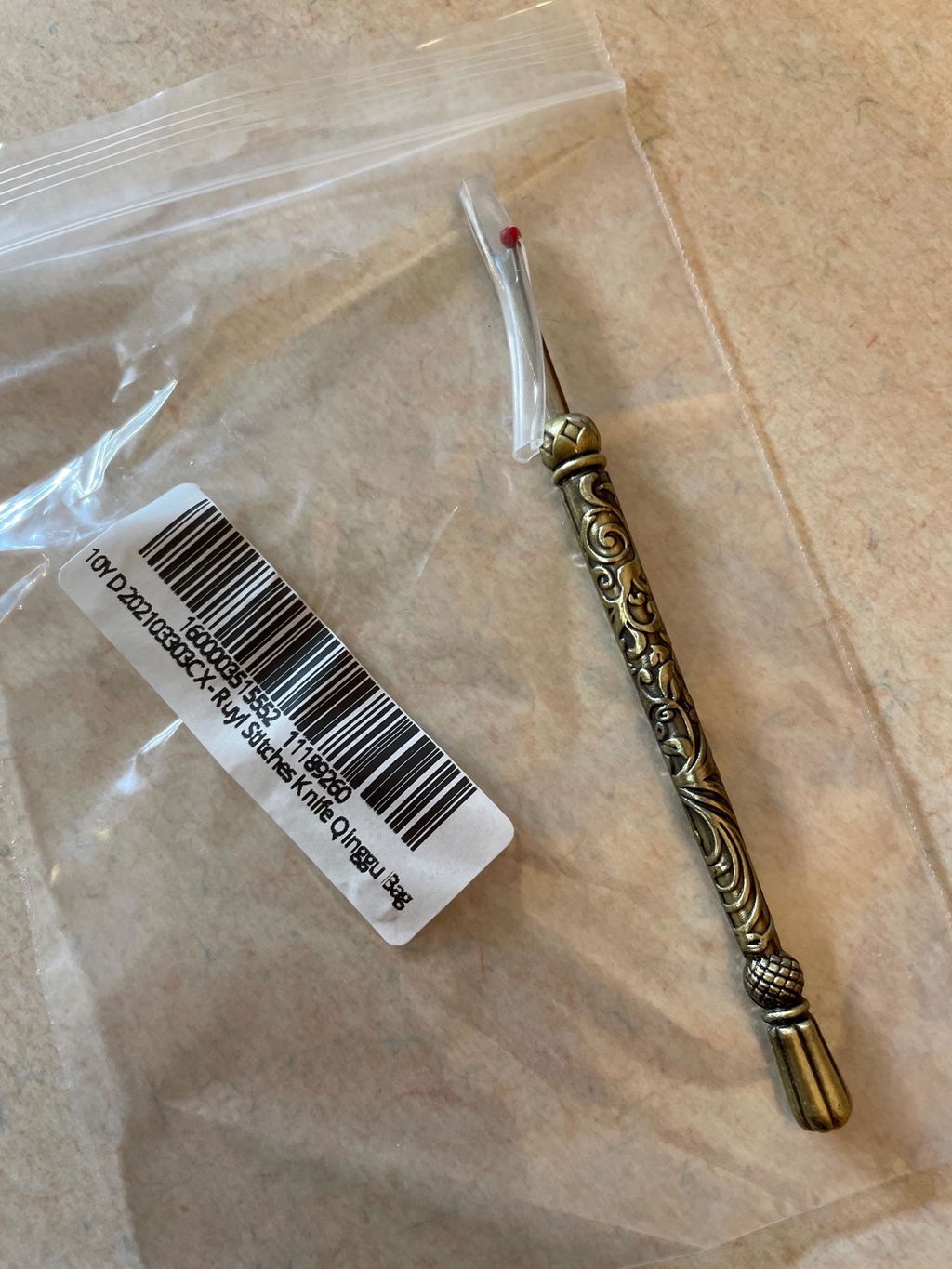
Absolutely beautiful and well crafted and a delight to use
Beautiful and exactly what I expected.
The quality of the item
So nice to have some things substantial instead of a plastic seam ripper. An added pleasure that it’s beautiful to look at as well.
customer service was excellent and the products are of high quality
It came so quickly and it's beautiful and made just as described!
This works very well and is so very cool looking. I only wish it had a metal cap to cover and protect it better. That said,it's a very worthy seam ripper.