


Vintage Style Metal Sewing Thimble — 3 Designs, 4 Antique Finishes
Vintage Style Metal Sewing Thimble — 3 Designs, 4 Antique Finishes
Limited Availability!
Trusted by Crafters Worldwide ✔
Couldn't load pickup availability
Estimated delivery -
—
- Fast Shipping
- 100% Guarantee
- Secure Checkout
GUARANTEE - 45-Day Money Back Guarantee
GUARANTEE - 45-Day Money Back Guarantee
100% Risk Free 45 Day Money Back Guarantee. If something is wrong with your order, you can contact our helpful customer support team to get a refund.
SHIPPING - 5–12 Business Days (Tracked)
SHIPPING - 5–12 Business Days (Tracked)
Please allow 5 to 12 business days for delivery, however, you may receive your items much earlier. All orders are shipped with tracking numbers so you can track them every step of the way! You will receive an email with tracking number once the order is shipped.
SECURE CHECKOUT - 100% Encrypted
SECURE CHECKOUT - 100% Encrypted
Safe payments via Stripe® and PayPal. We use encrypted SSL security for 100% protection.
SUPPORT - Fast & Friendly
SUPPORT - Fast & Friendly
We have 24/7/365 Ticket system with Phone and Email Support. Please contact us if you need assistance.
There is a particular kind of small pleasure in reaching for a tool you actually like the look of. This is a working metal thimble that happens to be lovely — engraved all over, finished in antique gold, silver, bronze or copper, and small enough to disappear into a sewing box until you want it.
It does the job it is meant to do. The whole dome is covered in fine dimples, so the eye of the needle catches instead of skidding off, and you can push through denim, canvas or a quilt sandwich without your fingertip taking the punishment. After an hour of hand sewing that is the difference between carrying on and putting the work down.
And because it is new rather than genuinely antique, the dimples are crisp, the rim is smooth, the metal is not worn thin at the crown, and the size is the size — none of the quiet problems that come with buying a hundred-year-old thimble to sew with.
What you get
- One thimble in the design and finish you choose.
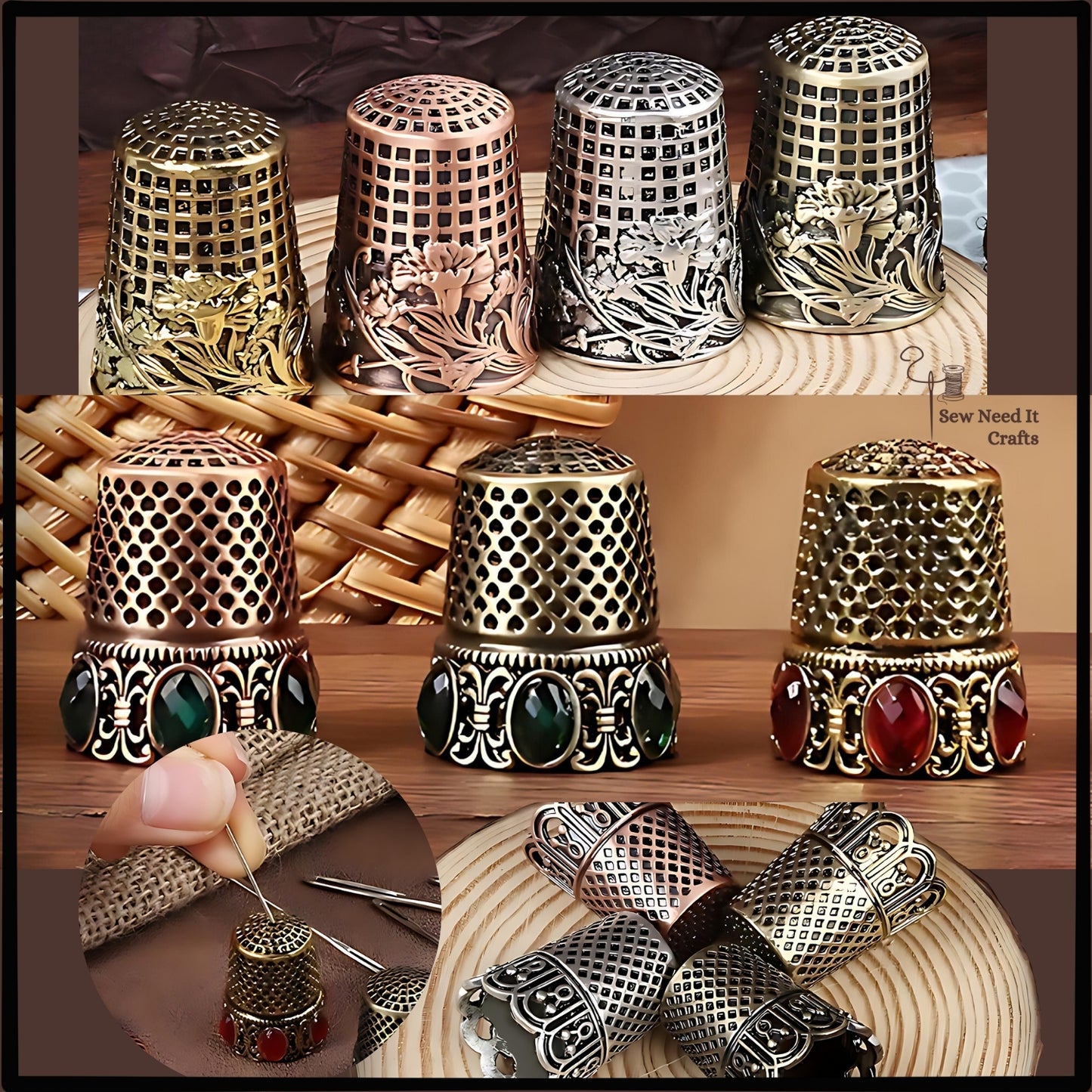
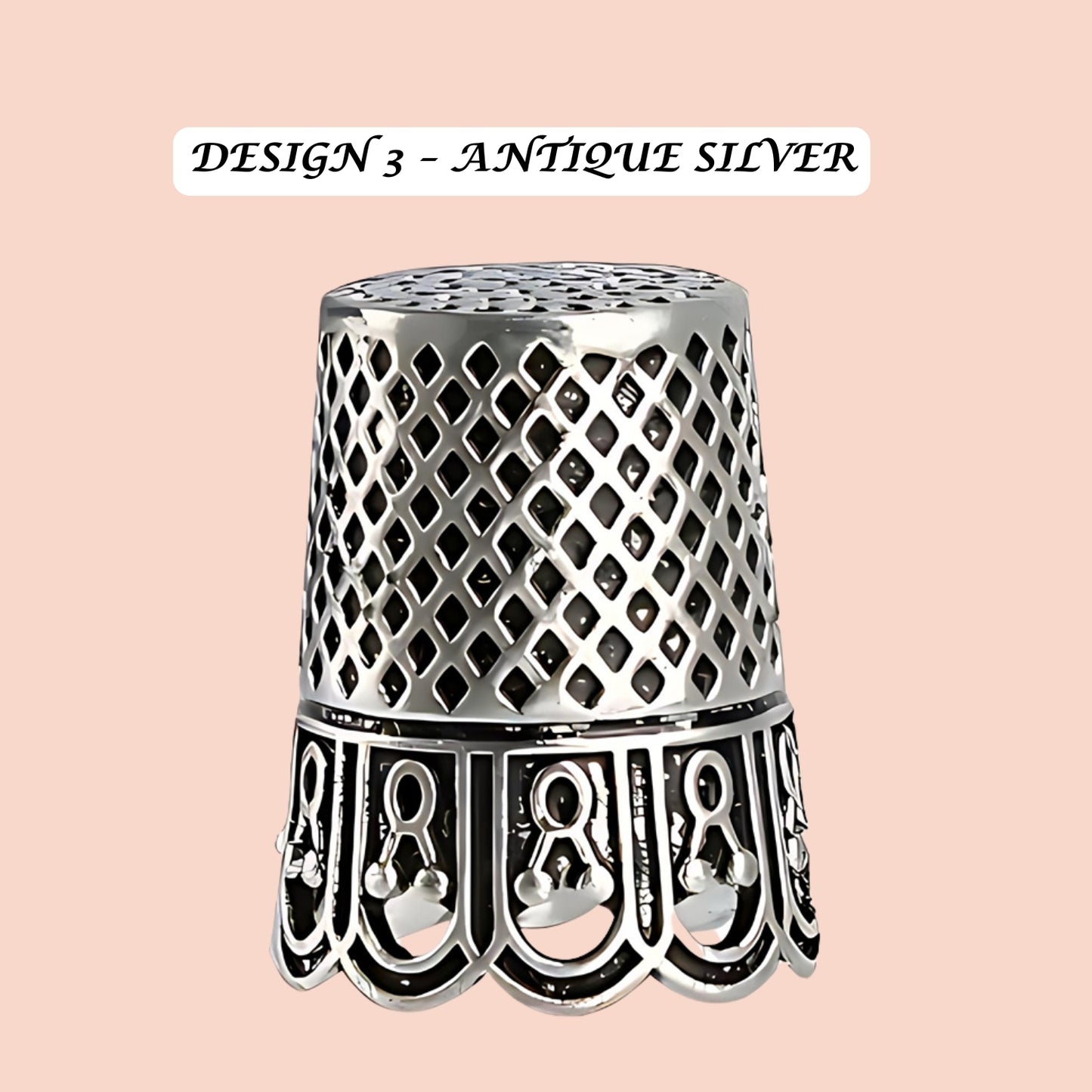
- Three designs: a stone-set band, a raised floral pattern, and a pierced openwork pattern.
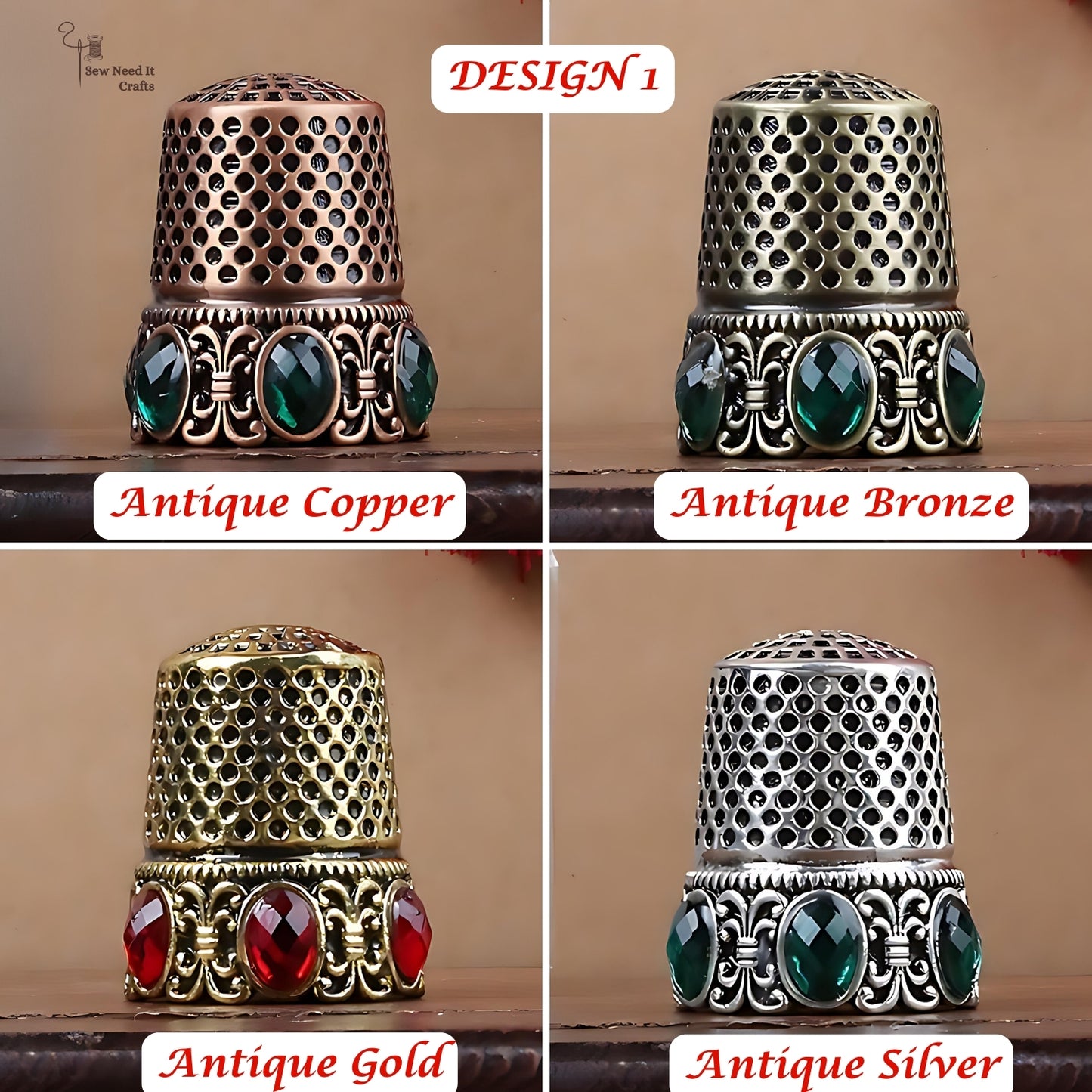
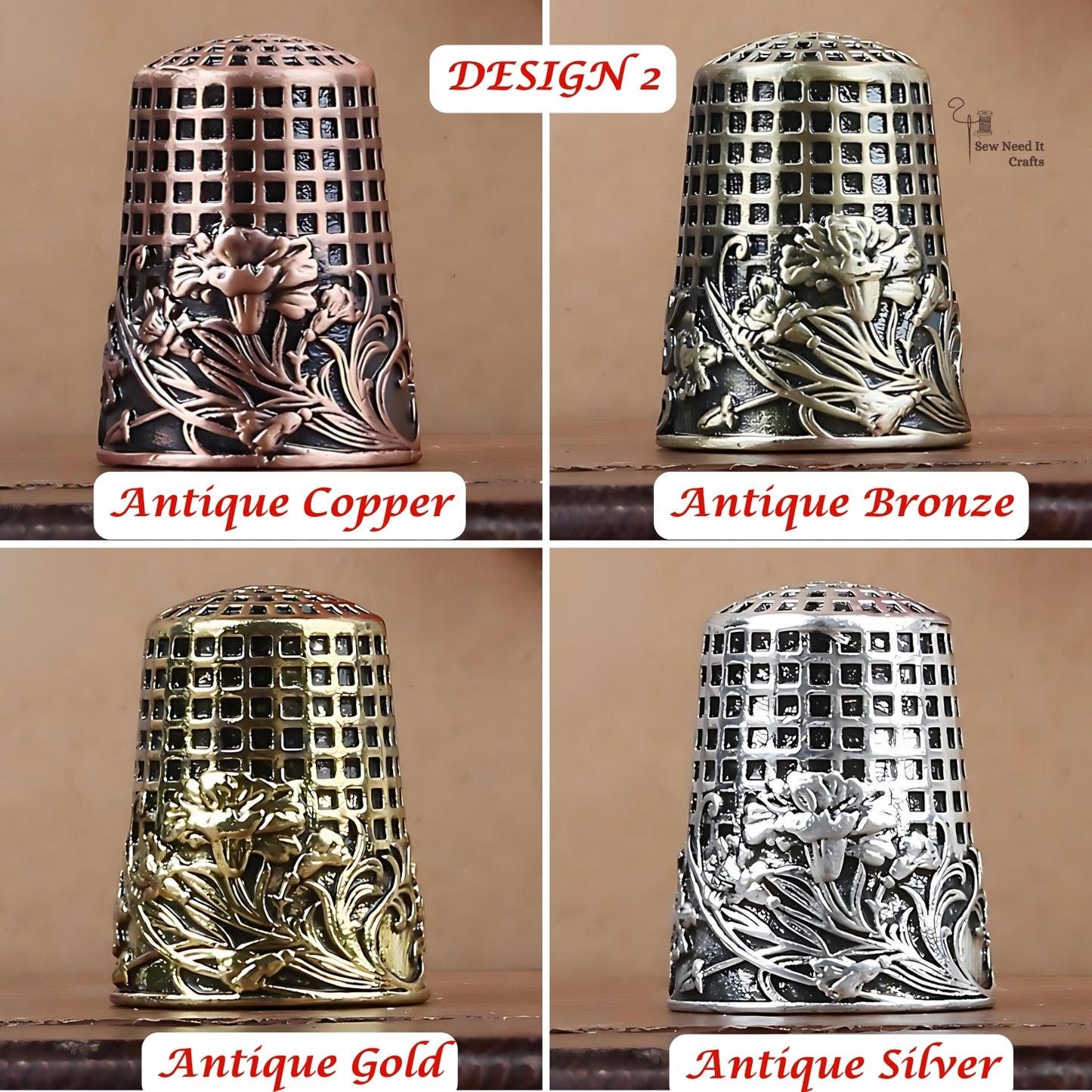
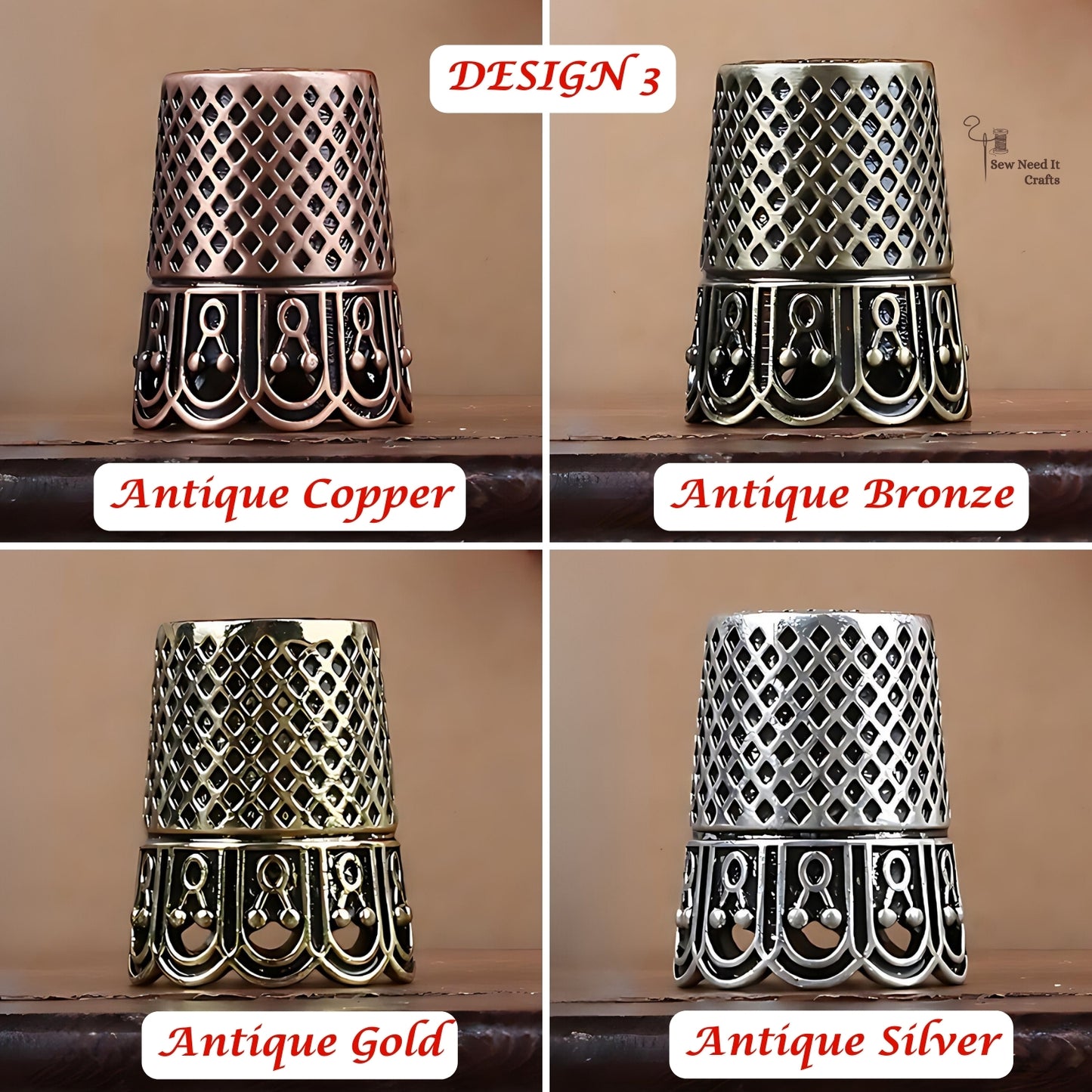
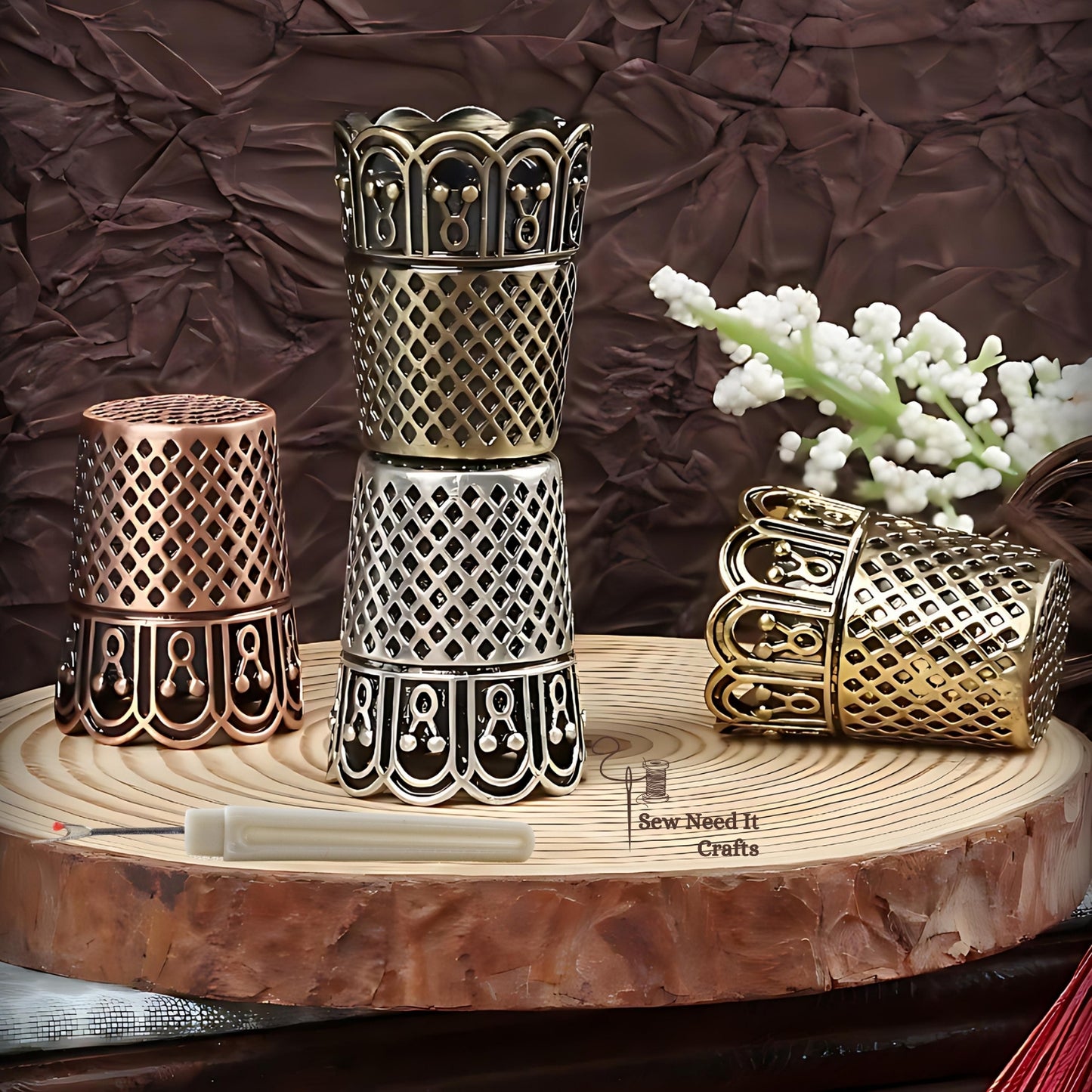
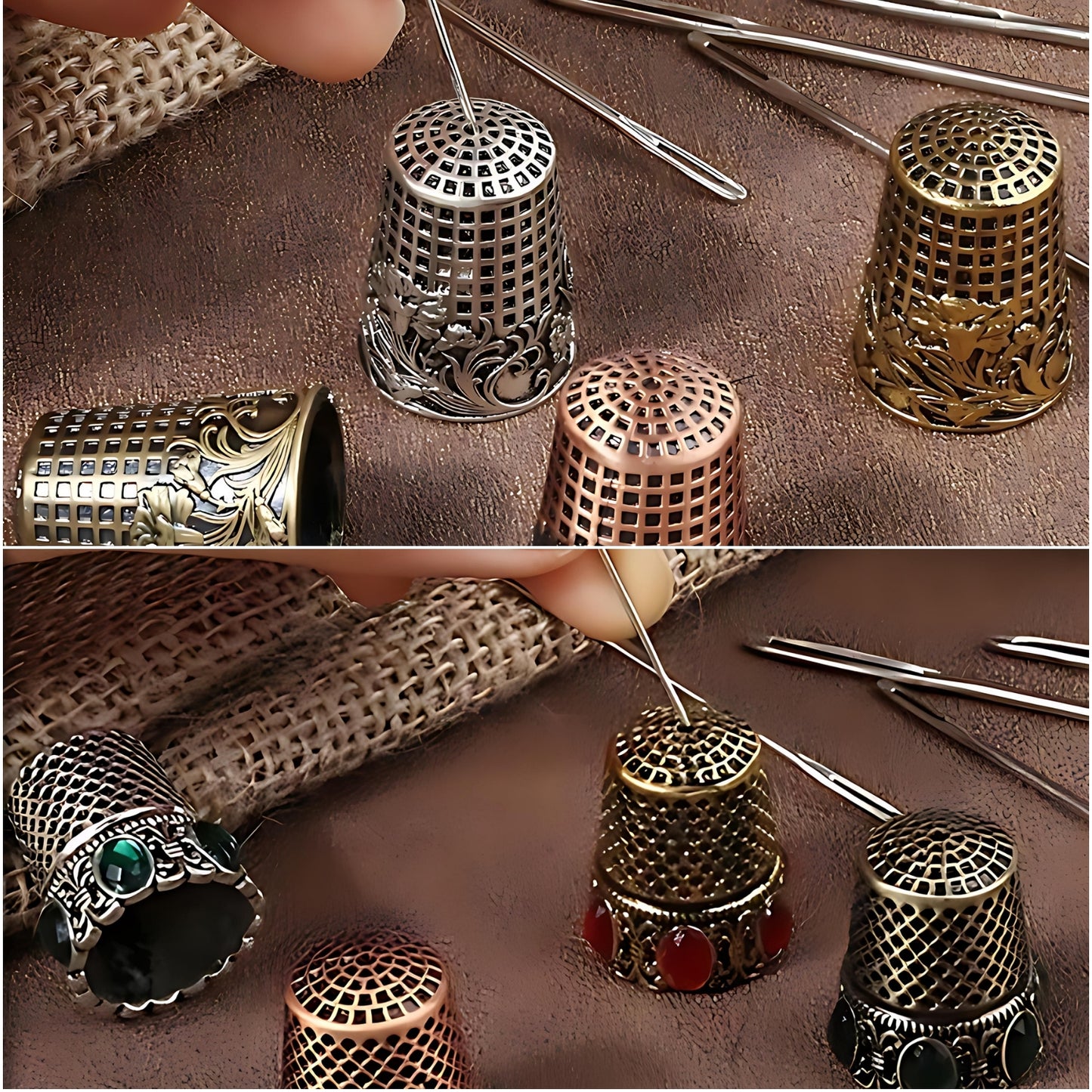
- Four antique finishes: antique gold, antique silver, antique bronze and antique copper.
- Twelve combinations in all — three designs across four finishes.
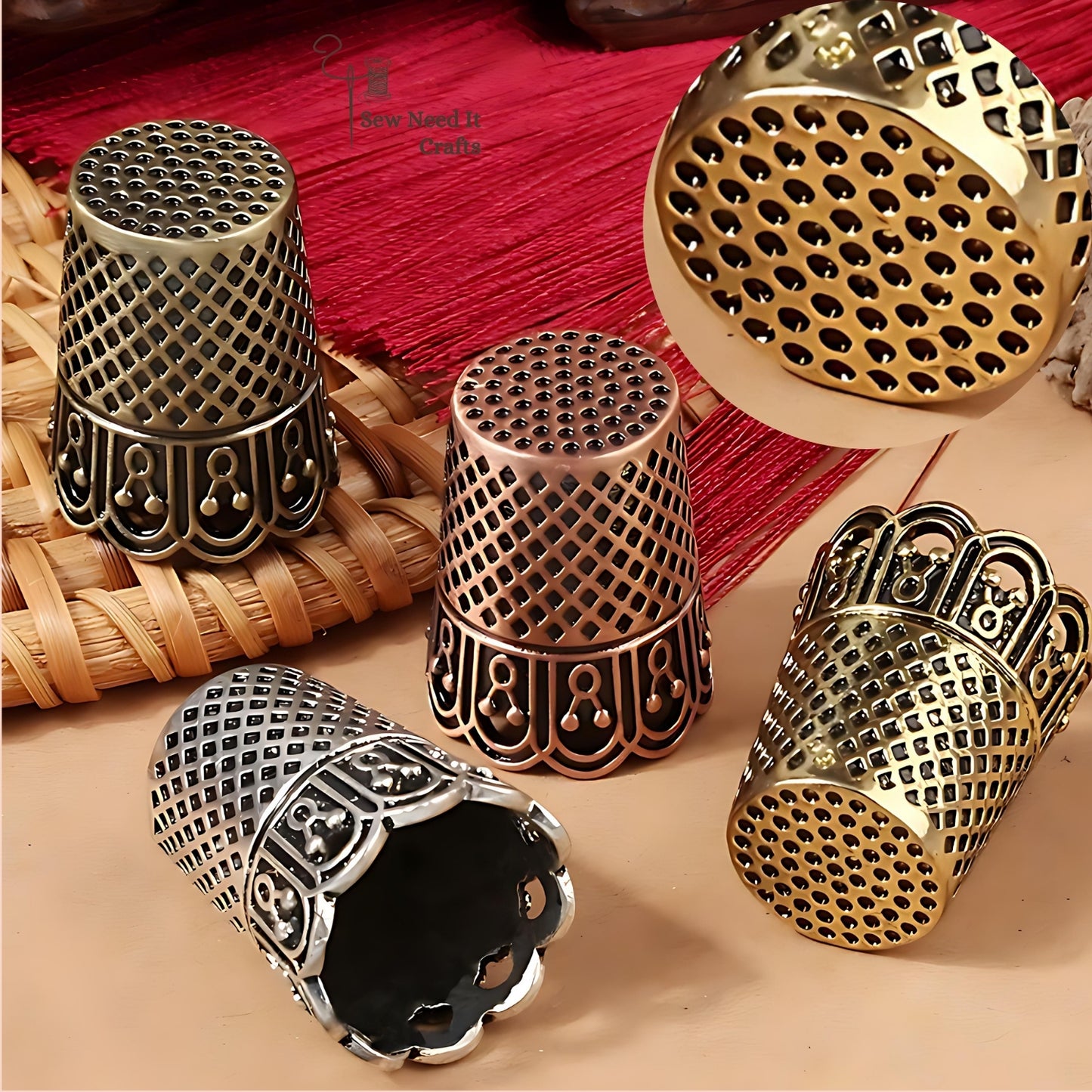
- Closed dimpled top, dimpled over the full dome and upper sides.
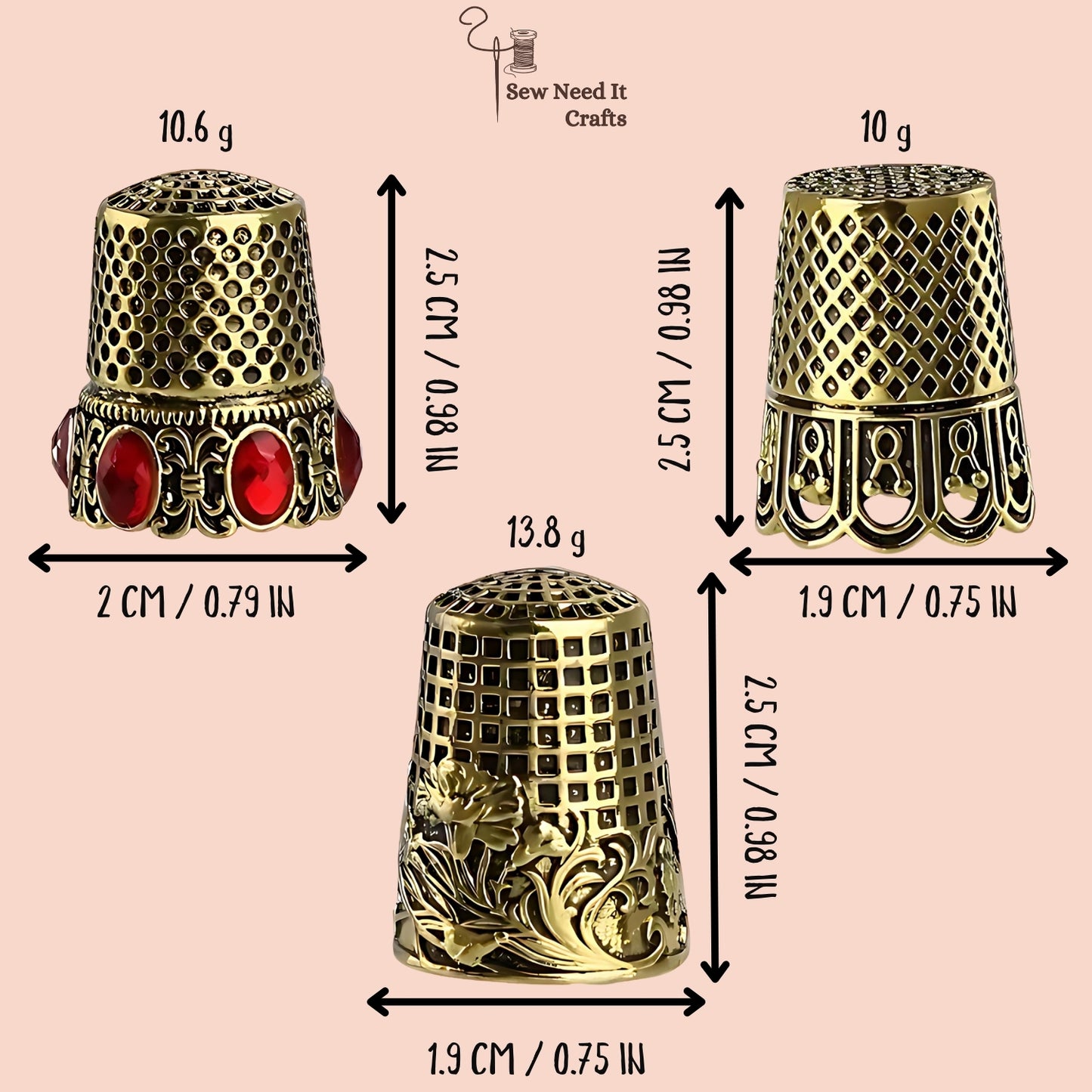
- Height 2.5 cm (0.98 in) on all three designs.
- Opening 2 cm (0.79 in) on the stone-set design, 1.9 cm (0.75 in) on the floral and openwork designs.
- Metal, with an antique-look plated finish.

The three designs
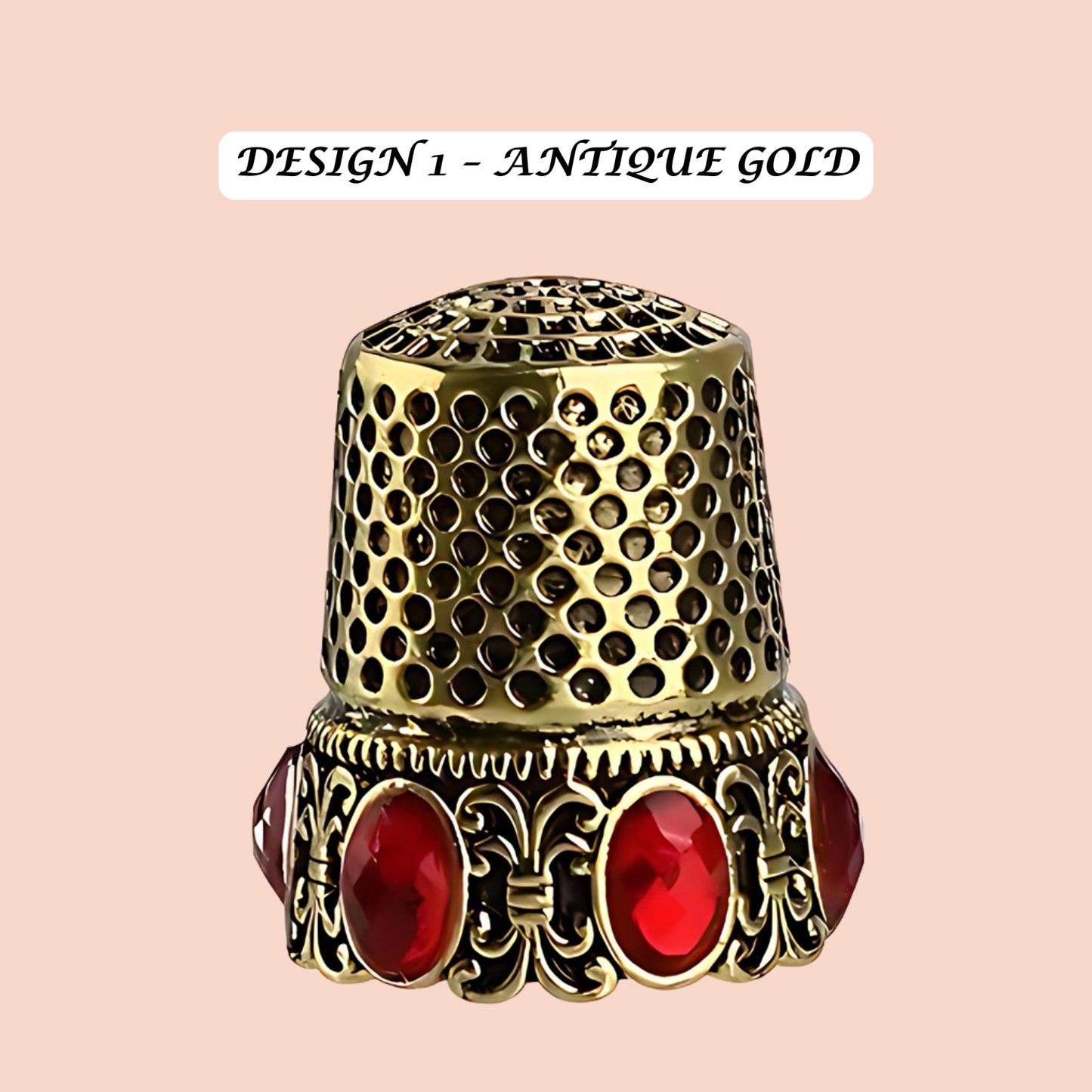
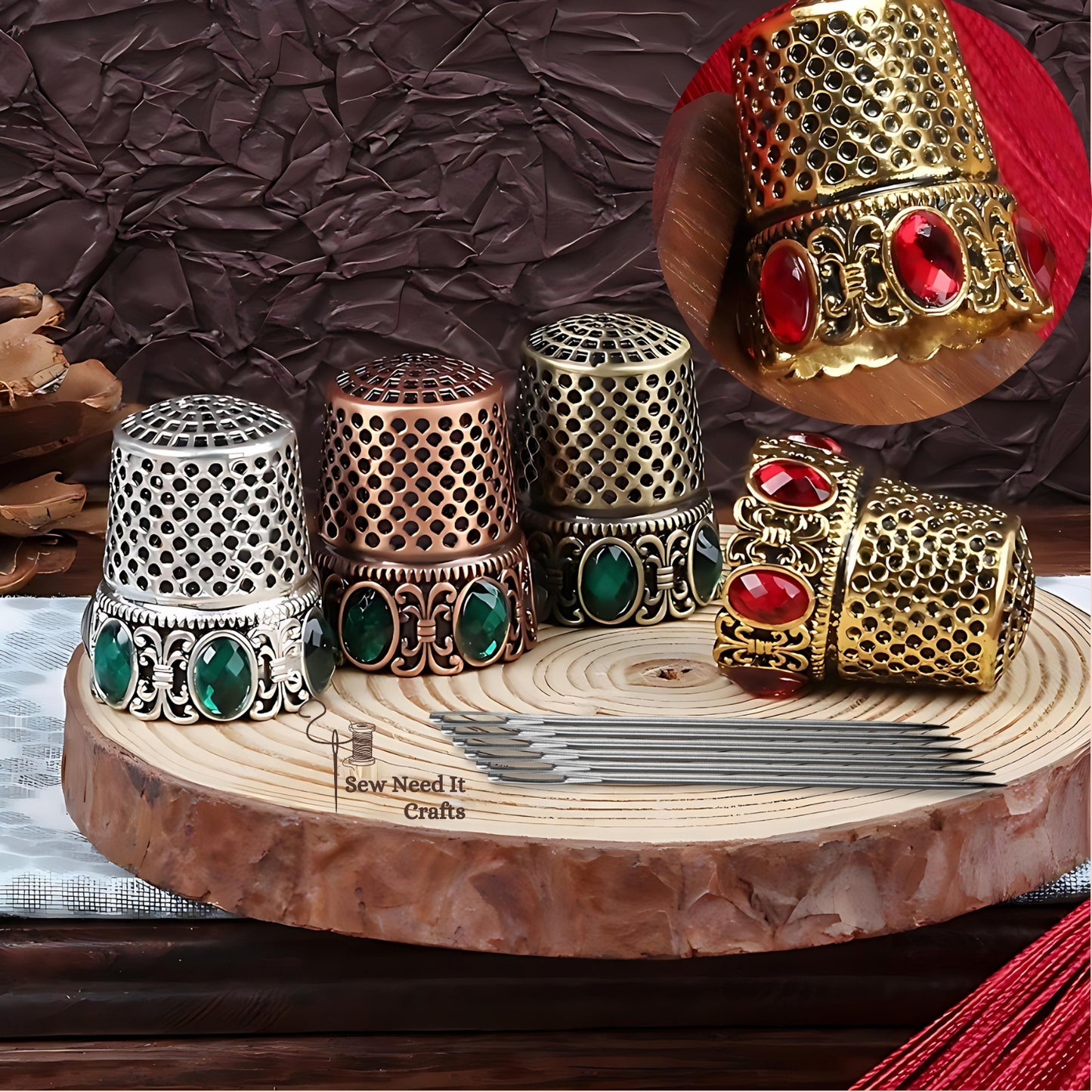
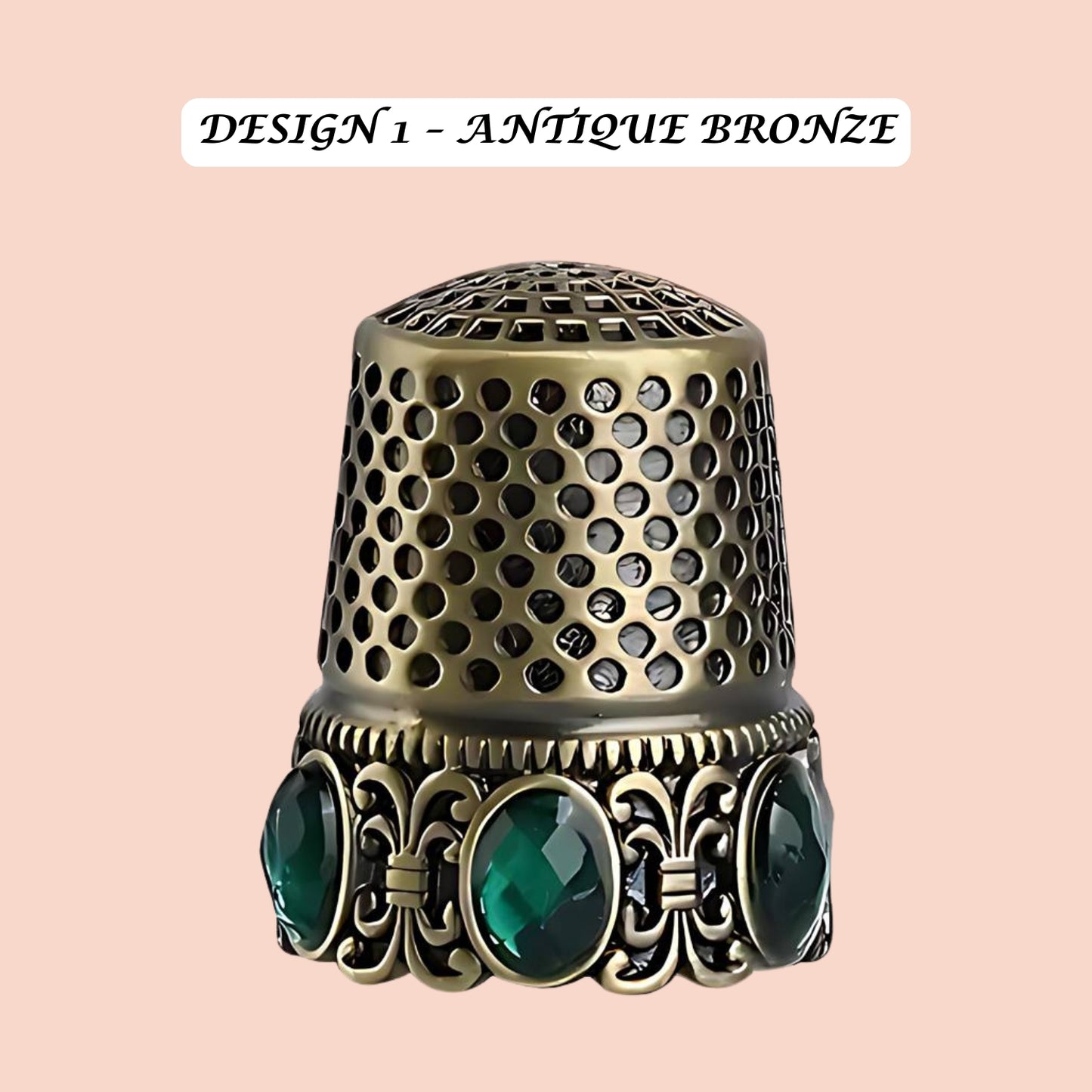
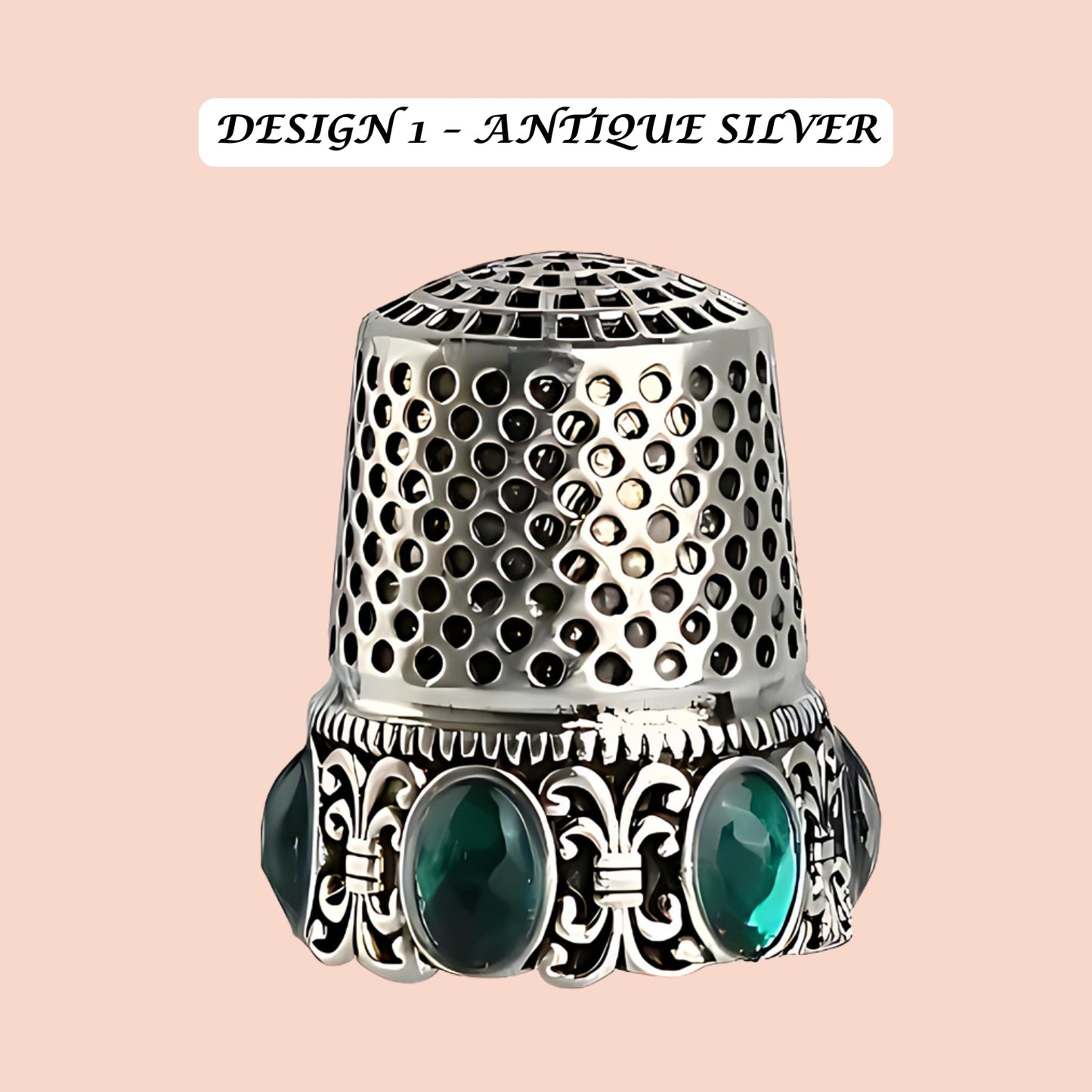
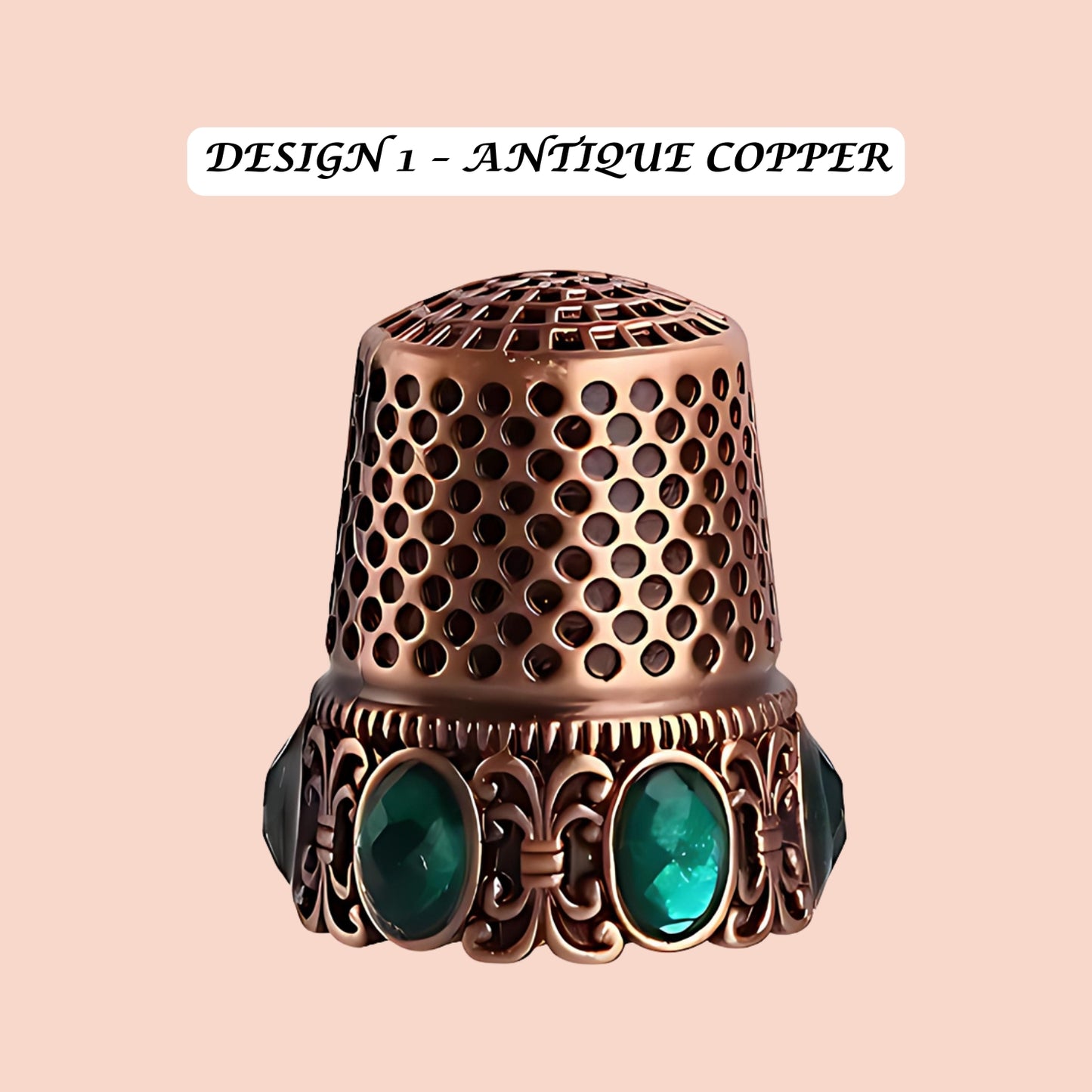
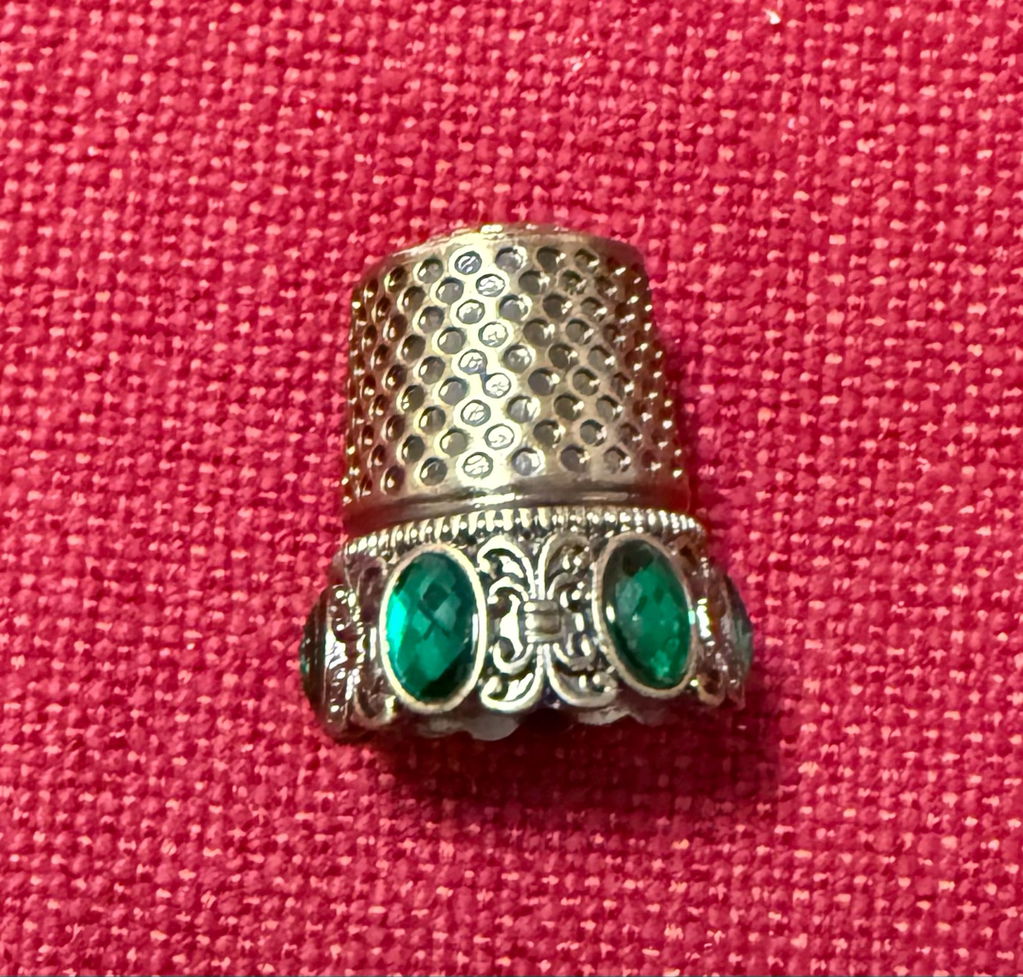
Stone-set. A band of oval coloured stones set into a scrolled surround around the base, below a fully dimpled dome. It is the most ornamental of the three and the one people tend to pick up first. The stones sit on the base band, not on the working surface, so the dimpled area you actually push with is untouched by the decoration.
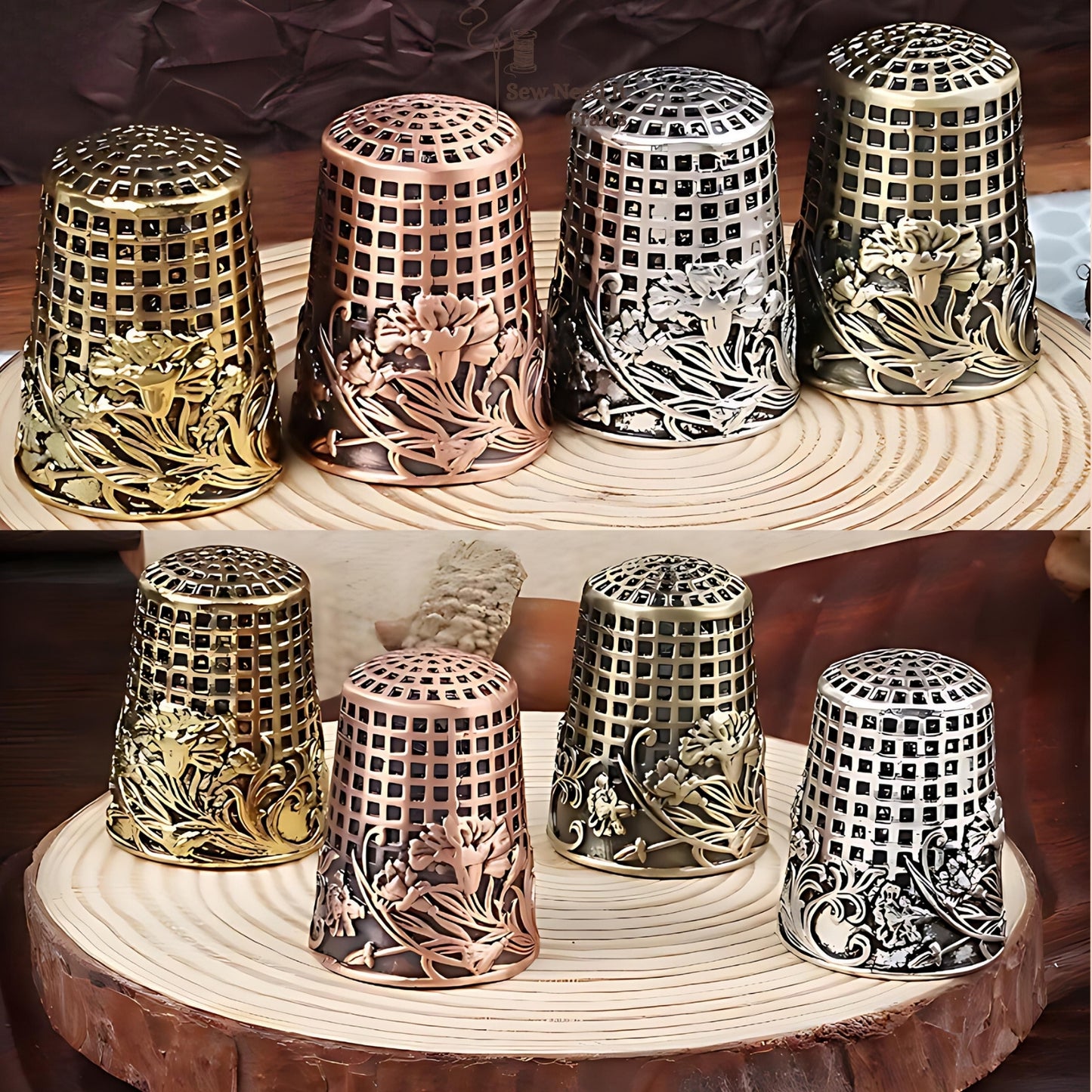
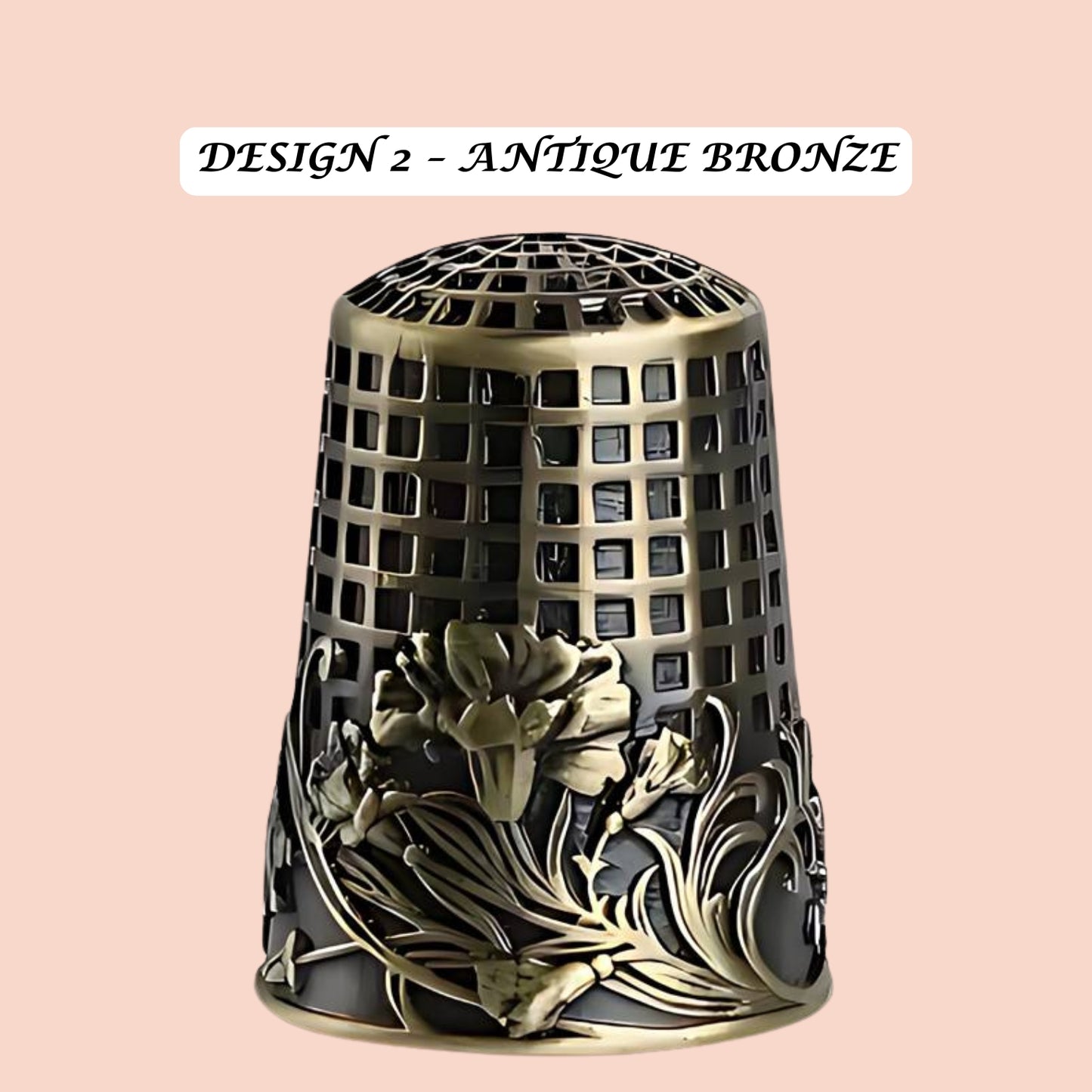
Floral. Raised flowers and foliage worked in relief around the lower half, with the dimpled dome above. The heaviest of the three in the hand, and the most traditional-looking.
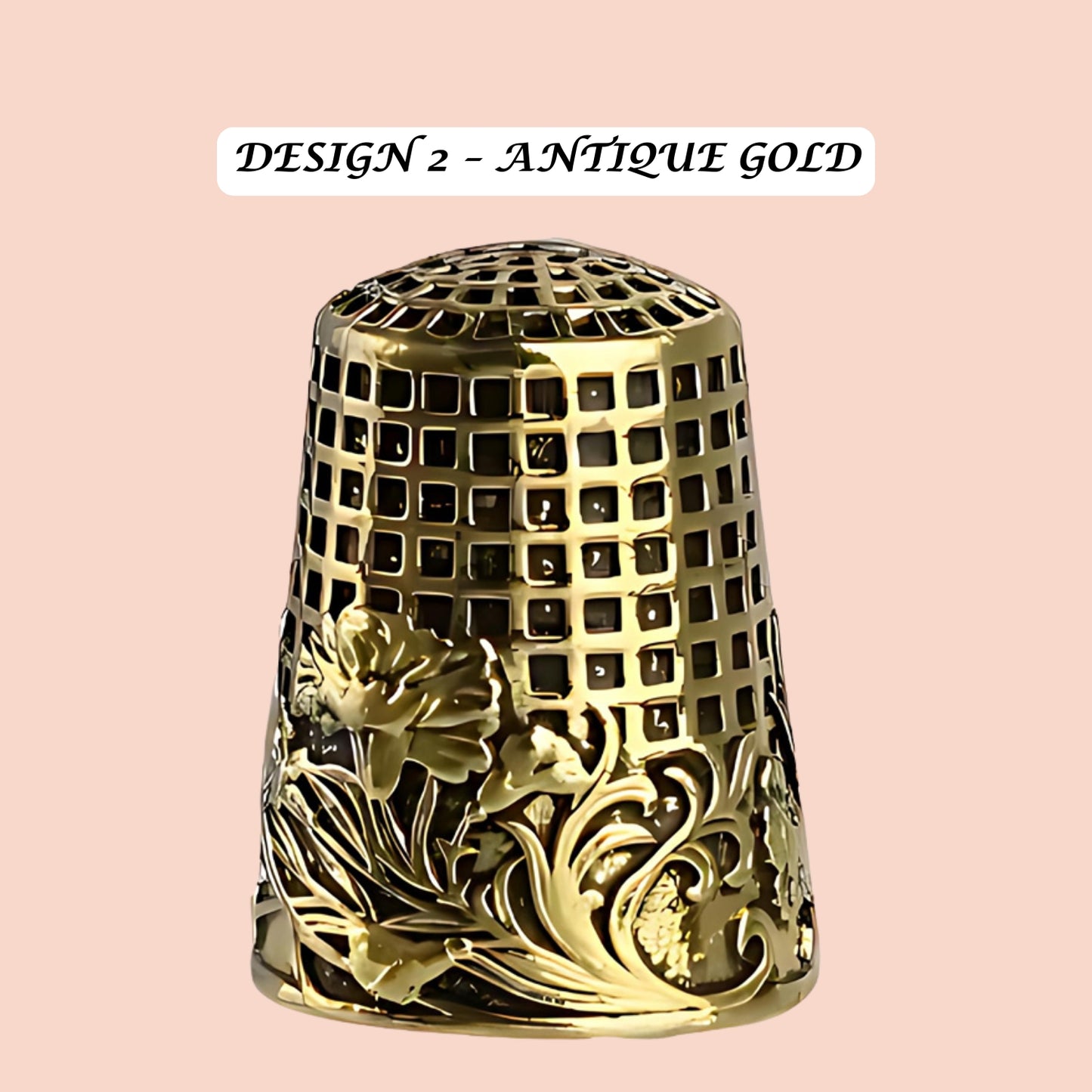
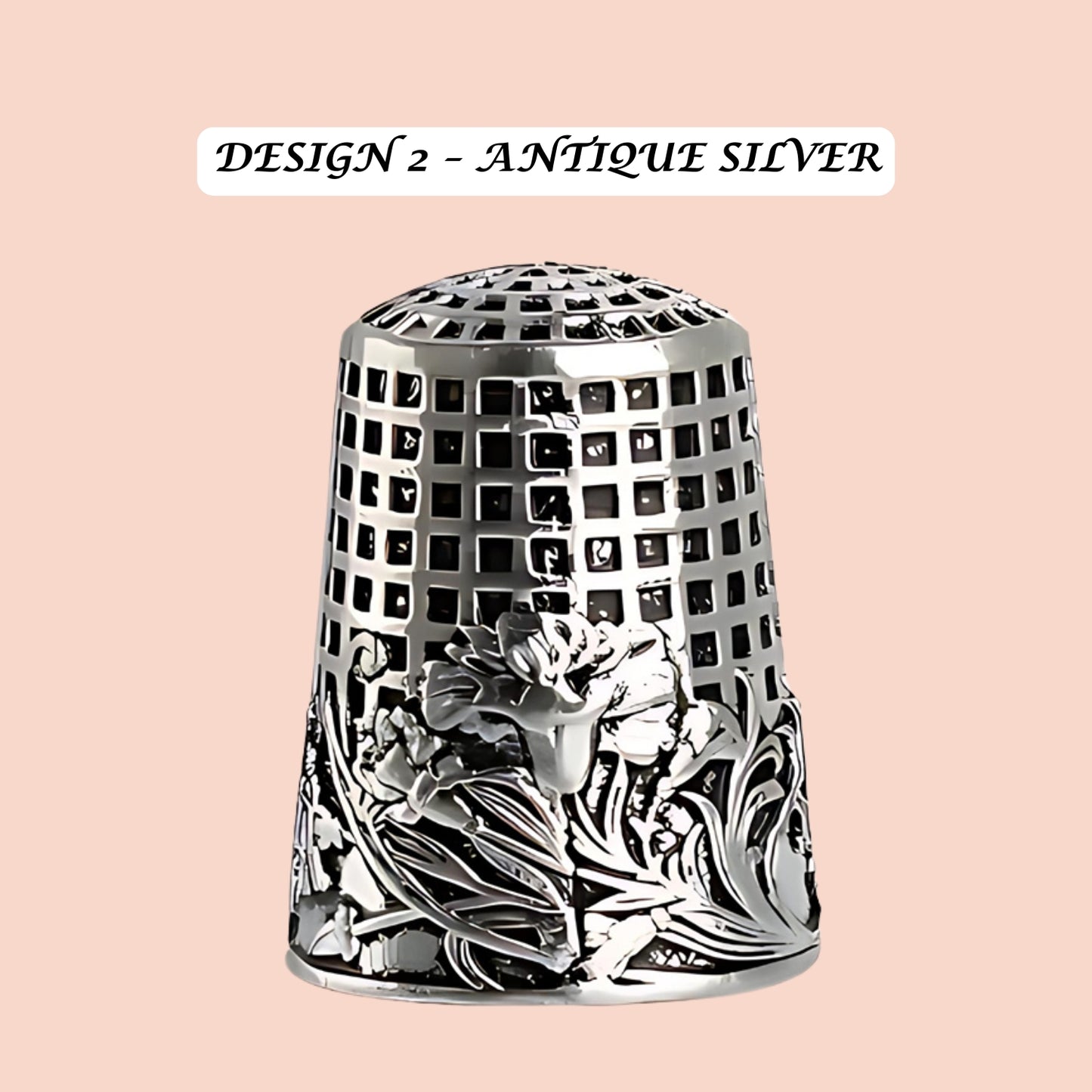
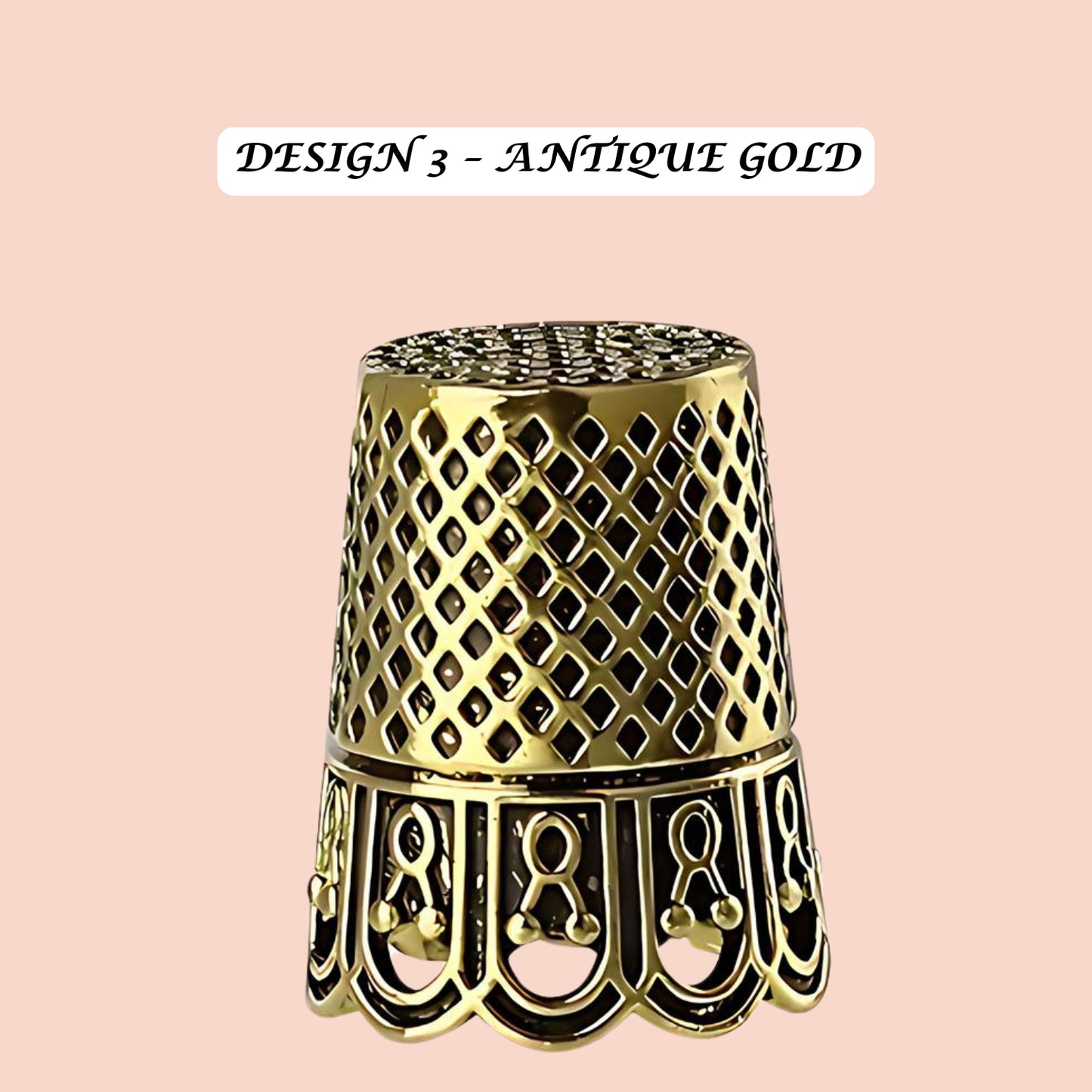
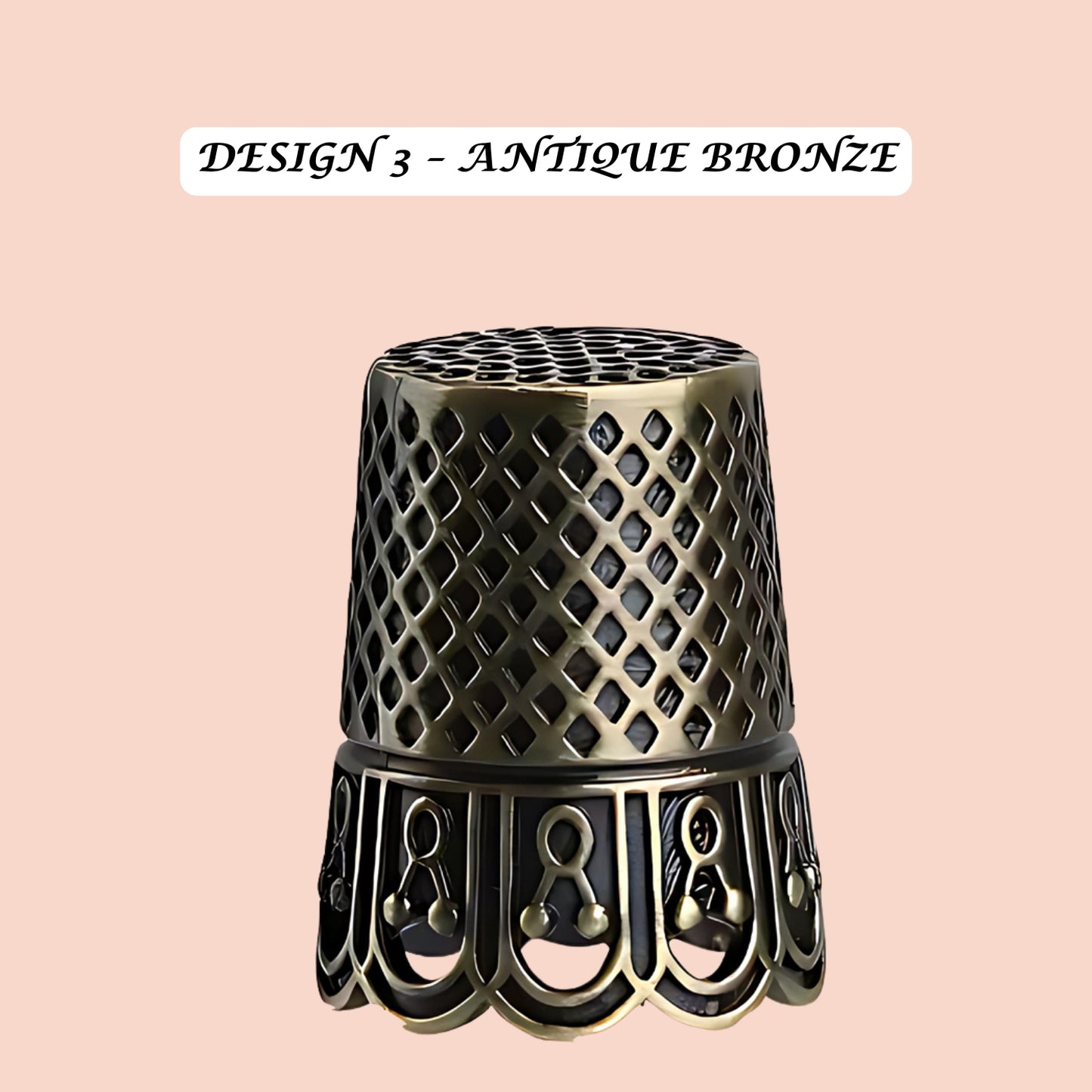
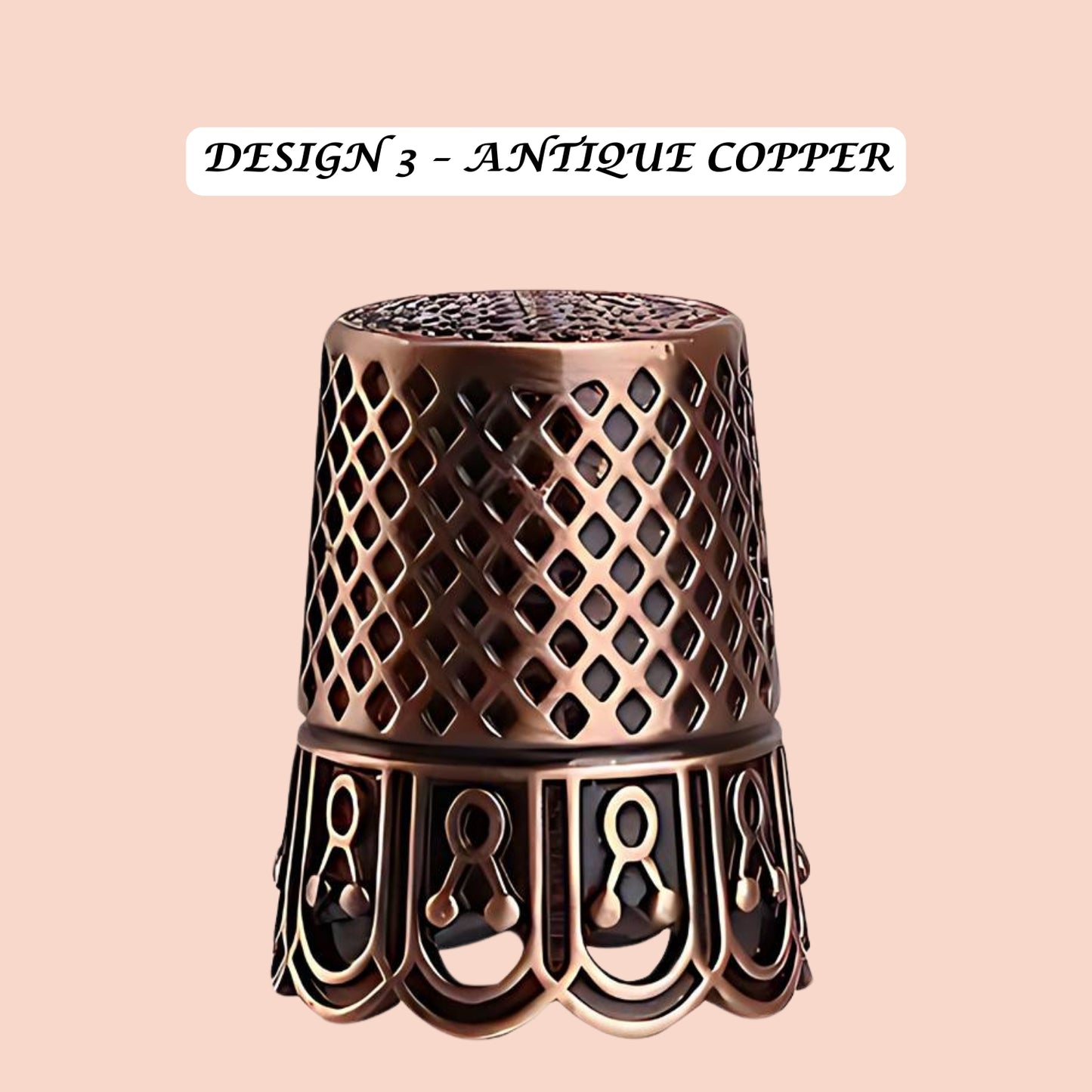
Openwork. A pierced band of arches around the base with a fine lattice above — the most delicate-looking of the three, and the lightest.
Will it fit?
This is the question worth answering before anything else, because a thimble that does not fit is a thimble that stays in the drawer.
Measure across the widest part of your fingertip, near the nail rather than down at the knuckle. If that measurement is close to 2 cm (0.79 in), the stone-set design will suit you. If it is closer to 1.9 cm (0.75 in), the floral and openwork designs will. All three stand 2.5 cm (0.98 in) tall.
A thimble that fits should slide on with gentle pressure, stay put if you point your finger down and shake lightly, and still be comfortable ten minutes later. If it pinches after a few minutes it is too small, whatever the tape measure says.

How to use it
Wear it on the middle finger of whichever hand pushes the needle — that is where most hand sewers and quilters end up, though some prefer the ring finger depending on how they hold the work.
Set the eye end of the needle against the dimpled dome and push from there. The dimples are what stop the needle sliding sideways off the metal, which is the whole point of a dimpled thimble rather than a smooth one. Once you have the habit it is faster than sewing without.

How this compares
Against a plain nickel-plated multipack. Those come ten or twenty to a bag, in one shape, and they work perfectly well. What they do not do is make you want to pick them up. If the thimble is going to live on your sewing table, being nice to look at is a real feature rather than a frivolous one — and this one still has the dimpling to work with.
Against a genuine antique thimble. Old thimbles are wonderful objects, but the ones that have actually been sewn with are often thin at the crown, sometimes split, and their dimples are worn shallow. Sizing on antique thimbles is also inconsistent and rarely stated. This is a new thimble made in the old style, so you get the look without the wear, and a measurement you can check against your own finger before you buy.
Against a soft or adhesive thimble. Stick-on pads and rubber thimbles are gentler to get used to, and some people much prefer them. A metal thimble gives you more push behind the needle and lasts indefinitely, which is why it is still the standard for quilting through several layers.
Materials and care
Metal with an antique-look plated finish. Keep it dry and give it an occasional wipe with a soft cloth. Avoid abrasive cleaners and metal polish — the antiqued look comes from the darker tone sitting down in the engraving, and polishing will lift it out and leave the piece looking flat.
Stored dry in a sewing box it will outlast most of the rest of the kit.

Questions we get asked
What finger are you supposed to wear a thimble on?
The middle finger of the hand holding the needle, most of the time. That is the finger most people naturally push with. Some quilters prefer the ring finger, and if that is how your hand sits, use that instead — there is no wrong answer as long as the thimble is on the finger doing the pushing.
How do I know what size thimble to get?
Measure across your fingertip at its widest point. The stone-set design has a 2 cm (0.79 in) opening; the floral and openwork designs have a 1.9 cm (0.75 in) opening. Both stand 2.5 cm (0.98 in) tall. Comparing those two numbers against your own finger is more reliable than a small-medium-large label, which means something different from every maker.
Why should you wear a thimble in sewing?
Because your fingertip is not built to push steel through layered fabric. A thimble spreads the pressure and gives the needle something firm to sit against, so you can work for longer, push through heavier cloth, and keep your stitches even once your hand stops flinching from the needle.
What does it mean when someone gives you a thimble?
Thimbles have a long history as small tokens of affection and friendship, and decorative ones were given as keepsakes well before they were collected. That history is part of why they still make such a good small gift for someone who sews — it is a useful object with a bit of sentiment attached.
Is this an antique?
No — and that is deliberate. This is a newly made thimble in the antique style, so the engraving is crisp, the dimples are sharp, the metal is at full thickness and the size is stated. If you are looking for a genuine period piece to collect rather than to sew with, this is not that.
Can I use it for quilting?
Yes. Quilting is where a closed-top dimpled metal thimble earns its keep, because you are pushing a short needle through several layers at once and the dimples stop it slipping. It works equally well for general hand sewing, mending and heavier fabrics like denim and canvas.
Pick the design you like the look of and the finish that suits the rest of your kit. It is a small thing, but it is the small things you reach for every time you sit down to sew.

Ils sont beaux et efficace!! L'illustration parfaite de l'expression "joindre l'utile à l'agréable"!
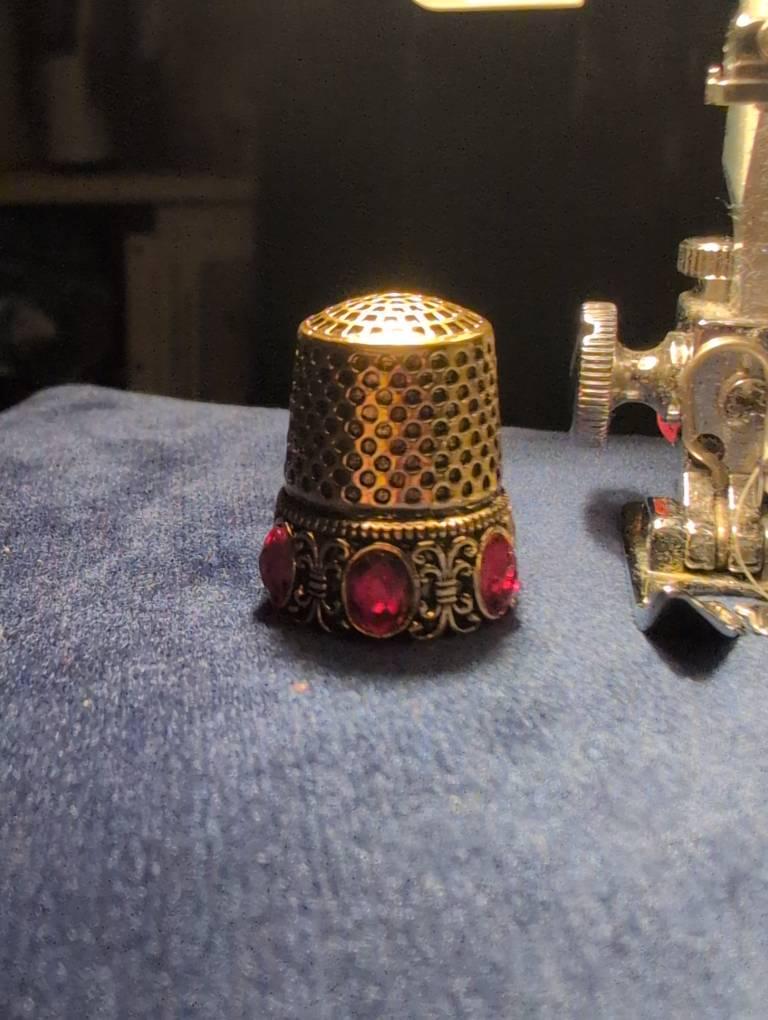
Love how detailed and well crafted this thimble is.
Arrived quickly but was packaged in such a way that makes it appear dropshipped. Very disappointing for the price.
Looks like the picture in the description
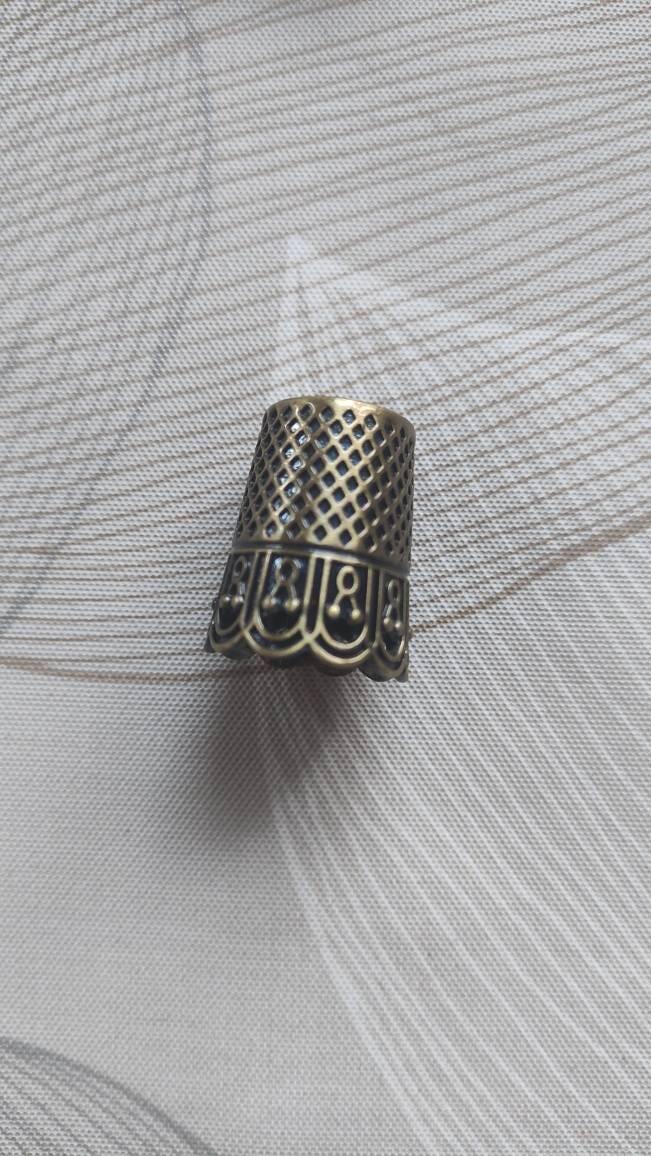
Very nice, I like it!
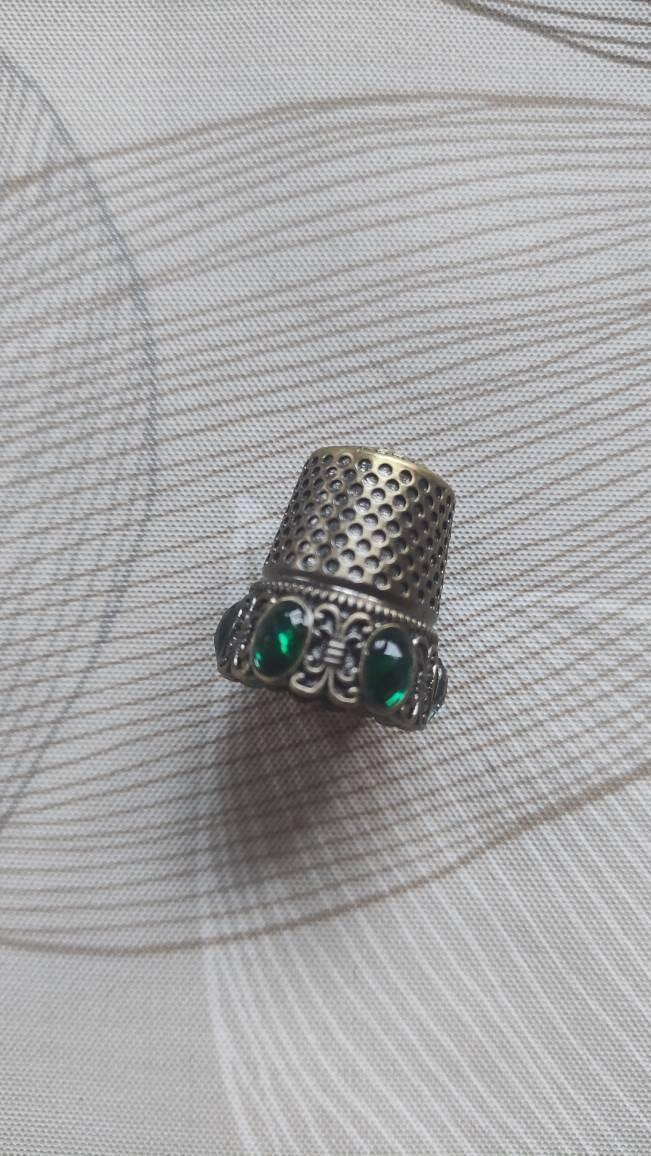
Beautiful thimble,love the design and color. Very beautiful and of course so useful. Was very carefully packaged and quickly shipped. Excellent experience!
It was the perfect gift
I thought I was getting two thimbles.
Love using this thimble for cross stitch.
This thimble is for a collection, and I'm very happy with it's sturdiness, colored metal, and colored stone. Thank you Debbie
Fits perfectly! Which I don’t always find thimbles that fit! It’s very pretty too!
Thimble is very nice as described.
I bought the silver thimble with the floral design…it is even prettier in person! I am going to be doing a lot of hand sewing on an upcoming project, so I’m looking forward to using it. Definitely recommend!
Very nice addition for large collection.
Working out fine just what I needed
Love this treasure! High quality, well crafted!
Love these thimbles! High quality materials and well crafted!!
Beautiful and great quality, plan to buy some more.
Very nice seller but for me this item doesn’t seem as nice as the pictures or price reflects, useable item.
Items arrived quickly and were so much better in person! Great craftsmanship and quality!
Very beautiful item. It will be a great gift
the thimble has a unique and beautiful design.
the thimbles are beautiful for my collection. it was a great find.
Love these thimbles for my collection.
Vintage Style Metal Sewing Thimble — 3 Designs, 4 Antique Finishes
Good quality and looks the same as photo A+
Brilliant item that is going to go well with some other decorative silver sewing items. Thank you :)
Product was as described, thimble is adjustable will take some getting used to to.
Really nice thimble thanks so much
Same as on the pictures. Fast delivery
It is beautiful, and fits well. I love it!
I love this symbol very nice now I won't have to worry about picking my finger anymore 😁