
-
Pinking Shears for Fabric — Zigzag or Scalloped Edge, 2mm to 18mm Tooth Sizes, 9.25 Inch
Prix régulier Depuis $13.97 USDPrix régulierPrix unitaire par$27.95 USDPrix de vente Depuis $13.97 USDVente -
Elegant Metal Engraved Dragonfly Design Retro Antique Vintage Style Sewing Scissors
Prix régulier $13.97 USDPrix régulierPrix unitaire par$27.95 USDPrix de vente $13.97 USDVente -
Ciseaux de broderie à plumes d'amis à plumes
Prix régulier $13.97 USDPrix régulierPrix unitaire par$27.95 USDPrix de vente $13.97 USDVente -
Ciseaux vintage du jardin Tulip
Prix régulier $15.97 USDPrix régulierPrix unitaire par$31.95 USDPrix de vente $15.97 USDVente -
Ciseaux de queue Retro Phoenix vintage antique
Prix régulier $14.98 USDPrix régulierPrix unitaire par$29.97 USDPrix de vente $14.98 USDVente -
Ciseaux en métal de papillon vintage
Prix régulier $13.97 USDPrix régulierPrix unitaire par$27.95 USDPrix de vente $13.97 USDVente -
Elegant Metal Engraved Orchid Flower Retro Antique Vintage Sewing Scissors
Prix régulier $13.97 USDPrix régulierPrix unitaire par$27.95 USDPrix de vente $13.97 USDVente -
Cutter de forme de cercle parfait
Prix régulier $19.95 USDPrix régulierPrix unitaire par$39.95 USDPrix de vente $19.95 USDVente -
Anneau de coupe de filetage à couture (3 pc)
Prix régulier $8.95 USDPrix régulierPrix unitaire par$18.95 USDPrix de vente $8.95 USDVente






Scalloped pinking shears and zigzag scissors cut an edge that stops woven fabric fraying, which is what you need when you have no overlocker and do not fancy turning and stitching every raw edge by hand. One pass down a seam allowance and the edge is finished.
Scalloped or zigzag — which edge?
Both stop fraying equally well, so the choice is what the edge is for:
- Scalloped pinking shears cut rounded waves instead of points. Softer and decorative, so they earn their place on anything the edge shows on: felt shapes, card layers, a blanket hem, appliqué. These are the scalloped scissors most people mean when they type scallop scissors or scalloped sewing scissors into a search box.
- Zigzag scissors for fabric cut the classic sawtooth. Sharper points, a more industrial look, and the one to pick for seam allowances inside a garment where nobody sees it.
Round, rounded or curved teeth — all the same tool
If you are looking for round pinking shears, or rounded pinking shears for fabric, or curved pinking shears, what you want is the scalloped pair. There is only one curved-tooth pinking edge and the blade that cuts it is called a circular arc. Choose Circular Arc (Scallop) and you have it, whatever the shop you last looked in called it.
Tooth size, 2 mm to 18 mm
Seven single tooth pitches — 2, 3, 4, 5, 7, 10 and 18 mm — plus four multi-size sets, on 9.25 inch shears. Small teeth for fine cotton and paper craft, large teeth for felt, fleece and anything thick; a 2 mm tooth on heavy felt just chews.
The two edges do not carry the same sizes. 2 mm is zigzag only. 10 mm and 18 mm are scalloped only. So if you want a big wave, pick the scalloped edge first and the size second — the large pitches only appear once you have.
What these are not
Straight answer, because it saves you a return: there are no large dressmaking shears here. Everything on this page is either pinking shears or a small blade for close work. If you need an 8 inch pair for cutting out a pattern, this is not the page.
Small sewing scissors, and why you want a dedicated pair
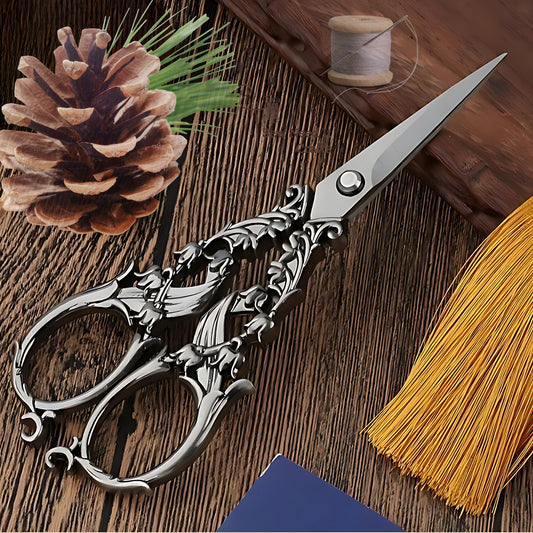
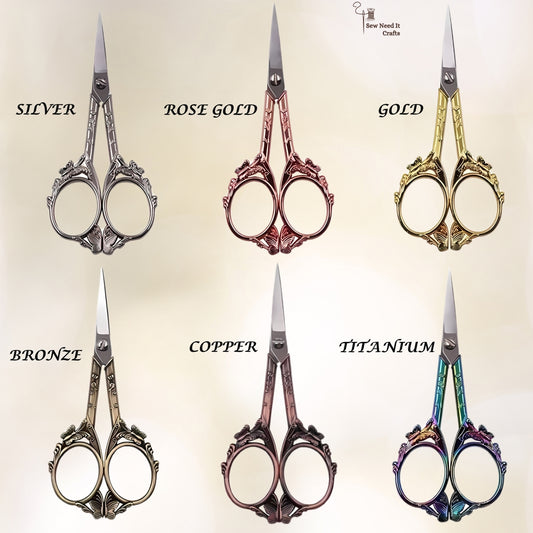
Six pairs of engraved sewing scissors in stainless steel — phoenix tail, dragonfly, orchid, butterfly, tulip garden and feathered friends — running 4.33 to 5.75 inches. Fine points, meant for snipping thread flush to the fabric rather than cutting anything out. Plain straight blades, not pinked: these are embroidery scissors, not a second way to cut a scalloped edge.
The reason to own a small pair is that it stops you reaching for the big ones. Fabric shears blunt the moment they touch paper or a thread knot, and a blunt pair drags the weave instead of cutting it. Keep the small scissors for sewing beside the machine and the large ones for cutting out only.
Or skip the scissors entirely
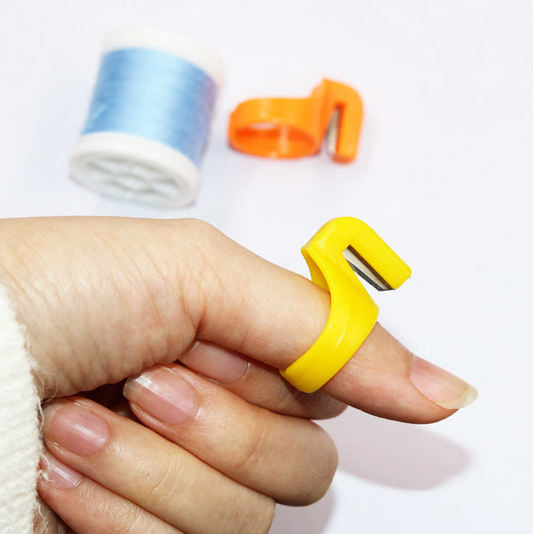
A thread cutter ring sits on your finger with a small recessed blade, so you snap a thread by drawing it across without picking anything up. It is faster than scissors for the job you do two hundred times an hour, and it cannot be left on the other side of the room. There is also a circle cutter for cutting clean rounds in fabric, card, paper and film.
How to keep any of them sharp
One rule and it is the whole answer: fabric blades cut fabric and thread, nothing else. Not paper, not tape, not the plastic on a new packet. Store them closed and dry — a damp sewing box is what pits engraved metal.
More engraved and antique-finish pieces are in vintage sewing tools. Everything else for the workbasket is in sewing tools and notions.