


Zickzackschere für Stoffe – Zickzack- oder Bogenkante, 2 mm bis 18 mm Zahnung, 9,25 Zoll
Zickzackschere für Stoffe – Zickzack- oder Bogenkante, 2 mm bis 18 mm Zahnung, 9,25 Zoll
Limited Availability!
Trusted by Crafters Worldwide ✔
Konnte die Verfügbarkeit von Abholung nicht laden
Voraussichtliche Lieferung -
—
- Schneller Versand
- 100% Garantie
- Sichere Kasse
GARANTIE
GARANTIE
100 % risikofreie 45-Tage-Geld-zurück-Garantie. Wenn mit Ihrer Bestellung etwas nicht stimmt, können Sie sich an unser hilfsbereites Kundensupportteam wenden, um eine Rückerstattung zu erhalten.
VERSAND
VERSAND
Die Lieferzeit beträgt 5 bis 12 Werktage. Es kann jedoch sein, dass Sie Ihre Artikel bereits viel früher erhalten. Alle Bestellungen werden mit einer Sendungsverfolgungsnummer versendet, sodass Sie sie jederzeit verfolgen können! Sobald die Bestellung versandt wurde, erhalten Sie eine E-Mail mit der Sendungsverfolgungsnummer.
Sichern Sie die Kasse
Sichern Sie die Kasse
Sichere Zahlungen über Stripe® und PayPal. Wir verwenden verschlüsselte SSL-Sicherheit für 100%igen Schutz.
UNTERSTÜTZUNG
UNTERSTÜTZUNG
Wir bieten Ihnen ein Ticketsystem mit Telefon- und E-Mail-Support, das rund um die Uhr erreichbar ist. Kontaktieren Sie uns gerne, wenn Sie Hilfe benötigen.
Eine Zickzackschere schneidet eine gezackte Kante anstelle einer geraden, und genau diese einfache Änderung verhindert, dass sich eine offene Nahtzugabe beim Waschen auflöst. Dies ist eine 23,5 cm (9,25 Zoll) lange Zickzackschere aus Edelstahl mit fein polierter, gezahnter Klinge und einem geformten ABS-Griff – und anders als bei fast allen anderen Zickzackscheren auf dem Markt können Sie hier die Zahnweite wählen.
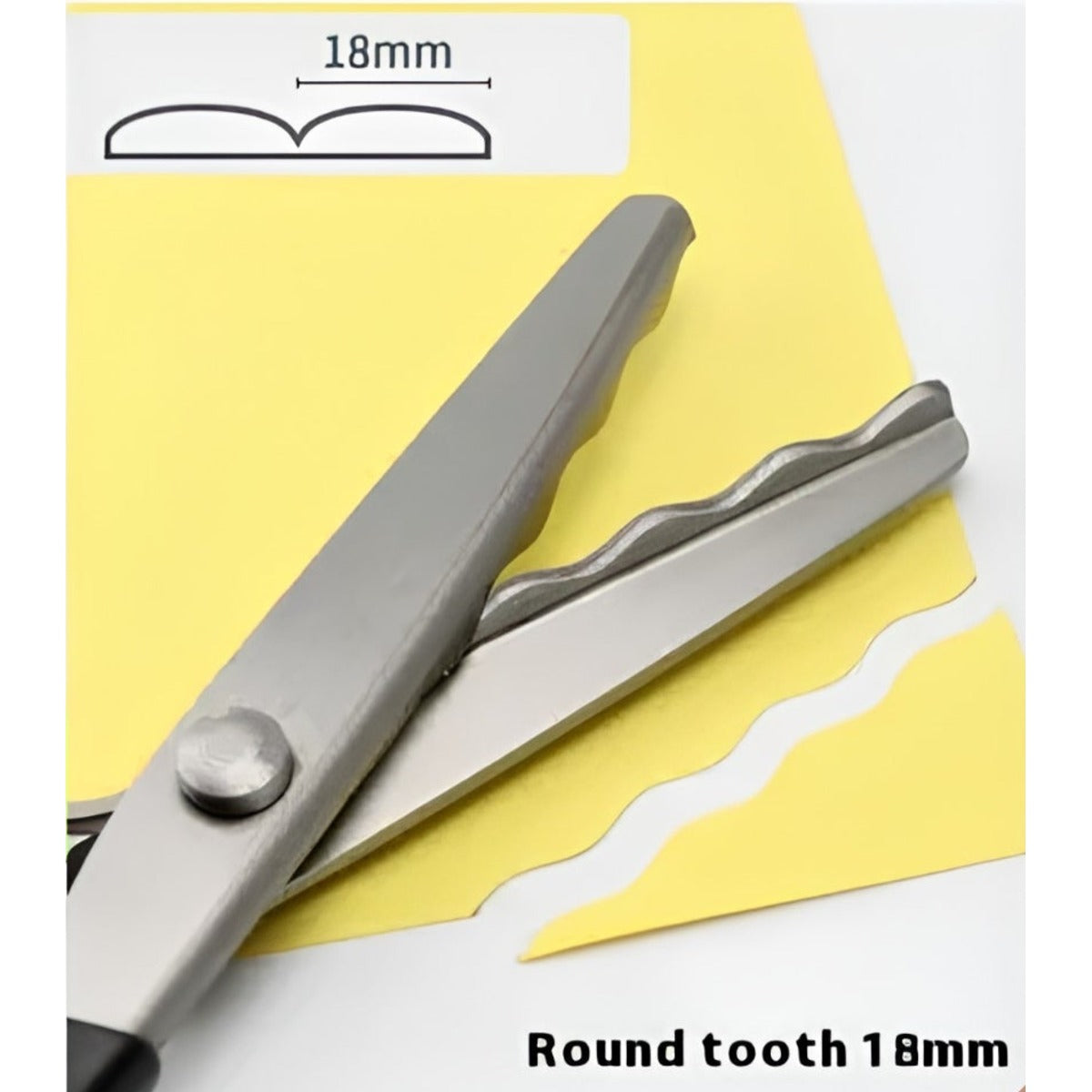
Die Zahl in der Variante – 2 mm, 3 mm, 4 mm, 5 mm, 7 mm, 10 mm, 18 mm – steht für die Zahnteilung: die Breite einer Zacke des Schnitts, nicht die Größe der Schere. Die Scheren selbst haben bei jeder Option die gleiche Länge von 23,5 cm (9,25 Zoll). Ein 2-mm-Zickzack sorgt für eine feine, dichte Zackenkante für leichte Baumwolle und filigrane Arbeiten. Ein 18-mm-Bogenschnitt ergibt eine markante, geschwungene Welle für Filzgirlanden und Applikationen.
Die meisten Marken legen eine Zahnteilung für Sie fest, und die feine Ausführung ist am schwersten zu finden – unsere Kunden berichten uns regelmäßig, dass sie lange nach einer 2-mm- oder 3-mm-Schere gesucht haben, bevor sie bei uns fündig wurden. Hier kaufen Sie gezielt die gewünschte Teilung, ob als dreieckigen Zickzack- oder runden Bogenschnitt, einzeln oder als abgestimmtes Set.
Wie Zickzackscheren funktionieren und warum die Kante hält
Gewebe franst aus, weil ein gerader Schnitt entlang einer einzigen Fadenlinie verläuft und sich diese Fäden vom Ende lösen können. Ein Zickzack- oder Bogenschnitt verläuft diagonal zu dieser Linie. Jeder Faden wird kurz geschnitten und von den benachbarten Fäden festgehalten, sodass kein Faden lang genug bleibt, um sich herauszuziehen.
Deshalb funktioniert das so gut bei Webstoffen – Quilt-Baumwolle, Popeline, Batist, Leinen, Canvas, Hemdenstoff, Köper – und deshalb reicht ein einziger Schnitt oft völlig aus, um eine versteckte Nahtzugabe zu sichern. Das Produktvideo zeigt es deutlich: Die Klinge läuft an einer bereits ausgefransten Köperkante entlang, die losen Fäden fallen auf der Abfallseite ab, und zurück bleibt ein sauberer Zickzack, der nicht weiter ausfranst.
Zickzack oder Bogen: Welche Kante benötigen Sie?

- Dreieckig (Zickzack). Spitze V-förmige Zähne. Dies ist die klassische Zickzackkante für die Kantenversäuberung – Nahtzugaben, Belege, Einlagenränder, Quilt-Rückseitennähte, Probestücke und Nesselmodelle. Die Spitzen dringen tiefer in das Gewebe ein und unterbrechen so mehr Fäden. Erhältlich in 2, 3, 4, 5 und 7 mm.
- Kreisbogen (Bogenschnitt). Abgerundete, wellenförmige Zähne. Dies ist die dekorative Kante – für Filzformen, Fleece-Decken, Girlanden, Applikationen, Bänder, Karten und Geschenkverpackungen, überall dort, wo die Schnittkante sichtbar bleibt. Erhältlich in 3, 4, 5, 7, 10 und 18 mm.
- Beide. Je eine Zickzack- und eine Bogenschere in der gewählten Größe, damit Sie eine Naht versäubern und eine dekorative Kante schneiden können, ohne das Werkzeug wechseln zu müssen.
Die Wahl der Zahnweite

- 2 mm und 3 mm – fein. Baumwollbatist, Voile, Hemdenstoffe, Puppen- und Babykleidung, schmale Nahtzugaben und enge Kurven. Auf Papier und Karton erzeugt diese Teilung einen Miniatur-Zackeneffekt, klein genug, um wie eine Briefmarkenperforierung oder ein Klebestreifenrand zu wirken. Die schwierigste Größe, die man sonst nirgends findet.
- 4 mm und 5 mm – mittel. Quilt-Baumwolle, Popeline und die meisten Kleiderstoffe. Die Wahl für den allgemeinen Gebrauch und der beste Einstieg, wenn Sie nur eine Schere kaufen möchten.
- 7 mm – kräftig. Schwerere Baumwolle, Denim, Canvas, Köper und Dekostoffe. Aggressivere Ausfranssicherung, einfacher an einer Nahtlinie auszurichten und groß genug, um auf Karton und Filz als eigenständige Form wahrgenommen zu werden.
- 10 mm und 18 mm – dekorativ, nur Bogenschnitt. Große, geschwungene Wellen für Filz, Fleece, Girlanden, Bannerkanten und Karton, bei denen der Schnitt bewusst sichtbar sein soll.
Produktdetails

- Gesamtlänge: 23,5 cm / 9,25 Zoll – bei jeder Zahnteilung identisch
- Klingenlänge: 9 cm / 3,54 Zoll
- Griffbreite: 8,8 cm / 3,46 Zoll
- Klinge: Edelstahl, fein poliert, gezahnte Zickzackkante
- Griff: geformtes ABS in Schwarz, versetzt, sodass die Klinge flach auf dem Tisch aufliegt
- Kantentypen: dreieckiger Zickzack, kreisförmiger Bogenschnitt oder beides
- Zahnteilungen: 2, 3, 4, 5, 7 mm Zickzack; 3, 4, 5, 7, 10, 18 mm Bogenschnitt
- Verkaufseinheit: eine einzelne Schere oder ein abgestimmtes Set aus 2, 4, 5, 6 oder 8
Lieferumfang der Sets
Die Sets entsprechen exakt den oben genannten Optionen, sodass Sie die gewünschte Reihe wählen können und genau wissen, was Sie erhalten.
Einzelne Zahngröße
- Dreieckig (Zickzack) in 2, 3, 4, 5 oder 7 mm – 1 Schere
- Kreisbogen (Bogenschnitt) in 3, 4, 5, 7, 10 oder 18 mm – 1 Schere
- Beide in 3, 4, 5 oder 7 mm – 2 Scheren, eine Zickzack- und eine Bogenschere in dieser Teilung
Mehrteilige Sets
- Dreieckig (Zickzack) + (3+4+5+7) mm – 4 Scheren
- Dreieckig (Zickzack) + (2+3+4+5+7) mm – 5 Scheren
- Kreisbogen (Bogenschnitt) + (10+18) mm – 2 Scheren
- Kreisbogen (Bogenschnitt) + (3+4+5+7) mm – 4 Scheren
- Kreisbogen (Bogenschnitt) + (3+4+5+7+10+18) mm – 6 Scheren
- Beide + (3+4+5+7) mm – 8 Scheren, jeweils eine Zickzack- und eine Bogenschere in den vier Größen
Was sie schneiden

Webbaumwolle, Popeline, Batist, Leinen, Canvas, Köper, Denim und Hemdenstoffe. Filz und Fleece. Dünnes Leder und Kunstleder. Vinyl und dünne Kunststofffolien. Karton, Papier und Geschenkpapier. Bänder, Vliesstreifen sowie Folien- oder Zellophanverpackungen – was sie auch für Partygeschenke und Süßigkeitentüten neben dem Nähen nützlich macht. Das Produktvideo zeigt zudem, wie die Zickzackklinge in einem Arbeitsgang durch Frottee und gerippte Strickbündchen schneidet und dabei auf beiden eine saubere Zackenkante hinterlässt.
Für wen sie geeignet sind und was Leute damit machen

Schneider ohne Overlock. Nahtzugaben, Belege, Einlagenränder und Probestücke, in einem Schritt versäubert ohne Garn und ohne aufzutragen.
Kleine Nähprojekte und Miniaturen. Hier glänzen die feinen Teilungen. Kunden nutzen die 2-mm-Zickzackschere für Puppenkleidung und winzige Babygarnituren, wo eine 5-mm-Zacke die gesamte Nahtzugabe einnehmen würde.
Quilter. Rückseitennähte, Musterstoffe und Patchworkränder, die vor dem Quilten des Oberteils häufig angefasst werden.
Filz- und Fleece-Bastler. Die Bogenkante ist der Clou – Girlanden, Applikationen, Deckeneinfassungen und Ausschnitte, die nicht gesäumt werden müssen, da Filz und Fleece nicht ausfransen.
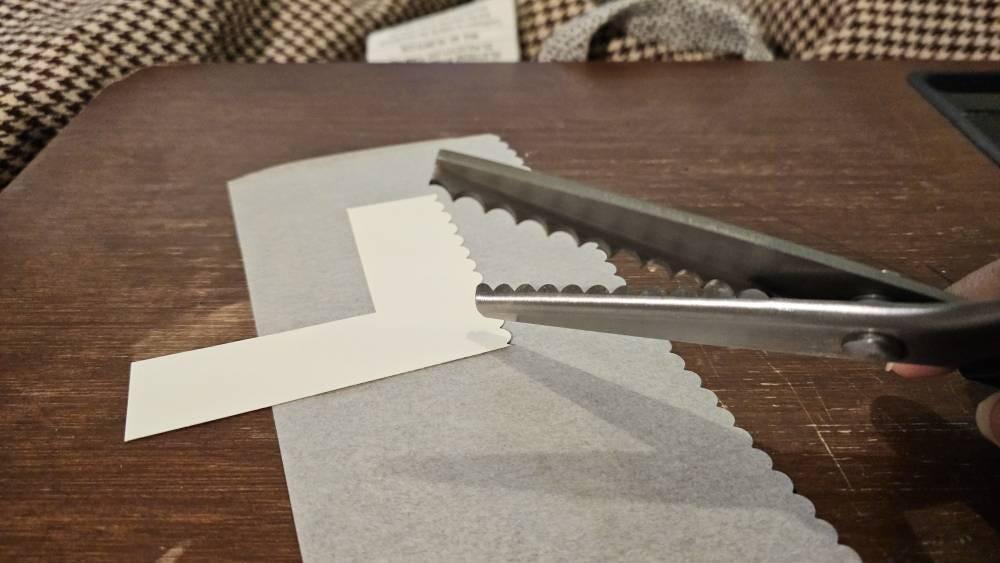
Papierbastler, Kartenmacher und Scrapbooker. Diese Gruppe ist größer, als der Name "Stoffschere" vermuten lässt. Ein feiner Zickzack entlang eines Kartenrandes wirkt wie eine Briefmarke; entlang eines Streifens erhält man den Look eines abgerissenen Klebebands ohne Kleber. Kunden verwenden sie für Papierblumen, Journal- und Scrapbook-Ränder, Geschenkverpackungen und Ausschnitte – eine Person nutzte sie sogar, um Alligatorzähne für ein Projekt zu schneiden.
Lehrer und Workshop-Leiter. Ein wiederholbares, gemustertes Finish, das eine ganze Klasse auf Papier oder Filz ohne Vorlage und ohne Messen hinbekommt.
Anwendungstipps
- Zuerst nähen, dann zickzacken. Die Naht nähen und bügeln, dann die Zugabe mit der Zickzackschere trimmen. Die Schnittteile bereits gezackt auszuschneiden, erschwert das genaue Ausrichten beim Zusammenfügen.
- Genug Platz außerhalb der Naht lassen. Etwa 1 cm bei einer standardmäßigen 1,5-cm-Naht, mindestens 0,6 cm bei Quilt-Baumwolle und mehr bei lockerem Gewebe. Die Täler des Zickzacks sind die schmalste Stelle, halten Sie sie also von der Nahtlinie fern.
- Nutzen Sie lange Züge aus der Mitte der Klinge. Kurze, abgehackte Schnitte führen zu versetzten Spitzen, wo ein Schnitt auf den nächsten trifft.
- Bei Kurven kürzere Schnitte machen und den Stoff in die Klinge drehen lassen, anstatt die Schere zu drehen.
- Bei lockerem Gewebe die Kante zickzacken und eine einfache Steppnaht knapp innerhalb der Kante setzen. Beides zusammen hält wunderbar.
- Auf Papier und Karton ergibt ein langer, selbstbewusster Zug eine sauberere Linie als mehrere kurze, und die Spitzen reihen sich perfekt aneinander.
Vergleich
Gegenüber einer herkömmlichen Zickzackschere mit fester Teilung. Fast jede verkaufte Zickzackschere hat nur einen Stil und eine Zahnweite, die vom Hersteller gewählt wurde – und die feinen Größen, 2 mm und 3 mm, sind am schwierigsten zu finden. Wenn diese Teilung zu grob für Ihren Batist oder zu fein für Ihren Canvas ist, können Sie nichts tun. Hier wählen Sie die Teilung selbst; wenn Sie mit einer Reihe von Stoffgewichten und Materialien arbeiten, bietet Ihnen ein passendes Set für jedes die richtige Kante.
Gegenüber einer Overlock. Eine Overlock ist bei langen, geraden Nähten schneller, erfordert aber ein separates Gerät, zusätzliche Kenntnisse und eine Vier-Faden-Konfiguration. Eine Zickzackschere versäubert in einem Arbeitsgang ohne Garn und Einrichtung und erreicht Kurven, Ecken und Belege, wo eine Overlock nicht hinkommt. Viele besitzen beides und greifen trotzdem zu dieser Schere.
Gegenüber einem maschinellen Zickzack- oder Versäuberungsstich. Beides funktioniert, bringt aber eine zusätzliche Garnlinie und etwas Steifigkeit in die Kante. Der Zickzackschnitt belässt die Nahtzugabe weich und flach, was bei einem leichten Kleid oder unter einem Beleg entscheidend ist, wo eine genähte Kante durchscheinen würde.
Gegenüber einem Rollschneider mit Zickzackklinge. Eine Rollschneideklinge ist bei langen, geraden Kanten auf einer Matte schnell. Die Schere geht überall hin – mitten im Projekt, abseits der Matte, um eine Kurve, in eine Ecke – und kostet nur einen Bruchteil.
Gegenüber einem Stanzer. Ein Stanzer bietet Ihnen eine feste Breite und ein festes Muster. Diese Scheren schneiden jede Länge, auf jedem Karton- oder Papiergewicht, und das gleiche Werkzeug funktioniert auf Stoff und Filz.
Gegenüber Fray-Stop-Flüssigkeit. Diese versteift die Kante und kann helle Stoffe verfärben. Eine Zickzackkante verändert weder das Griffgefühl noch den Fall des Stoffes.
Größen, Materialien & Pflege
Die Klingen bestehen aus Edelstahl mit fein poliertem Finish und einer gezahnten Zickzackkante, eingesetzt in einen geformten ABS-Griff. Der Griff ist versetzt, sodass die untere Klinge flach auf dem Tisch aufliegt und das Material beim Schneiden nicht verrutscht. Jede Zahnteilung ist in der gleichen 23,5-cm-Schere verbaut – nur das Klingenprofil ändert sich.
Wischen Sie die Klingen nach Gebrauch trocken, besonders wenn Sie feuchtes Material geschnitten haben, und lagern Sie sie geschlossen. Die schnellste Art, eine gezahnte Klinge zu beschädigen, ist das Schneiden über eine heruntergefallene Stecknadel, also halten Sie sie vom Nadelkissen fern. Sollte die Mechanik schwergängig werden, reicht ein Tropfen Öl an der Pivot-Schraube aus.
Häufig gestellte Fragen
Die meisten dieser Fragen werden tatsächlich Google und KI-Assistenten zu Zickzackscheren gestellt. Die letzten drei sind spezifisch für dieses Angebot.
Was bewirken Zickzackscheren bei Stoffen?
Sie schneiden eine gezackte Kante, die ein Ausfransen verhindert, in einem Durchgang und ohne Garn. An der Innenseite eines Kleidungsstücks ist das meist die gesamte Nahtverarbeitung. An der Außenseite eines Filz-, Fleece- oder Papierprojekts ist der Schnitt rein dekorativ – eine gemusterte Kante, die nie versäubert werden muss.
Stoppen Zickzackscheren tatsächlich das Ausfransen?
Sie reduzieren es dramatisch, und bei einer verborgenen Nahtzugabe ist das die ganze Arbeit. Da der Schnitt das Gewebe diagonal kreuzt, bleibt jeder Faden kurz und wird von seinen Nachbarn festgehalten, sodass nichts lang genug zum Ausreißen ist. Bei dicht gewebter Baumwolle, Popeline, Leinen und Canvas hält eine gezackte Zugabe wiederholtem Waschen stand. Bei sehr lockerem oder gazeartigem Gewebe zickzacken Sie die Kante und setzen zusätzlich eine Steppnaht direkt innen daneben.
Gibt es einen Trick bei der Benutzung?
Drei, die alle das Ergebnis beeinflussen. Schneiden Sie erst nach dem Nähen, nicht davor. Verwenden Sie lange Schnitte aus der Mitte der Klinge, damit die Spitzen von einem zum nächsten Zug passen. Und lassen Sie genug Stoff außerhalb der Naht, da die Täler des Zickzacks der schmalste Teil der Zugabe sind.
Was kann ich statt einer Zickzackschere verwenden?
Einen Zickzack- oder Versäuberungsstich, eine Overlock oder eine umschlossene Naht wie eine Kapp- oder französische Naht – und die meisten Schneider nutzen schließlich eine Kombination aus mehreren. Was eine Zickzackschere bietet, was keine der anderen Methoden liefert, ist ein fertiger Rand in einem Durchgang, ohne Garn, ohne zusätzlichen Aufbau und überall am Kleidungsstück, einschließlich Kurven und Ecken. Deshalb bleiben sie in der Schublade, selbst wenn man eine Overlock besitzt.
Wie heißen Zickzackscheren noch?
Pinking-Scheren, Zackenscheren oder gezahnte Scheren bezeichnen alle das gleiche Werkzeug. Die Version mit runder Klinge nennt man Bogenschere oder Wellenschere. Beides finden Sie hier: Die dreieckige Option ist die klassische Zickzackschere, die Kreisbogen-Option ist die Bogenschere.
Was ist die beste Methode, Stoff ohne Ausfransen zu schneiden?
Schneiden Sie ihn von Anfang an mit einer gezackten Kante. Ein gerader Schnitt hinterlässt lange Fäden mit einem freien Ende; ein Zackenschnitt nicht. Die Kante hält also vom ersten Moment an, ohne dass ein zweiter Arbeitsgang zur Rettung nötig ist. Für alles, was stark gewaschen oder beansprucht wird, zickzacken Sie die Kante und nähen Sie kurz innen daneben.
Welche Zahnweite sollte ich wählen?
Starten Sie bei 4 mm oder 5 mm, wenn Sie hauptsächlich Quilt-Baumwolle und Kleiderstoffe nähen – das ist der Allround-Bereich. Wechseln Sie zu 2 mm oder 3 mm für Batist, Voile, Puppenkleidung und Babysachen sowie für Papierarbeiten, wo Sie eine feine Miniatur-Zackenkante wünschen. Gehen Sie auf 7 mm für Denim, Canvas und Köper oder wenn das Muster selbst das Feature sein soll. Wählen Sie 10 mm oder 18 mm Bogenschnitt, wenn die Kante sichtbar sein soll.
Kann ich sie für Papier und Karton verwenden?
Ja, und viele Kunden kaufen sie genau dafür. Ein feiner 2-mm- oder 3-mm-Zickzack entlang einer Kartenkante wirkt wie eine Briefmarke, und entlang eines Streifens ahmt er den Look eines gerissenen Klebebands nach. Sie schneiden auch Karton, Scrapbook-Papier, Geschenkverpackungen und Blütenblätter sauber. Die Bogengrößen erzeugen eine sanfte Welle, die eine Bastelschere nicht schafft.
Funktionieren sie bei Strick, Frottee und Fleece?
Ja. Das Produktvideo zeigt, wie die Zickzackklinge sauber durch Frottee und gerippte Strickbündchen in einem Schnitt geht. Bei Strick ist die gezackte Kante eher ein ordentliches dekoratives Finish als eine Ausfranssicherung, da Strick nicht wie ein Webstoff ausfranst – aber sie schneidet sauber und sieht gut aus, und bei Fleece und Filz ist es eine der schönsten Kanten, die Sie an ein ungesäumtes Projekt bringen können.
Wählen Sie die Teilung, wählen Sie die Kante und erhalten Sie exakt die Linie, die Sie im Kopf hatten, mit einem Schnitt.


Reasonable price and cuts through multiple layers well.
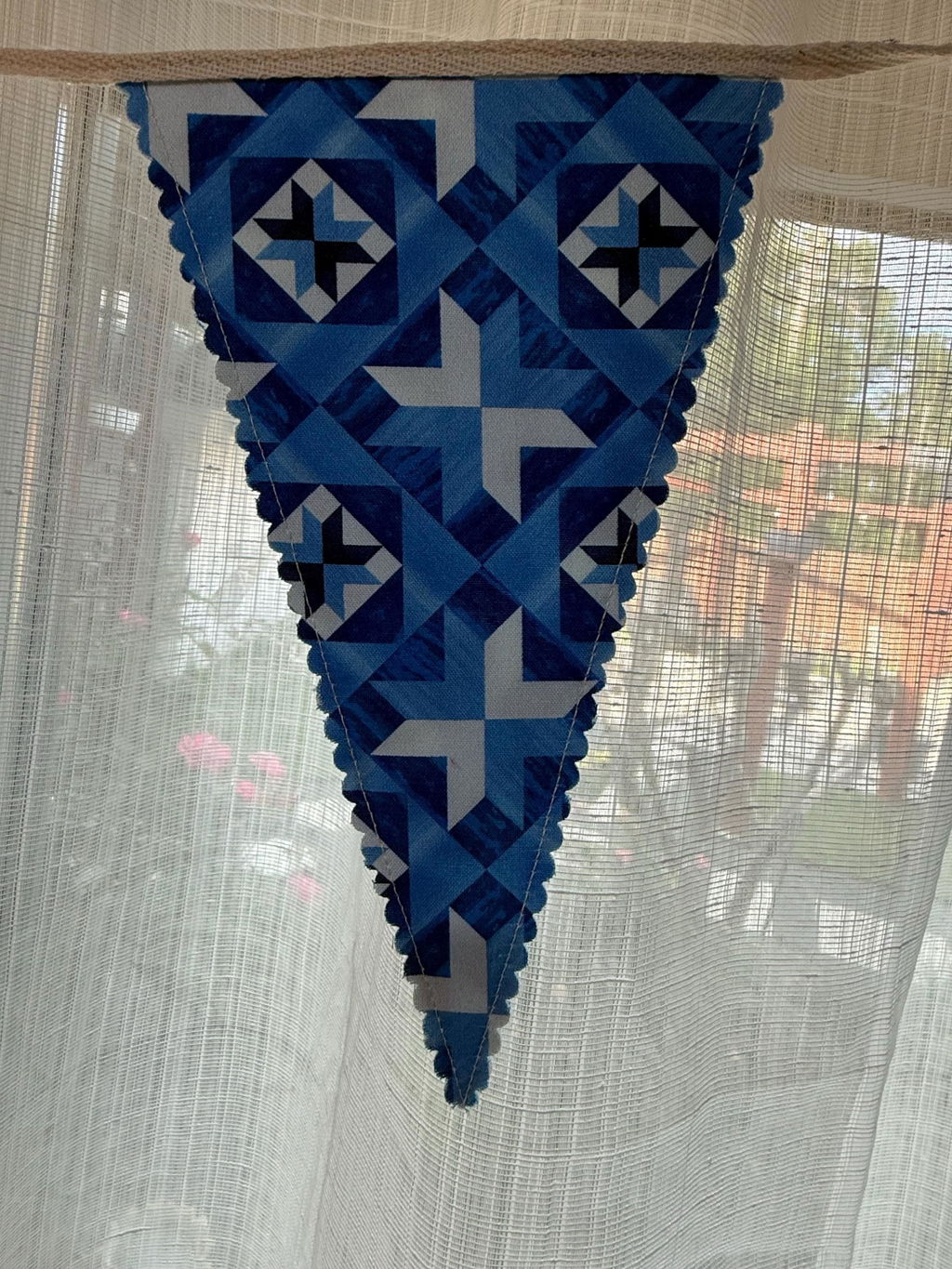
super fast shipping, got these for my paper crafts and work very well.
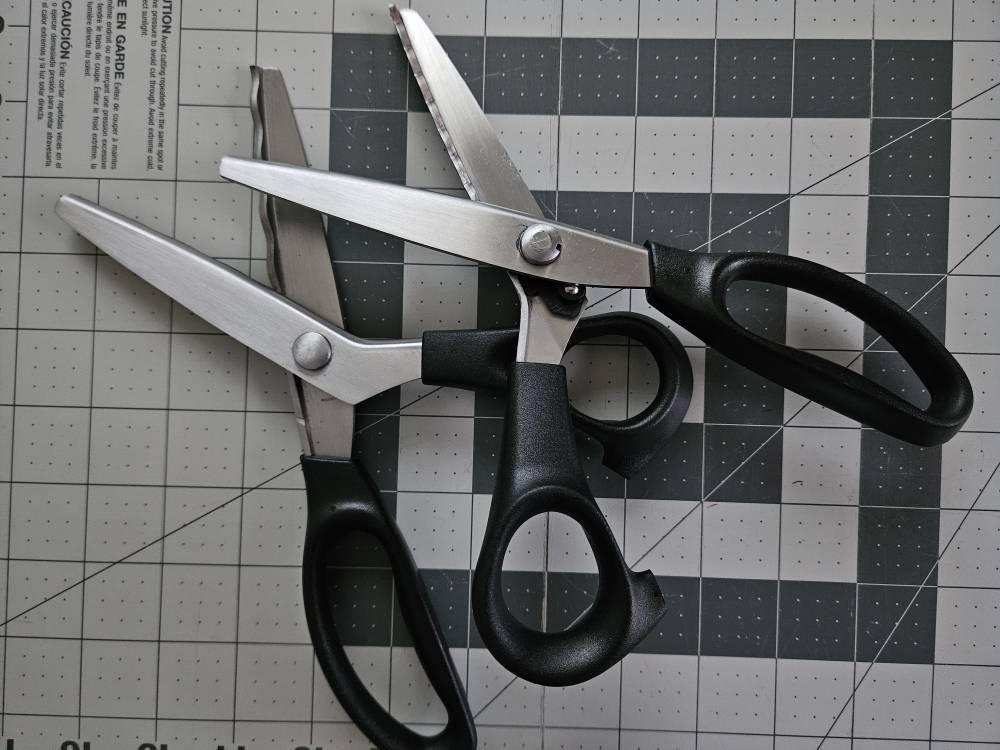
Good selection, wish the handles had different colors.
The item has finally arrived. Was two weeks late. Customer service is like talking to an AI chatbot and if I wanted a refund I was told that I would have to pay the cost of the return. Ended up receiving the item late instead.
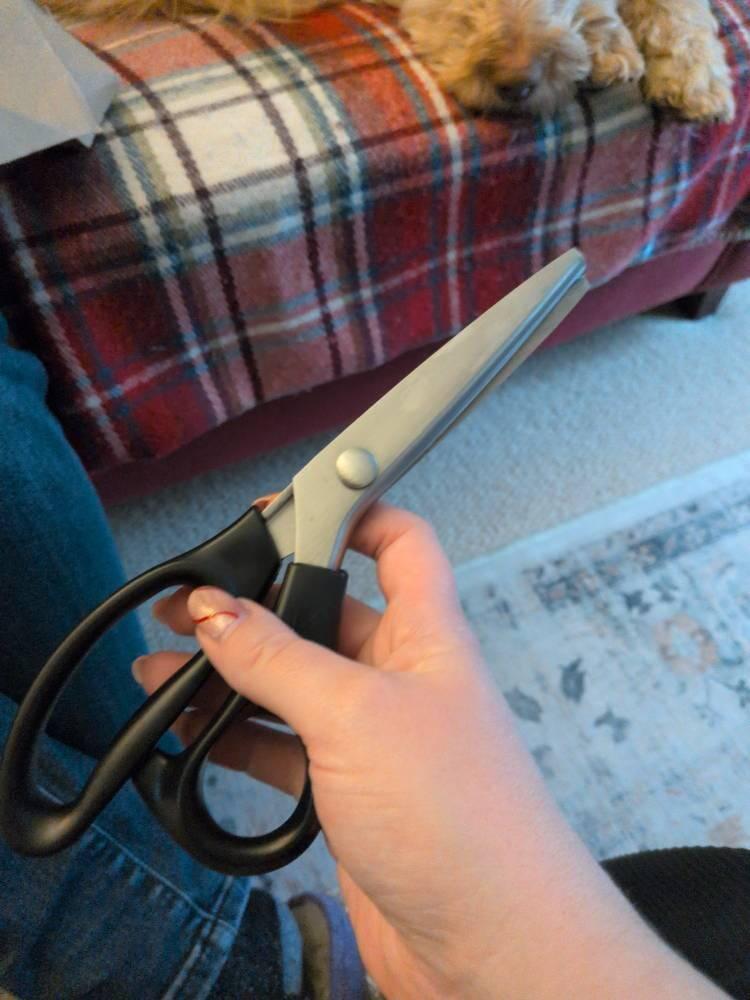
The shears arrived quickly and were as described. They seem very sharp and sturdy and made a nice scalloped edge on my fabric.
outstanding product. Cuts leather smoothly.
Excellent product!!! Nice heavy construction and packaged well!
Bought these as a gift for my mum, she is very happy with them! Nice quality
Primo pair of shears. Excellent cut for my projects.
Got here quickly and works great on fabric and felt.
Je suis ravie de mon achat!
I accidentally ordered the wrong one, after quickly emailing…they fixed my order and sent me the right scissors. They are a little tight trying to open. I machine oiled it…hope it helps. Cuts nice
Just what I needed for a small project
perfect.
Great sizzers
Zackenschere wie beschrieben, gute Qualität, robust und sicher verpackt. Der Versand hat jedoch etwas länger gedauert.
Just what I needed. Thank you so much 😊
Haven’t had a reason to use them
Pinking Shears for Fabric — Zigzag or Scalloped Edge, 2mm to 18mm Tooth Sizes, 9.25 Inch
Very nice product, all good!
Exactly what I needed for crafting. Very happy with the quality for a fantastic price.
Great product at a good price
Good seller and fast reply's
beautiful quality scissors
These are just the right size for adding that extra touch to handmade glassine bags!
Arrived quickly and exactly as expected.
The scissors are amazing! They cut through fabric and felt very easily and they are very durable. The seller was very responsive and so lovely. Definitely recommend!
Great item, just took a while to get to uk.
Great scissors - they feel very solid and cut well with great alignment. Shipped quickly in a nice box, too.
Shipped quickly, exactly as described.
Wonderful sheers! Quality, sharp precision cut with both the rounded & sawtooth pinking sheers. Fast delivery.
Le cisseau ne coupe et vue le prix pour renvoyer le produit dommage